Why the Hannas are Lifelong Members of St. Agnes Anglican Church

WHY THE HANNAS ARE LIFELONG MEMBERS OF ST. AGNES ANGLICAN CHURCH

© 2023 Rosemary Clarice Hanna

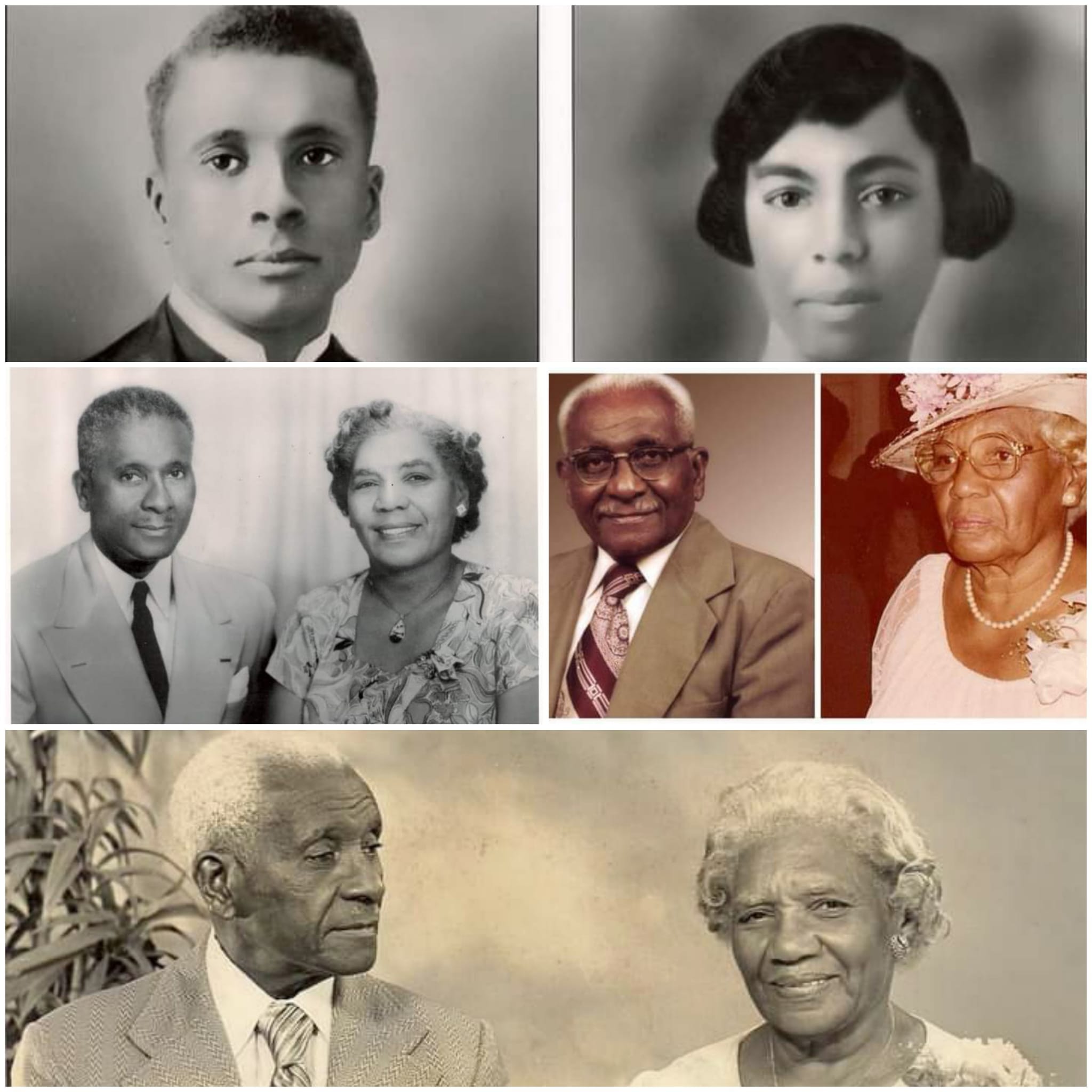
I love St. Agnes Church which is deeply embedded in my heart.  Why has the family been faithful member of this Church dating back to the early 1920s? The simple answer is that we had no choice! My parents, Percival James Hanna and Leona Aurelia Butler, were married here on 4th November 1925 and, during the Percy_Ona 1925-1980scourse of their 59 year marriage they produced five sons and two daughters namely: James, Allan, Ivan (deceased), Percival (decades), Paul (deceased) me and Andree. Thro0ughtout the years Mother and Daddy were involved with whatever was going on in the Church and they made sure that we will attended regularly. I will take you through an abbreviated 75 year journey of our participation in the life at St. Agnes.
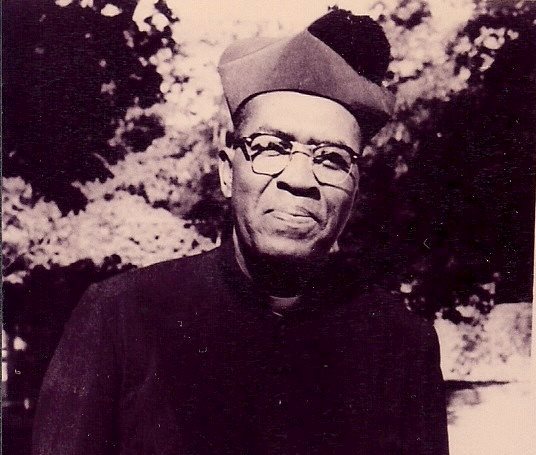
As children, we were all involved in many activities, and attended church three times on Sunday, beginning with 9 am Sunday School in the Schoolroom and then marching quietly in two along Cockburn Street to attend Mass here at the Church at 10:30 am. Then there was Sunday School again at 4 pm here at the Church led by the Rector himself, Canon Milton Cooper. Church was usually full and there was no mingling of boys and girls, with the boys sitting on the south side of the nave and girls on the north.  Back then funerals led by lodges and marching bands, were held on Sundays and whenever a funeral was approaching Fr. Cooper wCanon Milton Cooperould have the western door closed so that we would not be distracted. Church continued at 7 pm when we all returned with our parents for Evensong and Benediction which was a delight for me and many others, because we loved to hear Fr. Cooper’s beautiful and melodious voice, especially when he sang the “Divine Praises” during Benediction. The custom of separating males and females during services continued for a long time and to top it off, men went up for communion first followed by the ladies. I don’t remember when that was discontinued, but I was happy when it was stopped.
Some of you may not be aware that we had a Junior Choir during the fifties that was led by none other than Mr. Timothy Gibson – the composer of the National Anthem of The Bahamas – who was also the Headmaster of Western Junior School at the time. My sister-in-law Dolores, Fay Gibson (Callender), Freddie Turnquest (McCartney) and Shirley Sawyer (Cunningham) were among the members of that choir. They sat in the front pews on the north side in front of the pulpit. As a child I wondered why Mr. Gibson conducted the choir with a little white stick which I later learnt was a baton. The Senior Choir also sat in the same area, and the Hammond organ was in the spot where the piano is now located.

Childhood activities at St. Agnes included the annual picnic when we travelled by boat to Hog Island (later renamed Paradise Island) and, in addition to the beach we also enjoyed rambling through the bushes and catching soldier crabs. We also had a Girls Guild that was led by Sister Thecla Mary who was the last English nun to serve at St. Agnes. One of our church members is named after her but prefers to use her middle name. We also had the Boys Brigade led by Mr. Alleyne from Ross Corner who was from Barbados.

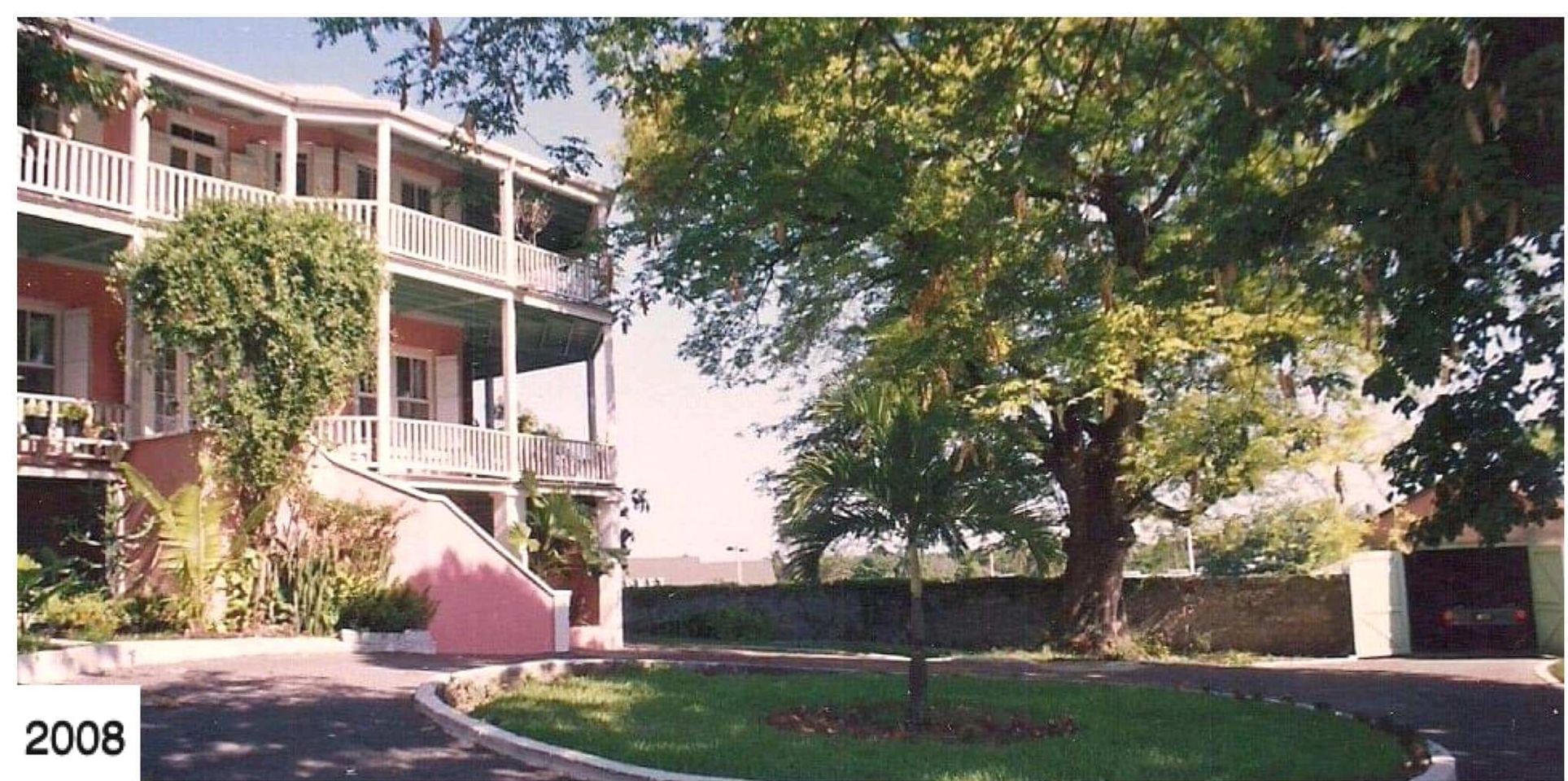
Another wonderful childhood memory that I have was spending Saturday afternoons here with my Godmother GwennieSt. Agnes Rectory Cooper (wife of the Rector Canon Cooper) and my good friend Jackie Williams Smith cleaning the brass vases, making floral arrangements and dressing the Altar.  Jackie’s mother Mrs. Nellie Williams took care of the Altar linens. In those days the flowers came from the members’ gardens and Goddie had a most beautiful one in the large circle at the front of the Rectory at the top of Market Street which, most unfortunately, has been replaced by a parking lot. Easter time was special with Altar being decorated with Queen Anne’s Lace and Larkspur flowers all from the Rectory garden. That is where I met D’Yanza and Doyle Burrows as they used to come down to help their aunt Gwennie in the garden. Doyle still keeps a beautiful garden.
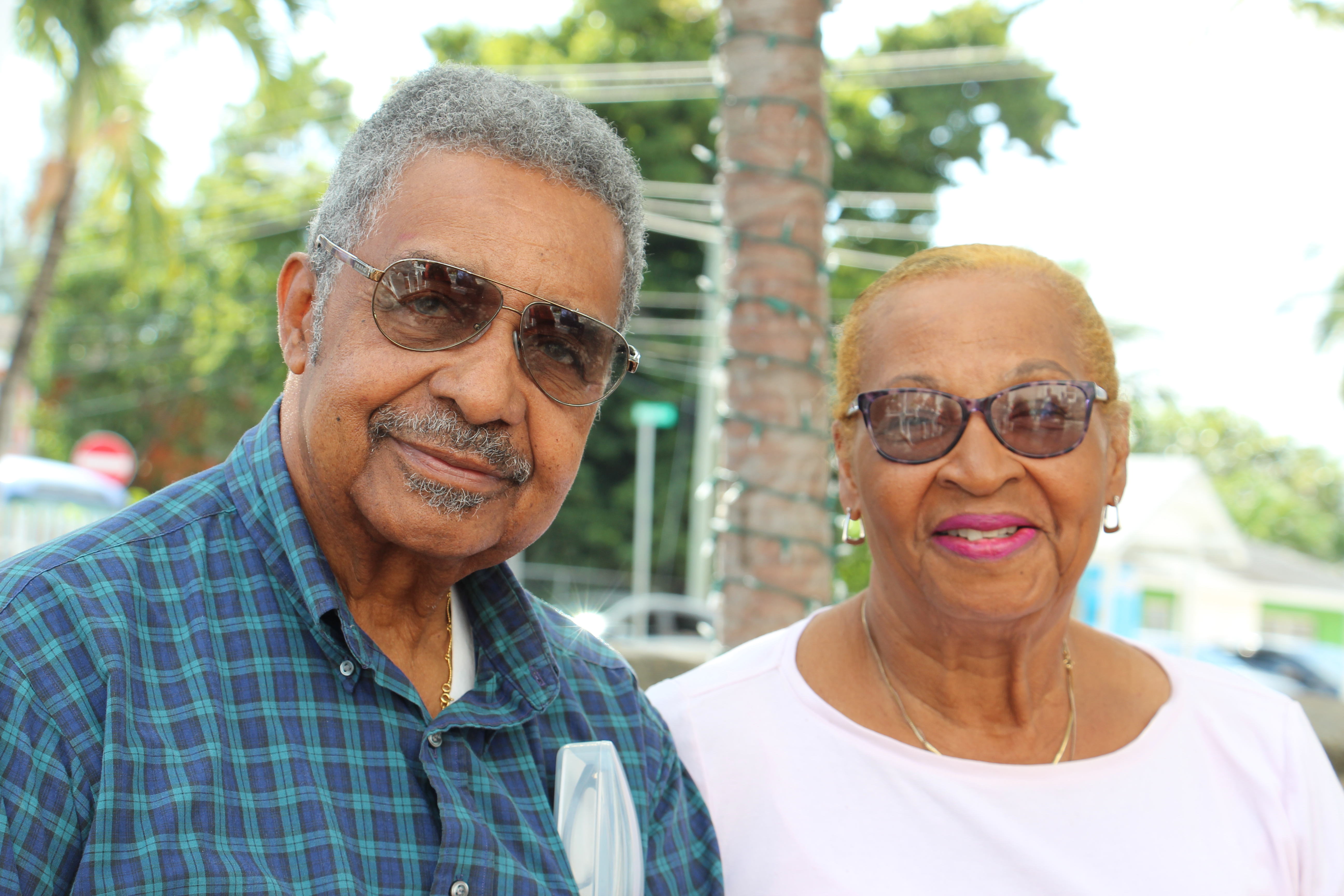
Long before TV our main form of entertainment included the regular programmes and plays held at the Schoolroom. Back then we also put on plays which were usually produced by the late great Basil Saunders who studied drama in the UK. Basil produced and directed a particular play in which the lovebirds Andy Gomez and then Louise Johnson IMG_4098had a romanArchdeacon Thompsontic scene. And there was astonishment and a lot of giggling amongst us 12-14 year olds when Andy planted real a real kiss and not a quick peck on Louise’s lips. And here they are still inseparable after 63 years of marriage, six children and eight grandchildren.
As young adults we had the Anglican Young People’s Association (A.Y.P.A.) which was sell supported and we interacted with young people from other parishes for joint activities, including debating against each other on current affairs and serious topics. Livingstone Bostwick and I represented St. Agnes in these debates and Archdeacon Thompson was our coach. Life was taken seriously back then and, as young people, we stayed abreast of what was going on around us.
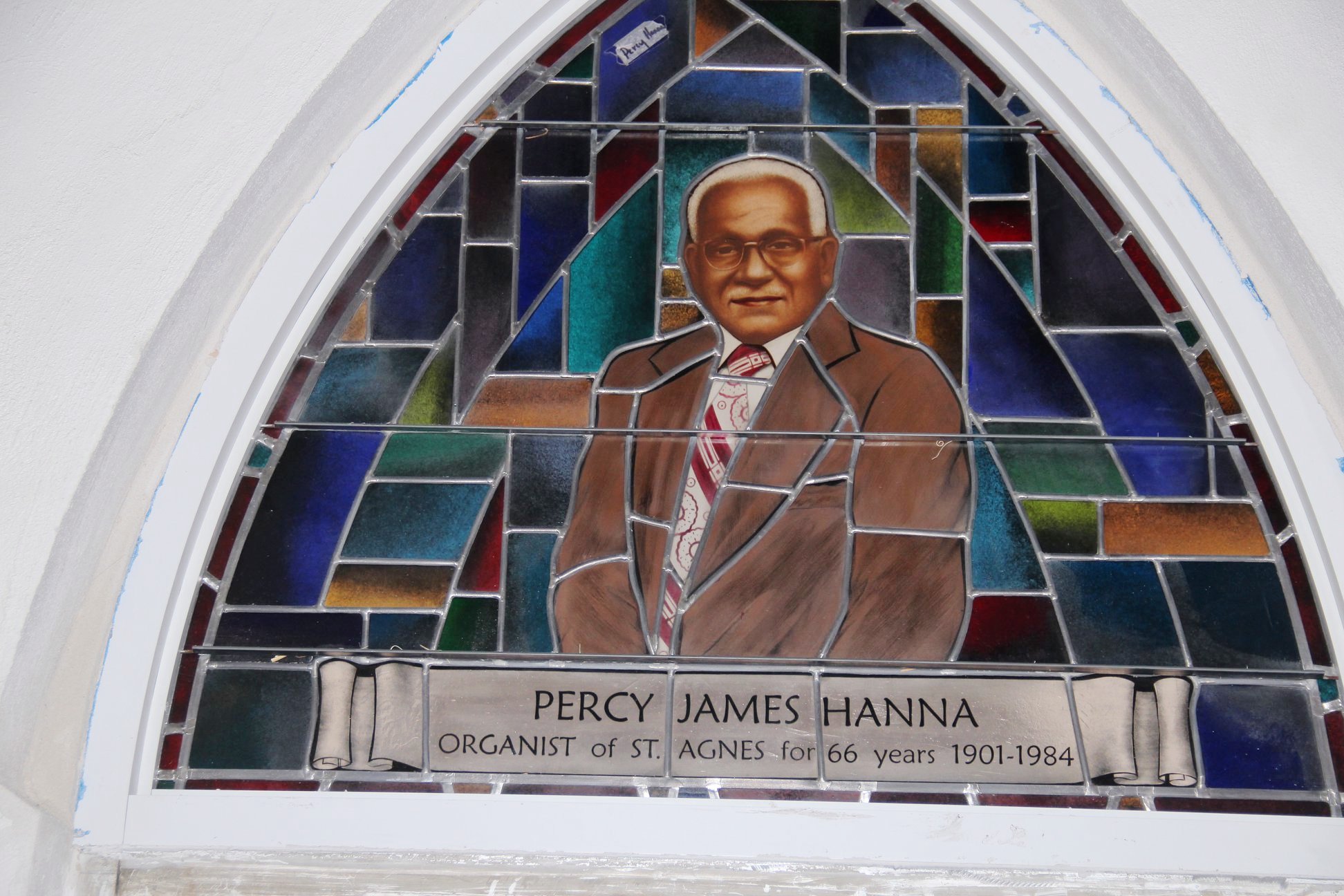
Daddy stained glass window_2As many of you are aware Daddy served as Organist here for approximately 60 years and he was ably assisted by my brother Ivan who also served for 57 years including the time he assisted Daddy. Portraits of both of them are up in the choir loft and Daddy’s image is in the stained glass window over the southern door. He was a stickler for being on time and was always present at church at least a half hour before services and played beautiful soft and soothing classical music for a congregation that listened quietly and appreciated it. Daddy was also a member of the Vestry during most of my childhood, and a founding member of the Anglican Church Men organization. He served as secretary for both groups for many years.

Ivan was a superb all round musician. As an organist he was known for his beautiful and melodious hymn interludes and the skill and smooth manner in which he modulated from one key to the next without jumping into another key as is so prevalent among some musicians today. He was also a great singer and, for many years, he led the St. Agnes Marching Band while blowing his trumpet. Ivan was a devout Christian and I remember his daughter Gina saying that whenever the family went on vacation they had to find their way to a church on Sundays.Hanna Girls_Dads at St. Agnes

Very few can remember when the Church had a wooden floor and a separate wooden bell tower which was located near the sitting area in the southwest area of the garden. Daddy designed the new bell tower and choir loft and my brother Paul was the engineer on the project. Before the loft and new pipe organ were constructed and installed Ivan invited me to assist him with the choir which I did happily up to the time of his death in 1999 and continued for a total of 20 years. His daughter Gina now conducts the choir and my sister Andree still sings in the alto section.

Long before the Anglican Church Women organization was established by Bishop Bernard Markham there was the St. Agnes Volunteer Group which included Mother, Mrs. Culmer, Mrs. Johnson, Mrs. Gay, Mrs. Bostwick, Mrs. Hepburn, Mrs. Tinker, Mrs. Ferguson, Mrs. Gomez and others. They held events to raise funds for the church. Upon the establishment of the ACW, Mother was elected as the first president and she also served on the ACW Council.

Aside from home, St. Agnes has always been an anchor, not only for the Hanna family but most of our neighbours including the Wilkinsons, Culmers, Johnsons, McDonalds, Gays, Gibsons, Minnises, Bostwicks, Adderleys, Gomezes, Coakleys and others, Despite the fact that most of us have from Over-The-Hill we still come back from all over the Island to worship at this place on Sundays and for other special occasions. When my daughter and I moved to the then wilderness of what is now Seabreeze Lane in 1974, we worshipped at Holy Cross Parish and she was confirmed there. However, St. Agnes kept pulling at my heart and Archdeacon Thompson was happy to welcome s back a few years later.
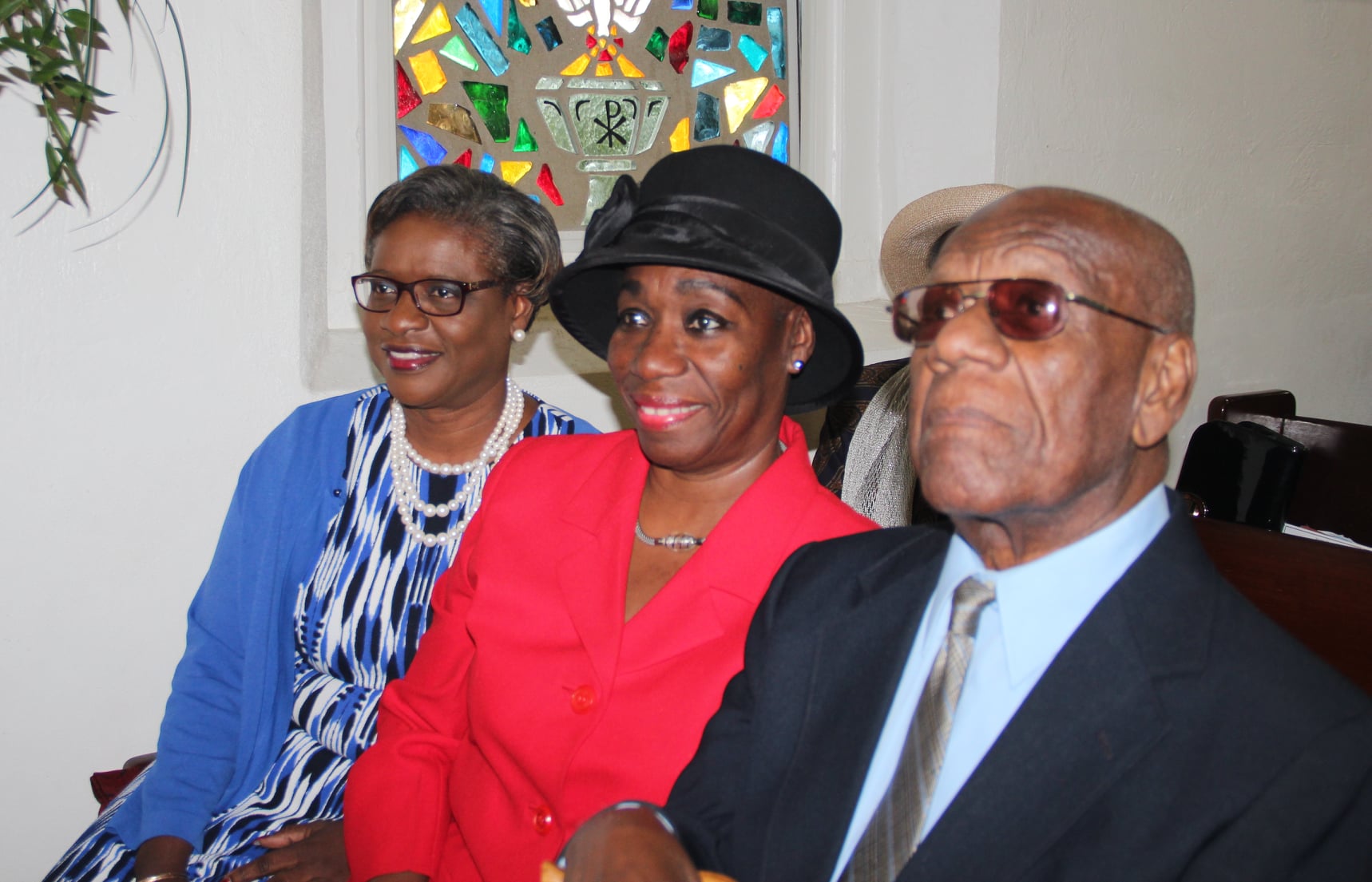
Constance_Garnell_AllanTo demonstrate how deep the Hanna commitment to St. Agnes is, my now 95 year old brother Allan married a St. Mary’s woman Marinetta Rolle in May 1952 and he never left St. Agnes. By the same token Marrie, as we called her, never left her precious St. Mary’s. However, their children were brought up in St. Agnes. For years after his retirement, Allan delivered soup to the poor and shut in members of the parish. Before the pandemic he never missed a Sunday 7 am Mass and sat on the southern side of the nave with his daughters Constance and Garnell (who also served as President of the ACW). I followed in Allan’s footsteps after retirement by going out with my partner Patricia Johnson to deliver soup to people who lived between Blue Hill Road and Collins Wall. It was through this activity that I saw firsthand how much the area had changed. It was sad to see how our mostly elderly people were living. This led to my taking pictures of the old homes that still stood; writing a book and producing a documentary film about Over-The-Hill. It was because of St. Agnes that I was able to document the significant role that many of our members and others played in the development of the nation. The documentary can be viewed on YouTube.

Speaking about photography, I was inspired by my late brother Perce. Somehow I have morphed into being the “official” church photographer and I noticed that the real photographer, David Knowles, stopped bringing his camera to church. Through photography at church I have gained many new little friends especially among the acolytes including some of whom are pictured here. Another one, Daniel, recently asked me if he could have copies of all of the photos that I took of him and, when walking away said: “Every last St. Agnes acolytesone.” I’m working on it Daniel.

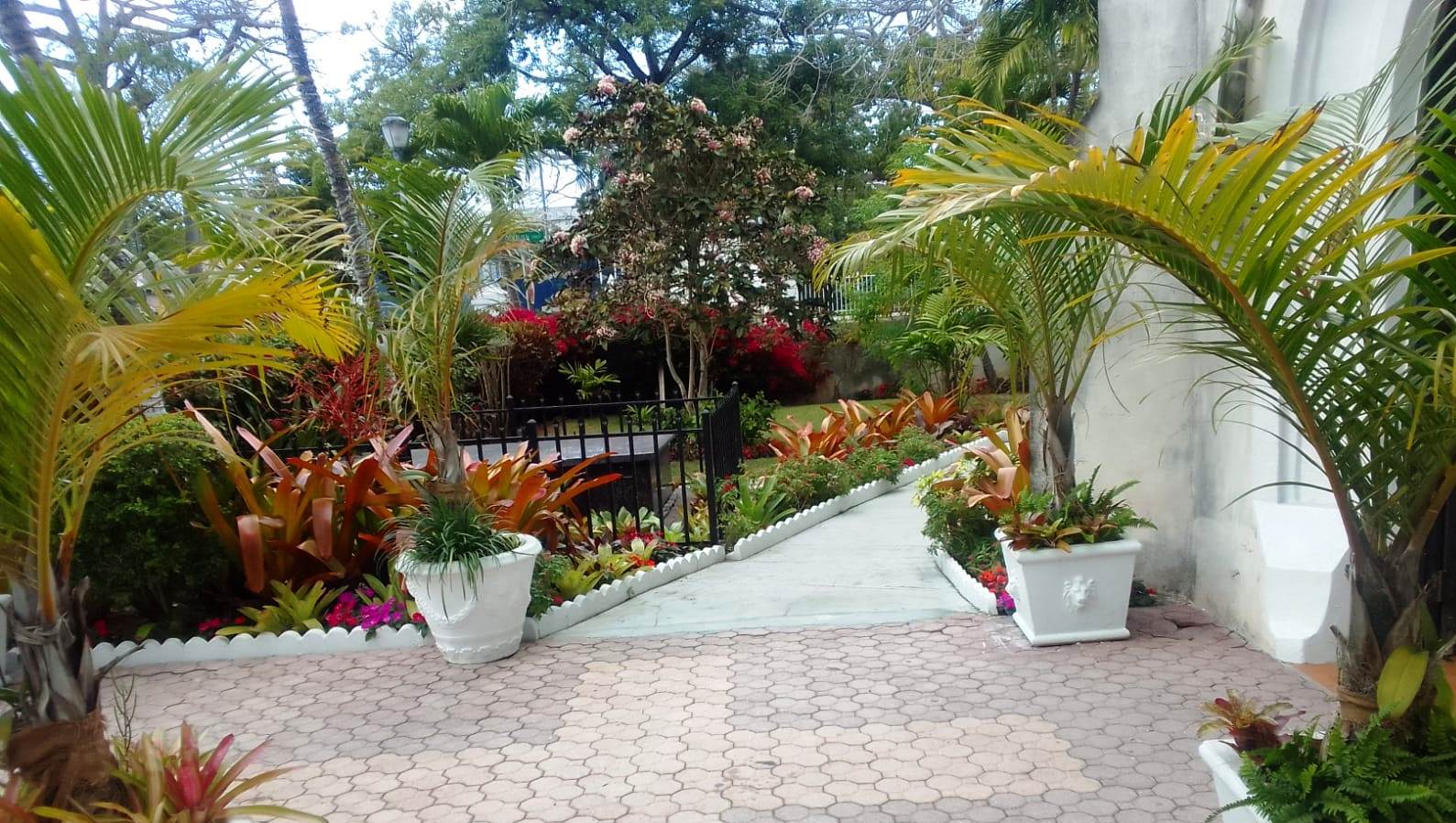
St. Agnes remains a wonderful oasis and beacon of hope in the Grant’s Town community – from the uplifting worship, the cheerfulness of the kitchen workers who feed the acolytes every Sunday, and 400+ people from the community every week, and the ever so beautiful gardens of St. Agnes, lovingly cared for by Michaella Strachan, Esnel Frael and team. I encourage those of you who have not been here for a while to come back come and become a part of a church which ministers in a most profound way to the soul and body.
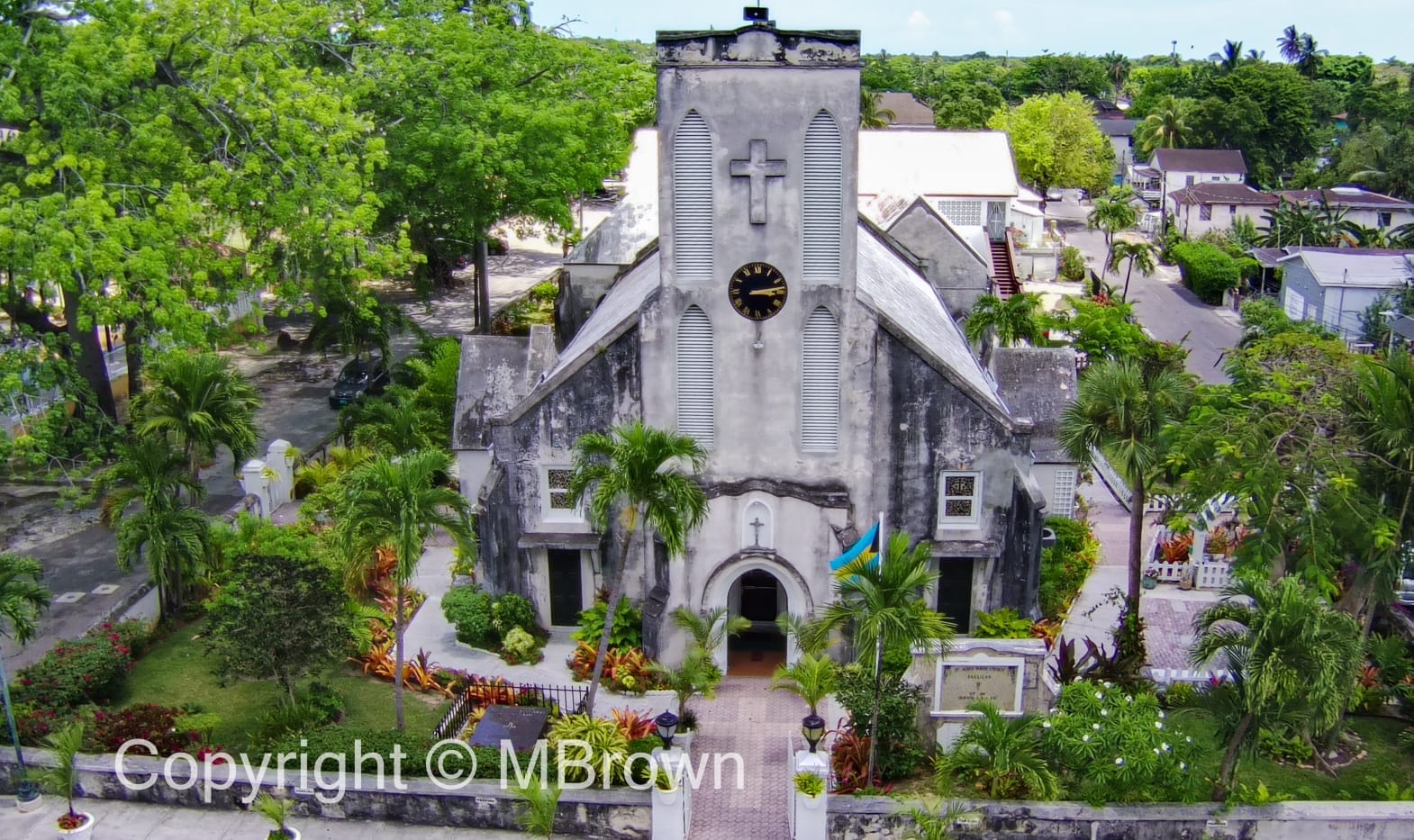
Aerial view of St. Agnes


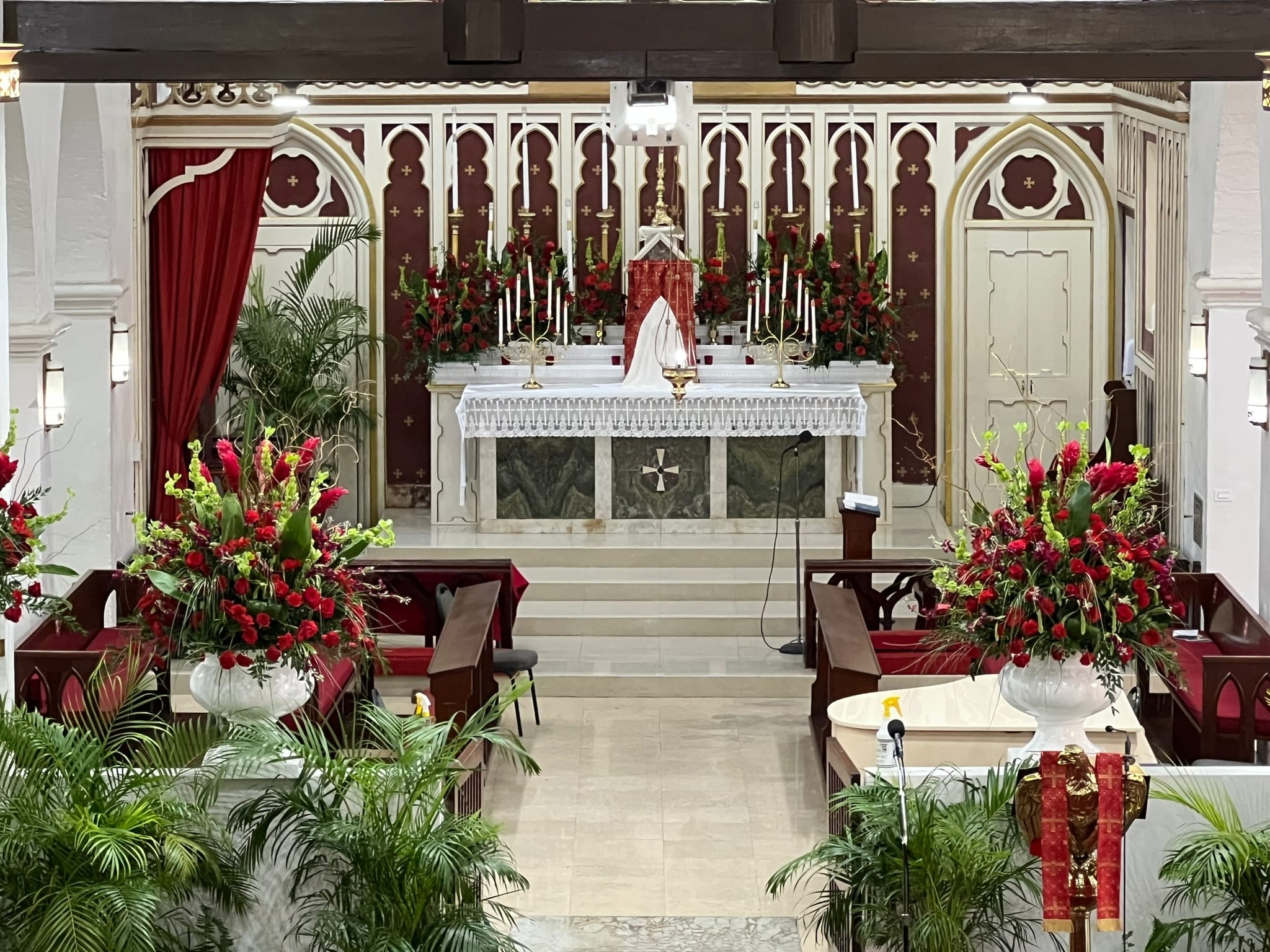
St. Agnes interior 3


St. Agnes garden 1

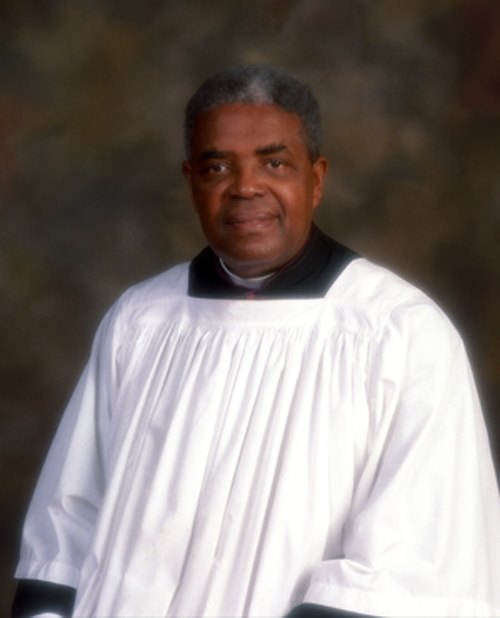
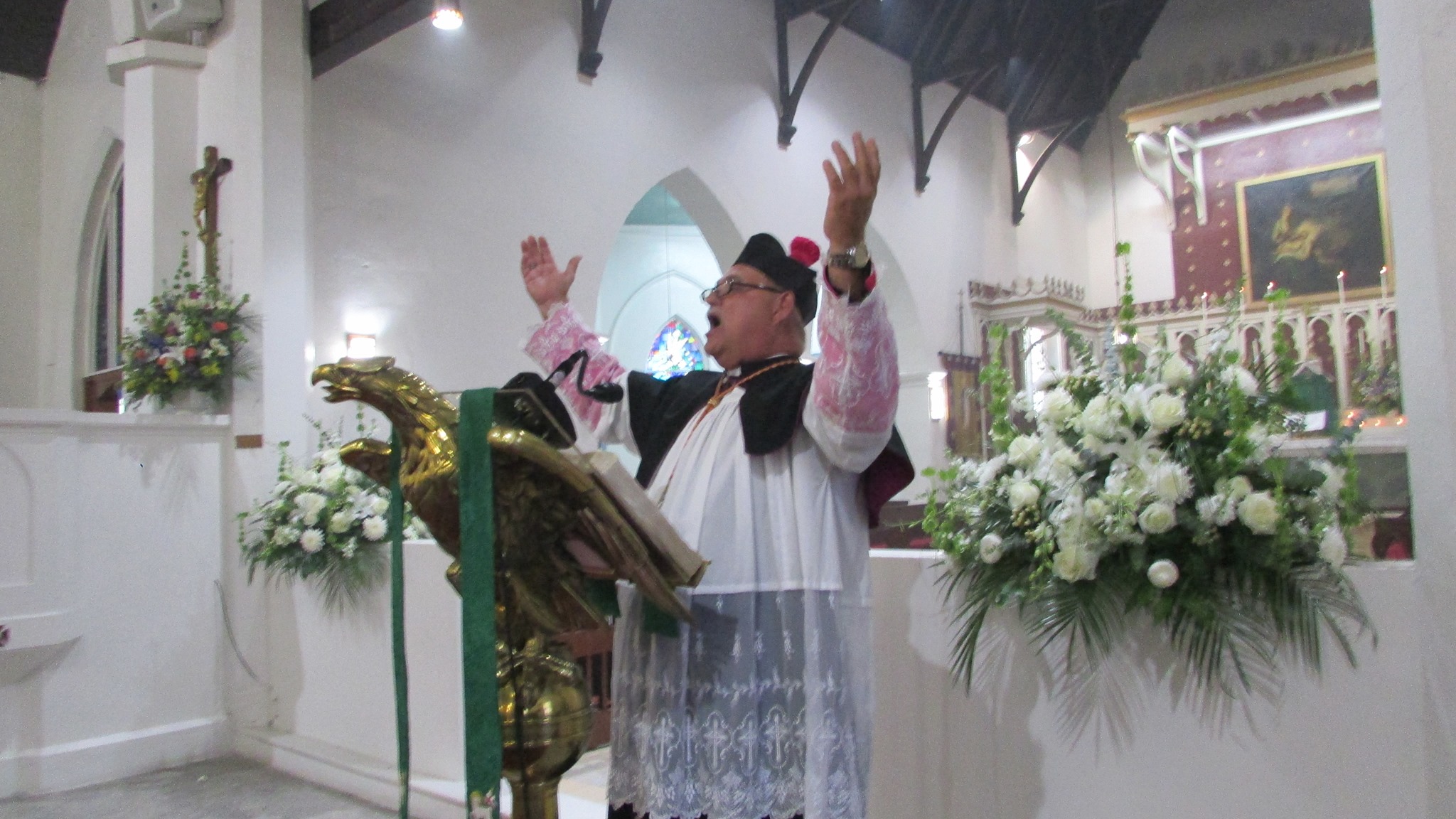
In closing, I want to say to Archdeacon Cartwright, that you brought much joy and happiness when you came back home as Rector of this great church. We all know how you love raising the rafters and making a joyful noise unto the Lord, especially at the podium at the end of services. However, I must say that neither you nor anyone else (including our beloved Archbishop Gomez) can hold a candle Fr. Cartwrightto Canon Milton Cooper when it comes to singing. Nevertheless, I’m going to sing my thanks via this Andrae Crouch song “My Tribute”, and Archdeacon, you are cordially invited to come up, raise the rafters and lead the congregation in the chorus.
How can I say thanks
For the things You have done for me?
Things so undeserved
Yet You gave to prove Your love for me
The voices of a million angels
Could not express my gratitude
All that I am and ever hope to be
I owe it all to Thee

To God be the glory
To God be the glory
To God be the glory
For the things He has done

With His blood He has saved me
With His power He has raised me
To God be the glory
For the things He has done

Just let me live my life
Let it pleasing, Lord to Thee
And if I gain any praise
Let it go to Calvary (Calvary)

Oh, with His blood (His blood) He has saved me (He has saved me)
With His power (His power) He has raised me (He has raised me)
To God (to God) be the glory (glory)
For the things He has done
 

JOSEPH SPENCE – by P. Anthony White

Joseph Spence:   Who dares follow in his giant strides?

By P. Anthony White

“Who follows in his train?”
From THE SON OF GOD GOES FORTH TO WAR

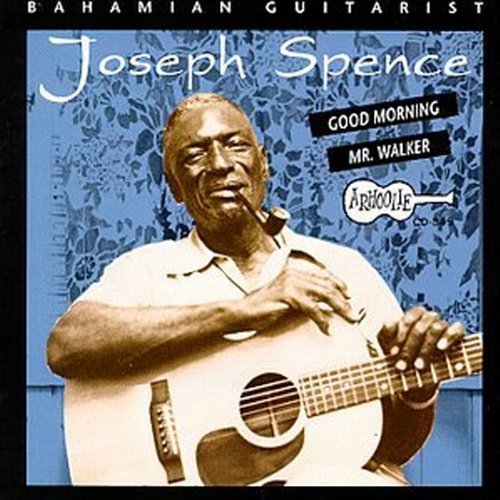
P. Anthony WhiteJoseph Spence_1Up through the years as The Bahamas developed admirably on the social, economic and political fronts, there has also been steady development in the area of culture and entertainment.

In each generation over that time, there have been entertainers who have been stand-outs who have left their indelible imprints, and many of their young successors on the entertainment stage have been greatly inspired by their glittering examples and have attempted to follow in their giant footsteps.

To his immense credit, for many years outstanding Bahamian radio personality Charles Carter, who has also been an executive at the Broadcasting Corporation of The Bahamas, a Member of Parliament, and a cabinet minister, has done an extraordinarily thorough and commendable job, wherever he could, of researching and transcribing the lives, times, and accomplishments of Bahamian entertainers over time.

He has exposed, through radio and other media, both the faces and the flip sides of  performers and entertainers such as the late George Moxey, Blind Blake, Maureen Duvalier, Priscilla Rollins, Freddie Munnings, and, of course, the unforgettable Tony “The Obeah Man” McKay from Canaan Lane.

However, perhaps of late Charles Carter, who was a fellow student of Tony McKay and The White Boy at Rhodes high school in New York City way back when, has also widely headlined the famous Berkeley “Peanuts” Taylor, and Ronnie Butler who, along with Count Bernadino, insists that age is nothing but a number.

Yet Charles Carter, who must be hailed as The Bahamas’ chairman of the radio entertainment board, has always, stretching back to the 1960s, quite sensibly and with abiding admiration left no research hill unscaled  with regard to the most ancient of the country’s pioneer entertainers whose influence over the years tentacled to faraway climes.

The reference here is, of course, to the inimitable, timeless, and unforgettable Joseph Spence who, had he been yet alive, would have celebrated his 100th birthday two days ago, on 3 August.

But who, exactly, was Joseph Spence? Many thousands of Bahamians would put that question, and well they deserve to know the answer. Art is long and time is fleeting, as Henry Wadsworth Longfellow advised and Sir Randol Fawkes was fond of repeating. Be patient.

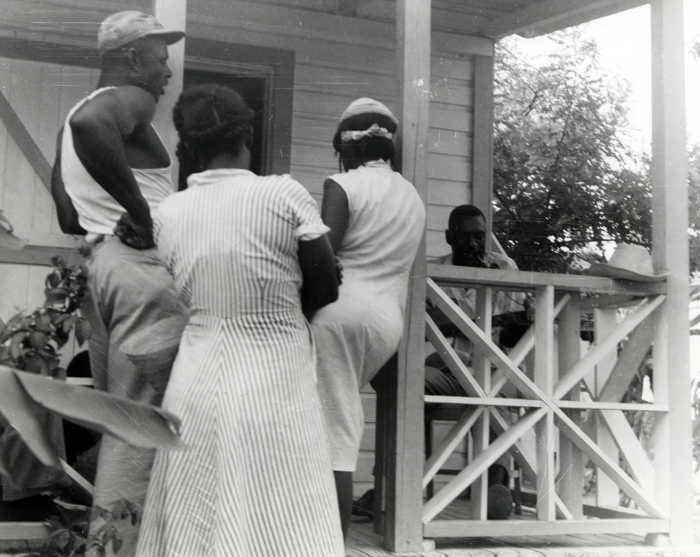
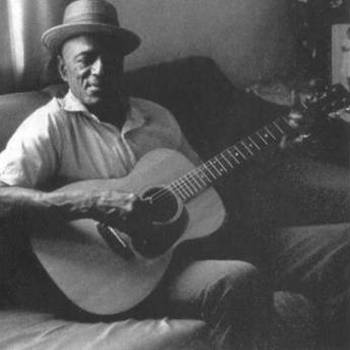
Joseph Spence_4Joseph Spence was an Andros sponge fisherman who was born on 3 August 1910, four years before the assassination of Archduke Franz Ferdinand of Austria sparked World War I, supposedly the “war to end all wars”.

When he was barely nine years old, Spence was given a guitar by an uncle who resided in the United States, and although he had not the slightest clue what to do with the thing, that instrument triggered  the foundation and direction of a long  and intriguing life of music.

He painstakingly taught himself to play the instrument, no doubt encouraged by
another uncle, who lived in The Bahamas, and who was popular and sought-after as a flute player.

Eventually young Spence, his uncle and two percussionists began playing for dances in Andros, performing rhythms that included quadrilles, waltzes, polkas, and calypso pieces.

However, no matter how much Joseph Spence loved his music, and how proficient he became as a guitarist, he obviously could hardly earn a living from his performances for friends, and so from the age of 16 he began going down to the sea in ships.

That was around 1926. The war had ended in 1918, and there was a kind of peace around the world. It was also the golden, lucrative age of sponging in The Bahamas, and especially in Andros. He became a sponge fisherman. For some reason music and the ad hoc singing of spirituals had become associated with sponging, and so Spence took his faithful guitar along on his trips at sea.

On those occasions he carefully wrapped the instrument in a cloth and kept it below deck so that the strings would not rust in the salt air. It was perhaps when he played the guitar at sea, probably with a few of the other fishermen chiming in, there was most likely slowly developed the Bahamian tradition of “rhyming”, in which you made up line after line as you went along.

Interestingly, “rhyming” has long been considered an early ancestor of rap music, in which black folk made up verses usually based on Bible stories or traditional hymns. Joseph Spence, who had grown up in the church at Small Hope, Andros in a musical Bahamas, particularly specialised in that style of singing, bringing to bear his guitar-influenced version of the style.

Thus his specialised and personalised  versions of spirituals dominated all other versions, becoming recorded and eventually performed on the international scene, particularly after the American company, Nonesuch Records, featured them prominently on releases.

Although truly unforgettable was Joseph Spence’s rendition of Down by the Riverside, the memory of which recently was so vividly and beautifully evoked by the exotic Naomi Taylor during the Sunday jazz session at Indigo, Spence had a number of other spiritual numbers as part of his expansive musical repertoire.

They were such as A Closer Walk With Thee. All Hail The Power Of Jesus Name, Be a Friend To Jesus, Living on The Hallelujah Side, Glory, Coming In On  A Wing and a Prayer, Kneeling Down Inside the Gate,  and the ever popular Bye and Bye  which so many grieving Andros families requested he come and sing at the setting-up for departed members.

Tragedy came in 1938 when a blight killed the sponge beds around The Bahamas,  and the sponge fishermen at Andros, including Joseph Spence, found themselves without jobs. Yet the musical sponge fisherman, Joseph Spence, was hardly discouraged, but with his simple faith interpreted the catastrophe in quite a different way.

Describing the blight to American writers John Stropes and Justin Segal, he explained: “God destroy all the sponge. You see, when the spongers used to bring the boat to the merchant, sinking down loaded with sponge, when they sell the sponge they still left in debt. They don’t hardly get nothing. So I figure the father say, ‘Well, I see they’re doing too much with this poor people having to kill these sponge. I better put them on something else.'”

Joseph Spence_5It has never been quite clear what else the Almighty had in store for the other fisherman, but He apparently inspired Spence to move to New Providence. A year after the sponge beds had died World War II broke out, and thousands of young Americans had to be deployed to fighting fronts in Europe and the Pacific. America had a shortage of manpower to work the farms and factories, particularly in the South.

Blessedly, in August 1940 the Duke of Windsor, who had given up the British throne for the woman he loved, arrived in Nassau to become Governor of the Bahama Islands. That was a tough economic season, when thousands of Bahamians, especially young men, were out of work.

The Duke has always been applauded for his initiative in travelling to Washington where he met with U.S. President Franklin D. Roosevelt and worked out a plan – the “Project” or “Contract” — in which Bahamians were allowed to travel and work on agricultural farms in the southeastern states.

Spence and his wife Louise took advantage of that opportunity and for two years worked on “The Contract”, his trusty guitar never far from him. That period helped his musical development tremendously, as he was exposed to American string traditions, eventually incorporating them – together with blues and country music – into his own techniques and emerging with a guitar style no one has to this date been able to duplicate.

In late 1938, some of his songs were recorded by the American folklorist Alan Lomax. However, interestingly, as Joseph Spence developed into an entertainment virtuoso, he had little regard for any kind of commercial success, and in fact owned no rights to his own works as recorded by many others..

In his time Joseph Spence popularized a  number of secular songs, leaving on them his special mark of the guitar which as any point at one time sounded for all the world as three or four different stringed instruments played in perfect accord, much like the four parts of a musical score.

In fact it has been said that because Spence often sounded as if he was playing several guitars at once, some suspicious or simply inquisitive or doubting foreign professional musicians, upon listening to Spence for the first time, were certain the Androsian had another musician hidden nearby as an accompanist.

That was the effect of Spence’s guitar expertise, though unconventional and perhaps considered out-of-tune by regular standards. Yet in his description of Spence’s rendition of “Good Morning, Mr. Walker”, the renowned Jack Viertal, wrote thus about what Spence had produced: “There is no sloppiness in this, he tunes very precisely by playing the same figures over and over again until he is satisfied, and the guitar is always tuned to the same pitches.”

Secular songs he performed utilising that unique style included such as “Good Morning, Mr. Walker”, “Conch Ain’t Got No Bone”, “Crow Calypso”, “Diamond on Earth”, “Don’t Let Nobody Burn Down”, “Sloop John B”, Burma Road”, “Bimini Gal”, Brown Skin Gal,  and “Don’t Take everybody To Be Your Friend”.

Having had his fill of travel, Joseph Spence returned to Nassau in 1946, a year after the war ended, finding work as a stone mason during the day, and at nights performing his beloved music at local hotels and upon requests aboard yachts moored in the harbour.

Yet, gradually, time was taking its toll on this unusual guitarist who for years had been celebrated far more grandly abroad than at home.

He suffered a heart attack in the mid 1970s, roughly around the time he was encountered by Charles Carter, without doubt his most faithful and adoring fan, who set out on a relentless odyssey of talking, interviewing, recording, and essentially capturing the real essence of Joseph Spence, essentially the quintessence of the real Bahamas.

But Spence bounced back from his illness, and became a night watchman at a primary school. Even then, in his mid 60s, he taught himself the piano, in fact creating on the keyboard a sound imitative of his guitar. By that time an American musical album had used some of the renderings of Joseph Spence in the widely-acclaimed compendium labelled, yes, The Real Bahamas.

Joseph Spence passed from the scene on 18 March 1984, just short of his 83rd birthday, and with his passing there expired from the cultural and entertainment stage of The Bahamas and indeed the world a stroke of musical genius ambitious aspirants will perhaps endlessly attempt to reproduce and imitate.

In his lifetime, Joseph Spence had spanned generations, plucking his guitar and singing from a boy during the first world war, through the second global conflict and the Korean War, and even through the 1960s when at least a handful of Bahamians were involved on the Viet Nam battlefronts.

He had crossed over the tenure of two powerful ruling political regimes, and indeed the year he died cabinet ministers Hubert Ingraham and Perry Christie were summarily dismissed from the government of the late Sir Lynden Pindling, and came to represent a new political culture and dispensation in The Bahamas.

At home and, intermittently abroad, Joseph Spence had seen life fully and seen it whole, and whatever else altered around him at home and abroad, he remained steady and consistent, particularly with regard to his unique music styling.

Yes, Joseph Spence, born a century ago and having passed from the scene a quarter of a century ago, was a living musical legend with a style uniquely his own, a winning style truly worthy of imitation or emulation.

Yet amongst today’s galaxy of budding entertainers, there must surely be those who will dare attempt to follow in his train. Who so dares… for what it’s worth?

P. Anthony White

5th August 2010

This article is posted here by kind permission of the children of P. Anthony White

P. Anthony White.. Online: https://pawbahamas.wordpress.com/ 

P. Anthony White on Facebook:  https://www.facebook.com/P-Anthony-White-164631210228066/?ref=ts&fref=ts


Basil Lawrence Ivan Johnson, CBE, BFM – WW II Hero

Basil Johnson

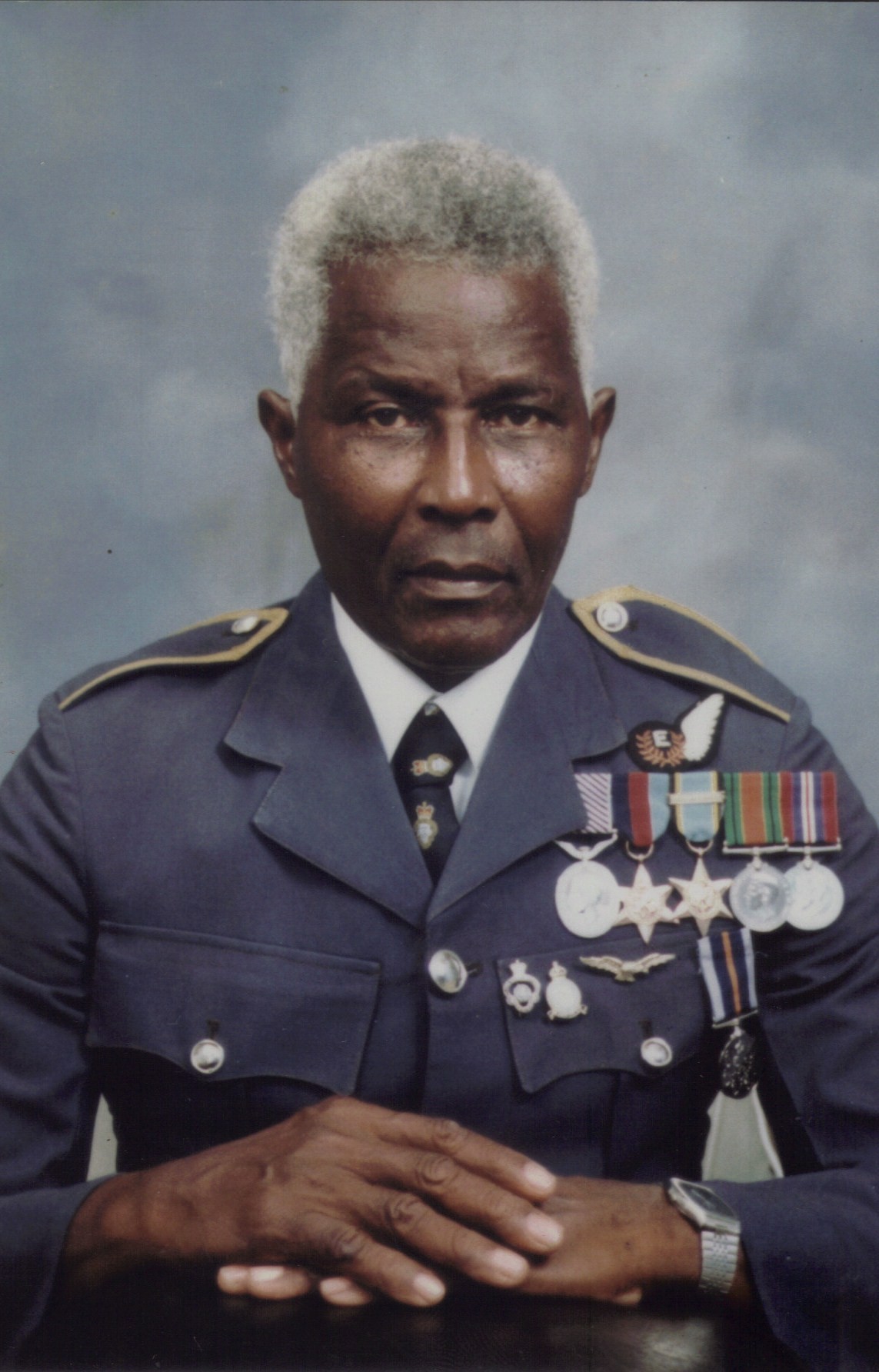
Basil Lawrence Ivan Johnson, CBE, DFM, was a lifelong faithful member of St. Agnes from his christening day shortly after his birth on 1st February 1920, to his final going home on 21st April 2005.

He attended St. Agnes Day School where his mother, Mrs. Florence Johnson of Hay Street, was a day school teacher and throughout his life he served St Agnes. He was a member of the St. Agnes Anglican Church Men and in January 2000 received an award for long and dedicated service to St. Agnes.

In June 1993 he was named in the Queen’s Birthday Honours as Commander of the British Empire for his service during World War II, his leadership skills and his active involvement in civic and religious services to his country.

In February 1999 he was named as one of the 100 Most Outstanding Bahamians of the 20th Century by Jones communications for his war service and his work with The Bahamas Branch of the Royal British Legion.

A World War II Veteran, he served with distinction in the British Royal Air Force Voluntary Reserves between 1941-1946 where he rose to the rank of Warrant Officer in the Pathfinder Force and was awarded the Distinguished Flying medal in recognition of his high sense of devotion to duty.  He was the President of The Bahamas Branch of the British Legion for forty years, and championed the Legion’s Poppy Day activities for forty-three years.

An engineer by profession, Mr. Johnson was employed at the Bahamas Electricity Corporation from 1936 to 1980.  He was married to the late Eunice Johnson and they had four children.

Adopted and Blessed by Liam Edwards

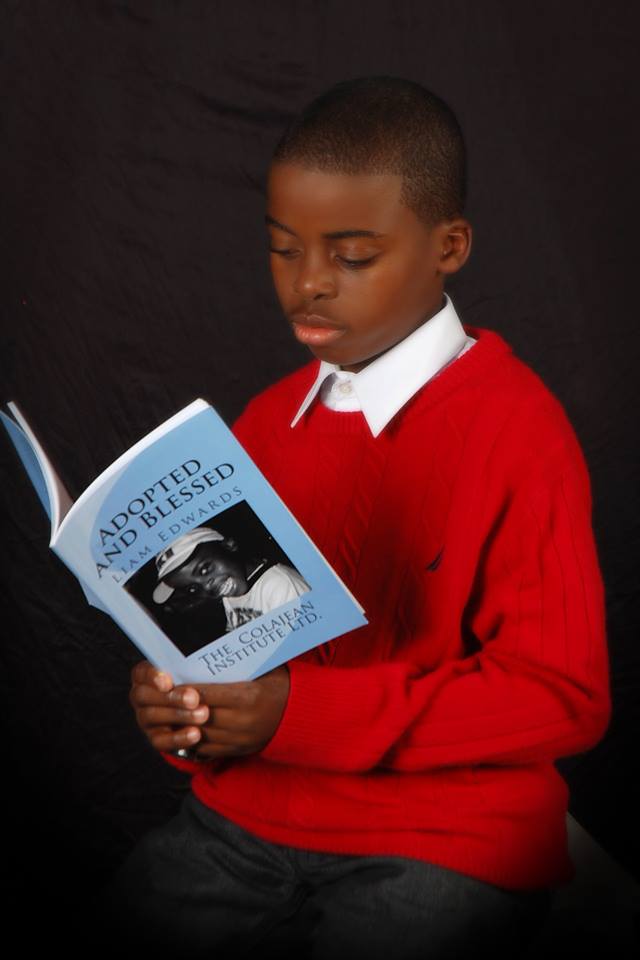
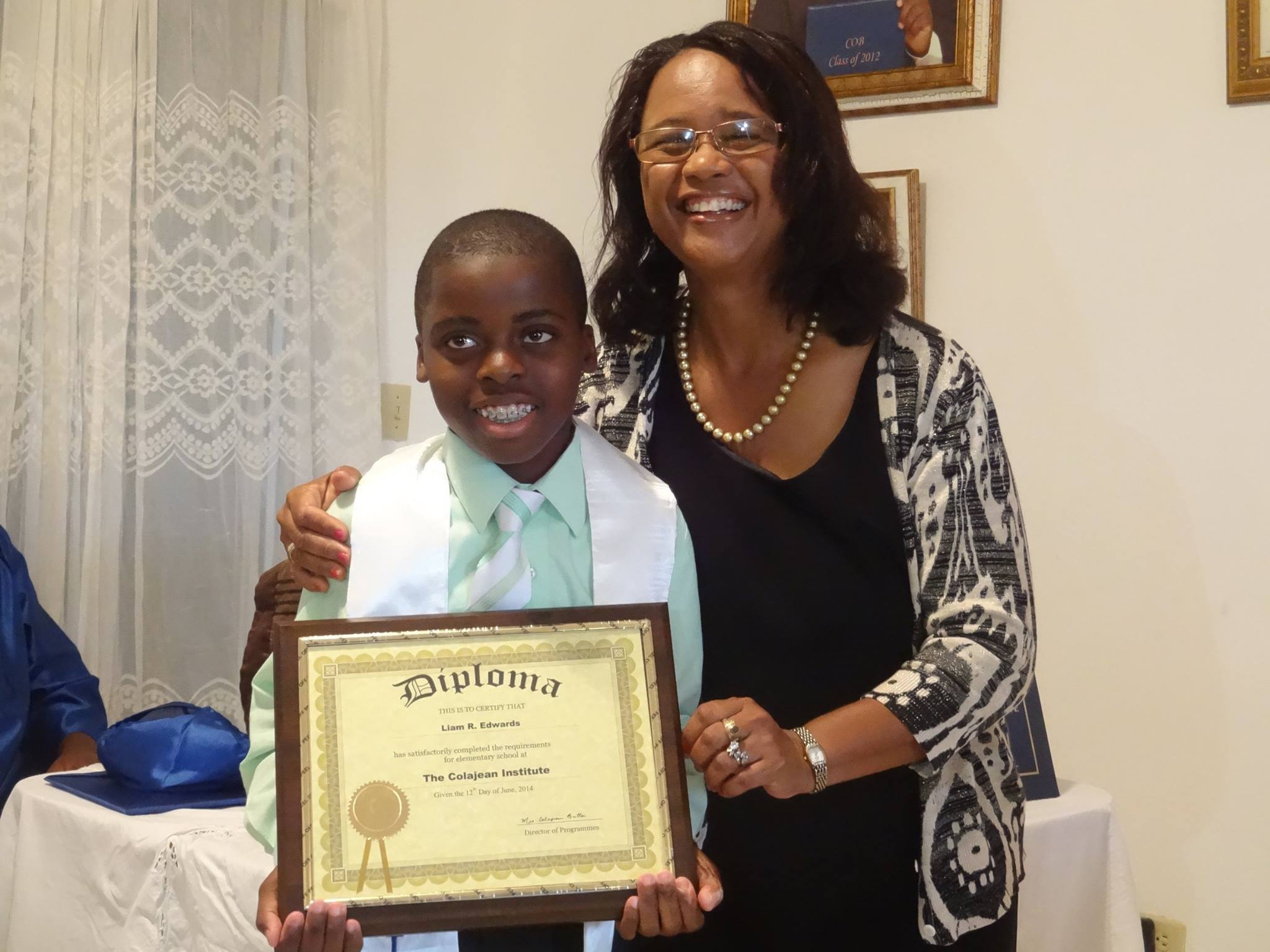
Liam reading bookLiam_Teacher_2

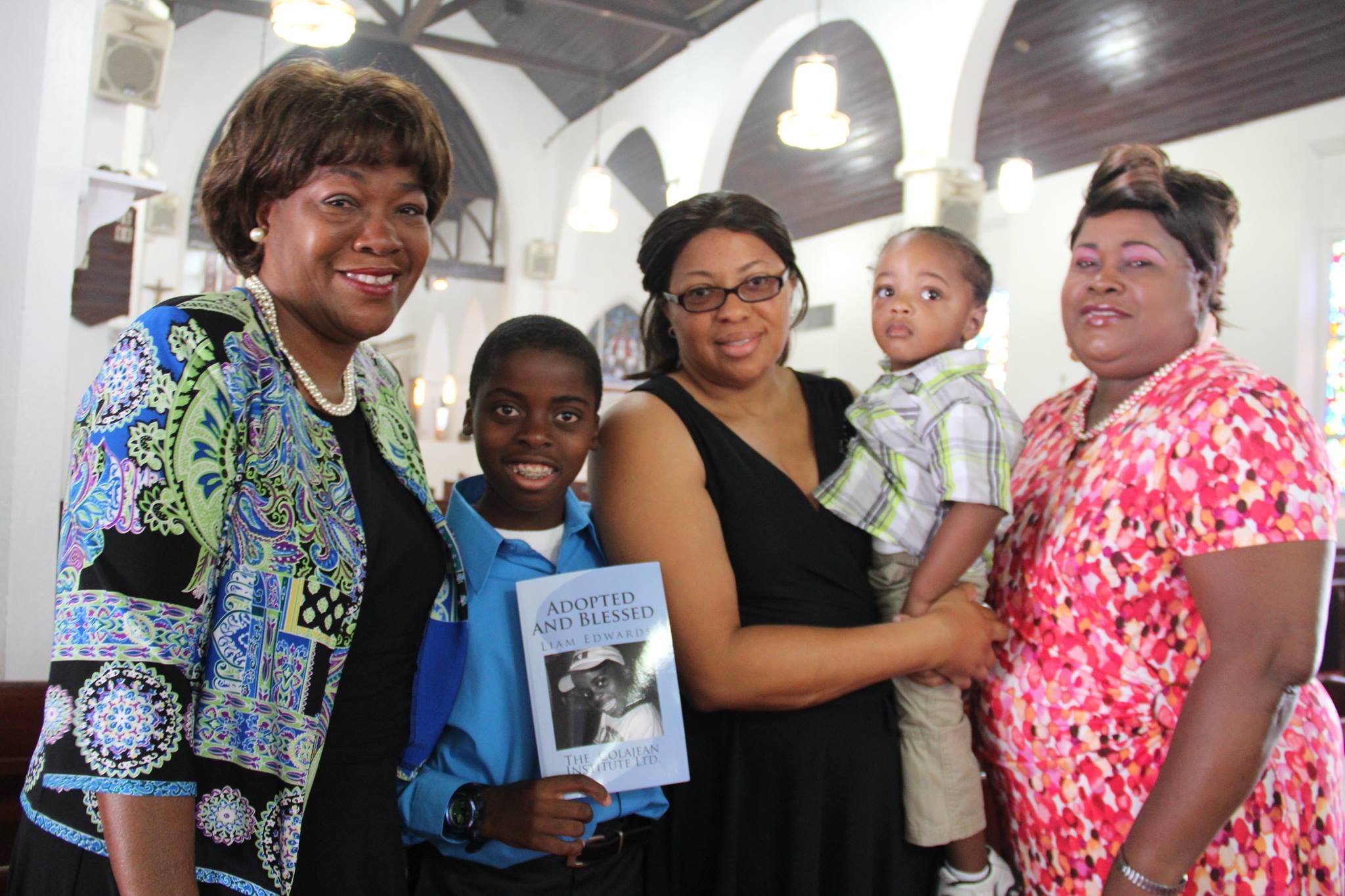
Twelve year old Liam Edwards is the author of the wonderful book “Adopted and Blessed”. He wrote an essay for school and was encouraged by his sixth grade teacher Mrs. Colajean Butler of the Colajean Institute to turn it into a book. Liam is now a 7th grade student at St. Augustine’s College (SAC). On 25th April 2015 he had a book signing at Chapter One Bookstore at The College of The Bahamas and the book is available at Amazon.com.

Liam and his family worship regularly at St. Agnes Anglican Church in Grant’s Town, New Providence, The Bahamas.

Quotes from the book:

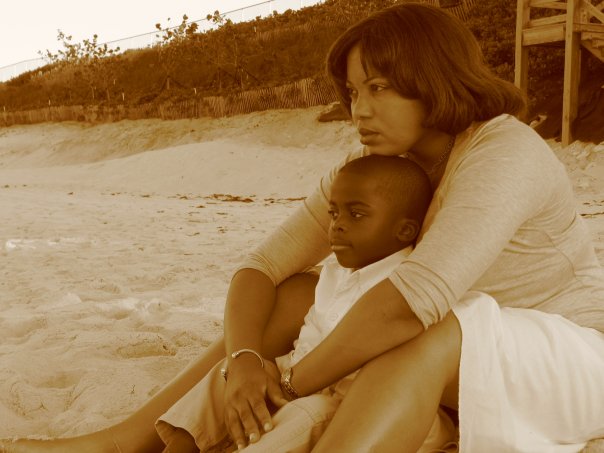
Liam_Neisa_Beach_2A family does not have to be biologically connected. A family is made up of persons who choose to love and care for one another. My mother and I are an adoptive family. An adoptive family is any family that has an adopted child or children.  My parent is my mother, but my aunts help her to take care of me.

When I was six years old, my mother took me to the beach and told me that I was adopted. She thought it was important for me to know that even though she did not give birth to me, I was her child.  Finding out that I was adopted was a big surprise. But I felt safe because I knew that my mother loved me and she was the only mother that I needed.”

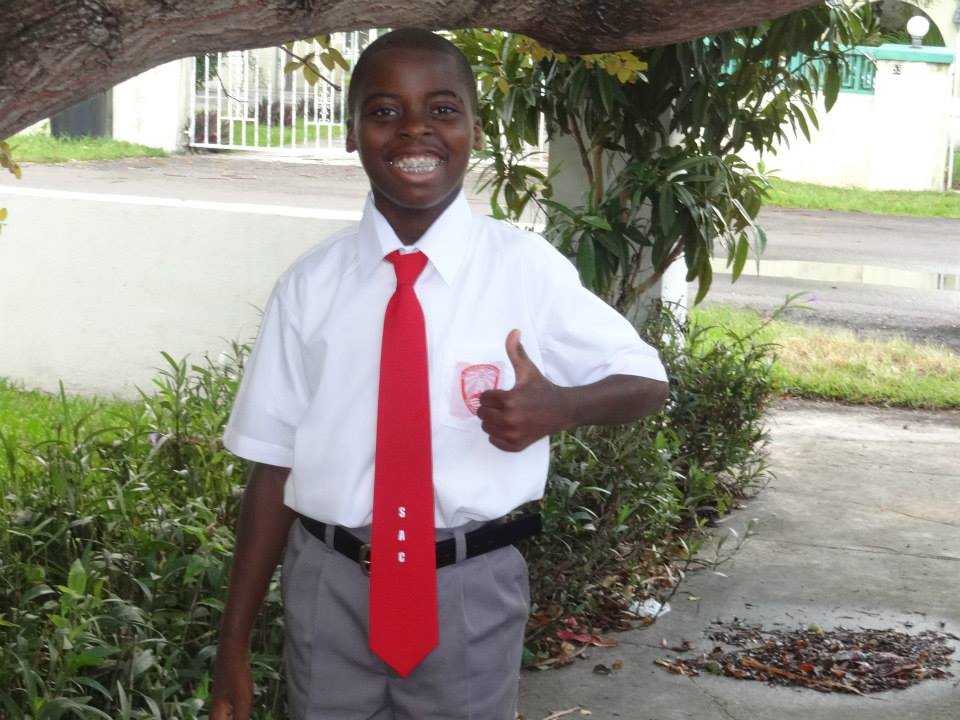
Liam_SAC School uniformI had some questions about my biological parents and my mother answered them. She also told me that whenever I wanted to talk about it we could do so.  She told me that I could talk to her about any feelings that I may have.

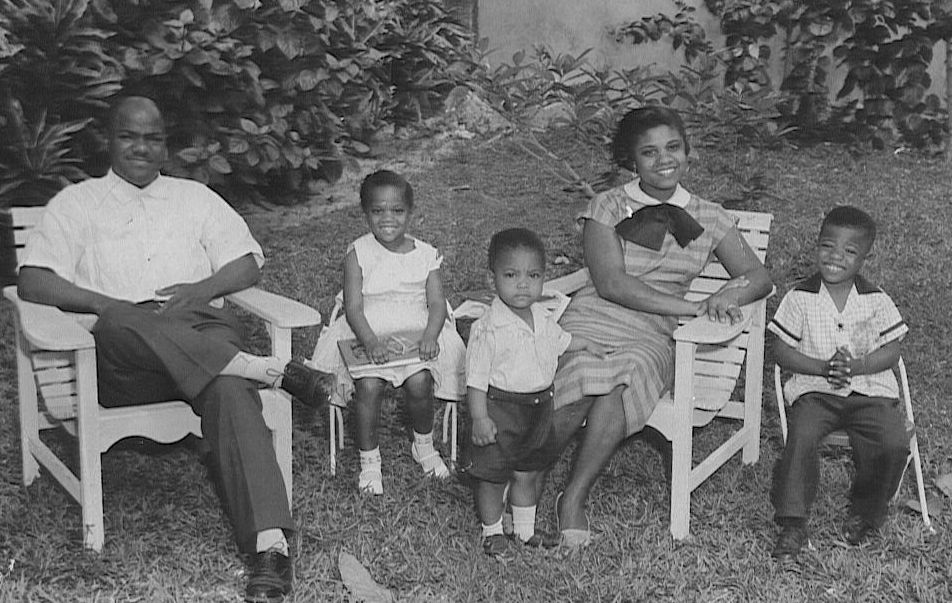
Edwards Family_2She told me that I could also write about my feelings. Even though I don’t know where my biological parents are, I have written letters to ehem. I keep these letters in a box. If I ever meet my biological parents I can give them the letters.

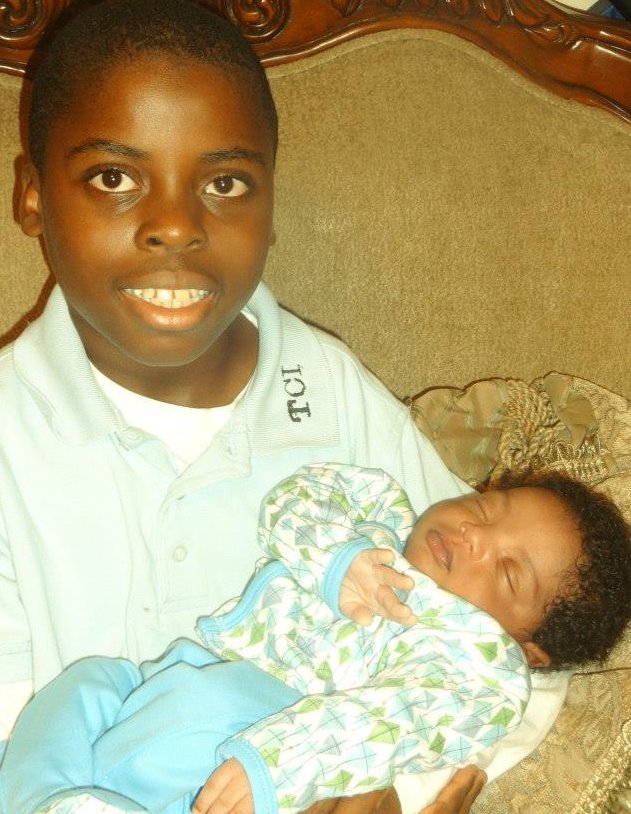
Liam_BrotherI have a baby brother. His name is Layth. He is my mother’s biological son. He grew in her body. My mother says if anyone says that he is her natural son, that makes me ‘supernatural’! He is her second son! She loves us both. She has been blessed twice. I love my baby brother. I can’t wait to teach him about life. I can’t wait to show him the good things in the world. My name means protector and guardian of God’s people. I am my brother’ Layth’s protector and guardian.

Dr. Joseph Robert Love

Bust of Dr. Joseph Robert Love by Andret JohnDr. Joseph Robert Love was the grandfather of the late Vera Love and great grandfather of the late Cynthia Love, who were both lifelong active members of St. Agnes Church.  Another of Dr. Love’s great granddaughters, Gloria Archer, lives in Freeport, Grand Bahama. Dr. Love was born in Nassau in 1839. He grew up in Grant’s Town and was a member of St. Agnes Church. He moved to the United States in the 1860s and became a priest in 1877.

In 1879 Dr. Love became the first black medical graduate of the University of Buffalo. He went to Haiti in 1881 as a medical missionary.  In the 1880s many black West Indians went to Haiti in search of work as they felt more comfortable living in a Black Republic, where they would not be discriminated against by Colonialists. Dr. Love was among a number of foreigners who became involved in Haitian politics.  He later moved to Jamaica where he also became active in politics and published a weekly paper the Jamaica Advocate.  He was elected to the Legislative Council in 1906 and served in other high offices in Jamaica.  Dr. Love was a proud black man and he always encouraged black Jamaicans to become involved in politics. Marcus Garvey, the Jamaican Black Nationalist Leader, was influenced by the writings of Dr. Robert Love, who died in Kingston, Jamaica in 1914.

The bust of Dr. Love was created and photographed by Andret John.


Sir Randol F. Fawkes

In the late 1940s and before the new road Glinton Square was opened, McPherson Street (or Bethell’s Addition as it was then called), was a quiet cul-de-sac, and the families who lived there enjoyed their closely knit little enclave.

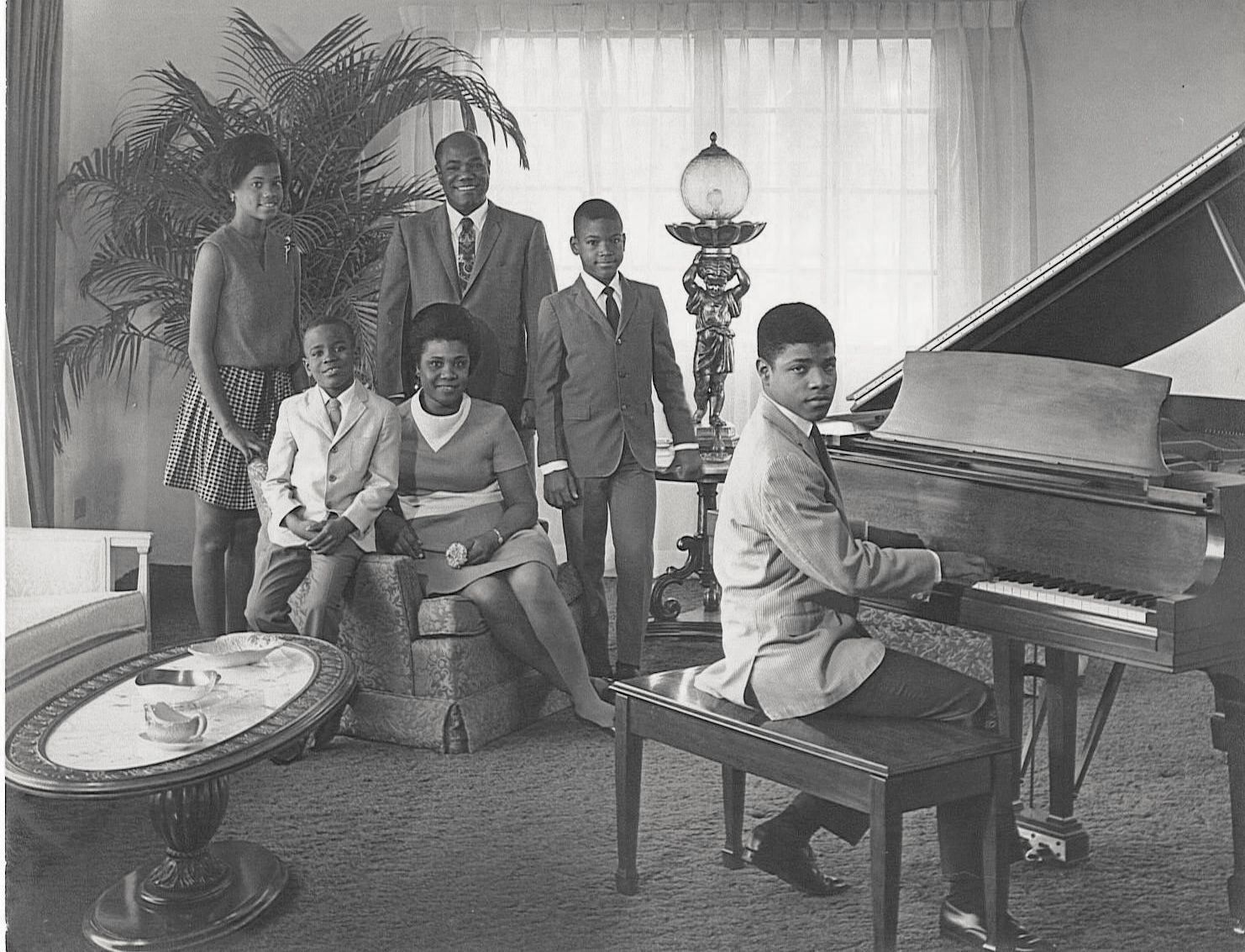
Fawkes_family_1958Sir Randol F. Fawkes is regarded as the Father of Labour in The Bahamas.  Although small in stature he was a giant of a man who suffered many personal hardships and adversities in his fight to uplift the down trodden workers of The Bahamas.  He was a very pleasant man who greeted everyone with a smile and he always walked briskly.

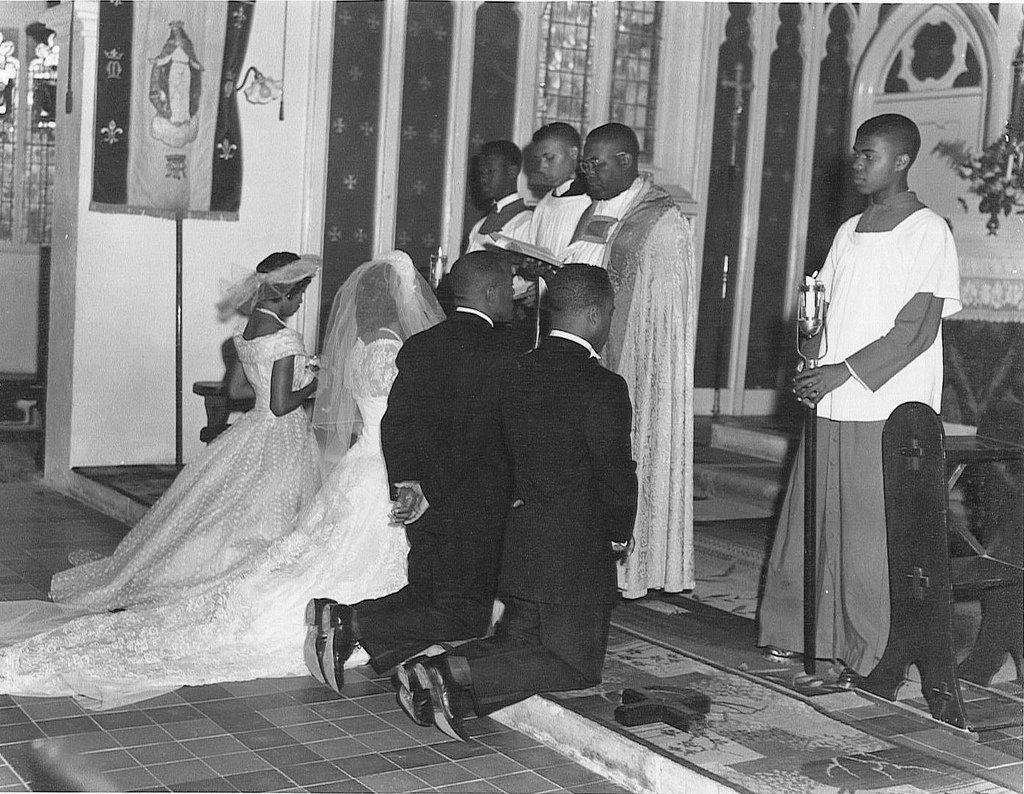
FawkesWeddingRandol Fawkes was called to the Bar in 1948.  In June 1951, he married the former Jacqueline Bethel at St. Agnes Church and the ceremony was performed by Canon Milton E. Cooper, with William E. Thompson serving as an acolyte.  Randol and his wife had four children, Francis, Rosalie, Douglas and David.

Early in his practice as a lawyer Fawkes became aware of the inequities with regard to representation of the poor before the legal system. He realized that the Bar Association was not effective and, with the help of Norman Manley and Basil Rowe of Jamaica, he got a copy of the Jamaican Bar Association constitution and adapted it to the Bahamian situation.  He fought hard for the establishment of Court of Appeal.  He also petitioned for the abolition of the all white male jury system.   Following a court case in which he represented a Civil Servant, Fawkes was suspended from practicing law for two years. His Notary Public License was revoked and the Board of Education would not allow him to carry out his duties as the duly elected Chairman of the Parent-Teachers’ Association of Western Senior School.

As result of the foregoing, in 1954 he left his young family and travelled to New York where he held a number of menial jobs.  Upon his return to The Bahamas and the restoration of his license to practice law, he continued undaunted in his struggle for the poor man.  He described himself as David fighting against the formidable power structure of the white minority Goliaths, who were determined to keep blacks enslaved through poor wages and lack of education.

Magnificent SixFawkes ran on the Progressive LIberal Party (PLP) ticket in the 1956 election and he was one of the Magnificent Six PLP candidates who won seats in that historic election. Seated l-r: Cyril Stevenson, Lynden O. Pindling, Clarence Bain; Standing l-r: Samuel Isaacs, Milo B. Butler and Randol Fawkes..

Fawkes was one of the leaders of the 1958 General Strike which came about, yet again, because of the blatant discrimination of the minority white ruling class.  Late in 1957, The Bahamas Government granted the white owned tour companies exclusive franchises to transport tourists to and from the newly constructed Nassau International Airport.  As a result of this a group of taxi drivers led by Clifford Darling (later Sir Clifford and Governor General) and others used their taxi-cabs to block all access to and from the airport.   In 1958 the members of the Taxi-Cab Union sought the assistance of The Bahamas Federation of Labour in their fight with the tour company operators.  On 13th January 1958, Randol Fawkes and Lynden Pindling and others travelled to the various hotels and gave the order for work to stop.  The strike spread to all sectors and finally came to end on 29th January 1958, after the Governor brought representatives the government, the taxi drivers and the tour companies together.

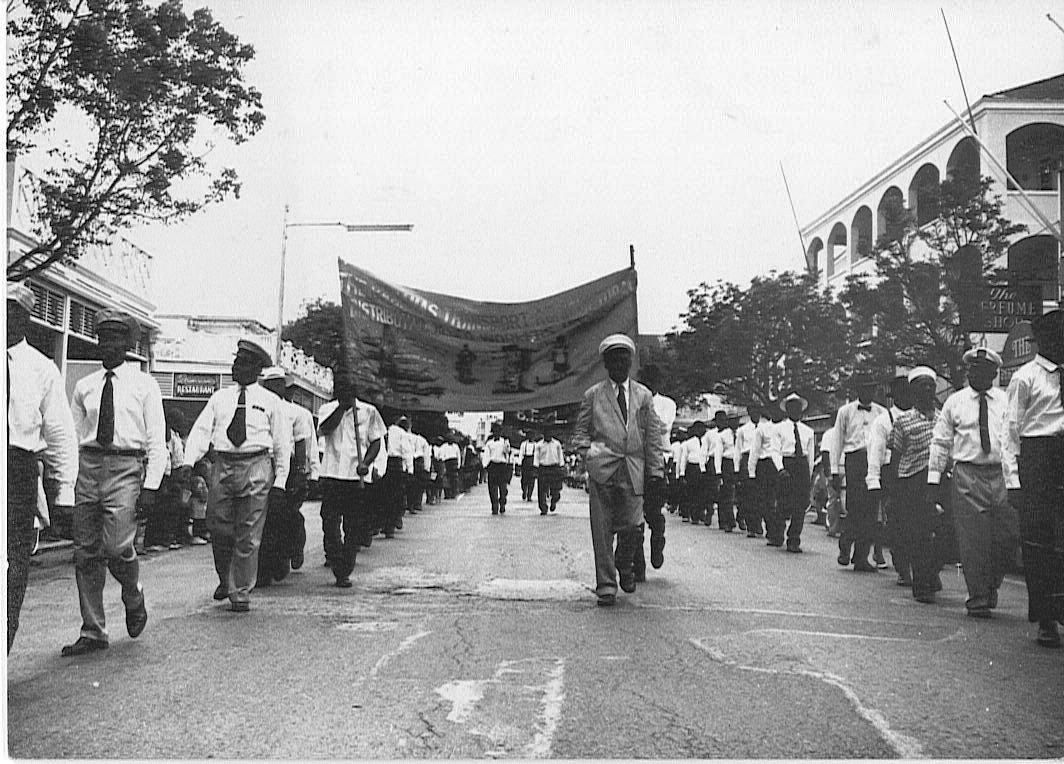
Labour Day 1962 YBut that was not the end of Fawkes’s problems. Sometime later in 1958, he was charged with trespassing and disorderly conduct because of his having met with mill workers in Abaco to hear their grievances concerning their poor working conditions and pay.  I don’t know when the accidents occurred but, my sister-in-law’s father, James Roy Williams and his brother Reginald, lost a hand and foot respectively in the Abaco mills and they had no recourse.   Fawkes was given a suspended sentence by Magistrate Maxwell J. Thompson, and bound over to keep the peace for three years.   However, that did not deter him and he proceeded to have a meeting at Windsor Park on 8th August, 1958, the same evening of the day on which he was bound over to keep the peace.   The following day he was arrested and charged with sedition (treason) and hauled off to jail.

He was brought to trial before a white Judge and a jury of eleven white and one black man.   Fawkes was represented by Vivian O. S. Blake of Jamaica, who fought an uphill battle on behalf of his client, which ultimately resulted in the Judge ordering a not guilty verdict.

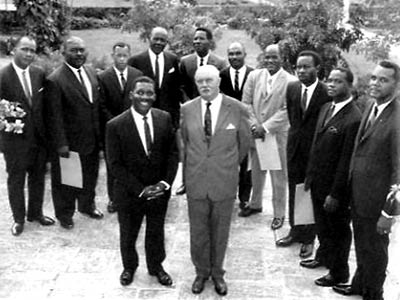
First PLP GovernmentIn the historic January 1967 general elections, the PLP and UBP parties both won eighteen seats.  Randol Fawkes who had run on the Labour ticket also won and Alvin Braynen, a white man who had fallen out with the UBP won as an independent, so the balance of power hung in the hands of these two gentlemen. Fawkes was persuaded to join with the PLP and thus was born the PLP-Labour Coalition Government with Alvin Braynen accepting the position of Speaker of the House. Pictured are:  Front l-r, Lynden O. Pindling, Premier and Sir Ralph Grey, Governor; back l-r: Cecil Wallace-Whitfield, Milo B. Butler, Arthur D. Hanna, Clarence Bain, Jeffery Thompson, Carlton Francis, Randol F. Fawkes, Warren Levarity, Curtis McMillan and Clement T. Maynard.

fawkes_family_1967_bThe Fawkes family moved from McPherson Street to their estate, “La Campanella” on JFK Drive where Lady Fawkes still resides. Their former house at McPherson was later occupied by the R. M. Bailey tailor business.

In an 18th May 1998 interview with the magazine, Consumerism Today, published in its June/July 2001 issue under the heading: “Profile of a Great Bahamian” Sir Randol is quoted as follows:

“Today, both political parties are trying to ride the bandwagons of the TUC and others.  As a result they (the Labour movement) are not as effective as they can be, for the poor people.  I hope there will be another Bahamas Federation of Labour, but is takes a long time to build a man.”

And further:

“The only advice I can give them is that they have to study Business Administration.  How they can bring the administration together without losing any power or sovereignty of separate unions.  In fact, you said they are not united, and asked me for advice for them; well they should unite and stay clear of these political parties.  Because, no matter what they do the political parties want to get on the bandwagon.  And in getting on the bandwagon, they adulterate the aspirations of the labour movement, and eventually they will destroy it.”

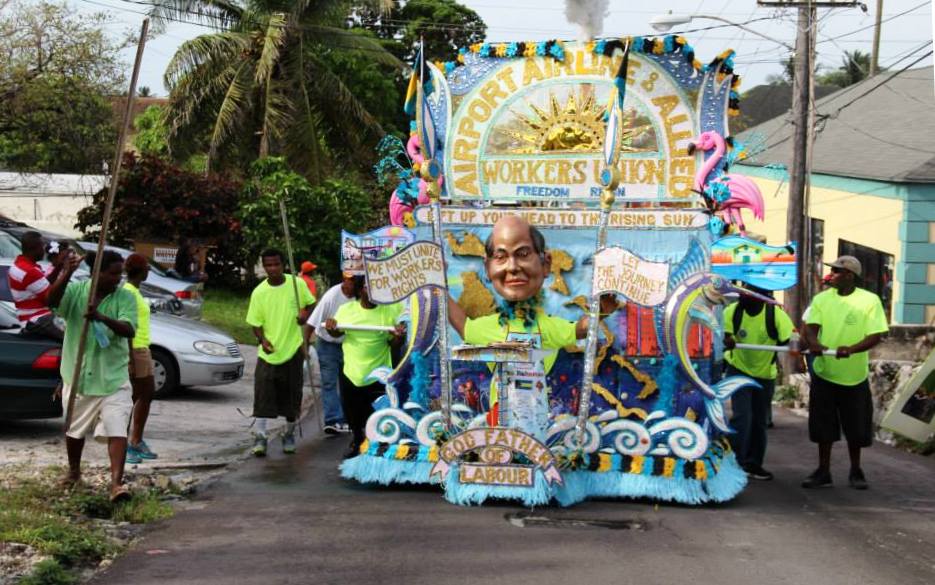
Sir Randol fought for and was the author of the Bill that established Labour Day as a public holiday.  The first official Labour Day was celebrated in 1962.  Yet, forty-nine years later in June 2010, P. Anthony White wrote concerning Randol Fawkes:

“Six years were to elapse before a stubborn, shortsighted Bay Street would reluctantly cause the first Friday in June each year to be observed as Labour Day and a public holiday.  But it was Randol Fawkes’s dream and desire for the workers of The Bahamas, and it came about largely because he, even more stubborn than Bay Street, harboured a faith that would, indeed, one day move the mountain.  “Yes, Sir Randol Fawkes was the determined man who made it all happen.  The nation has not yet completed its task of according him his deserving reward and recognition.”

Other great Bahamians and, in my estimation some not so great, have had public buildings, schools, highways and monuments named in their honour. Yet successive Governments of The Bahamas have failed to bestow any such honour in memory of The Father of Labour.

ADDENDUM

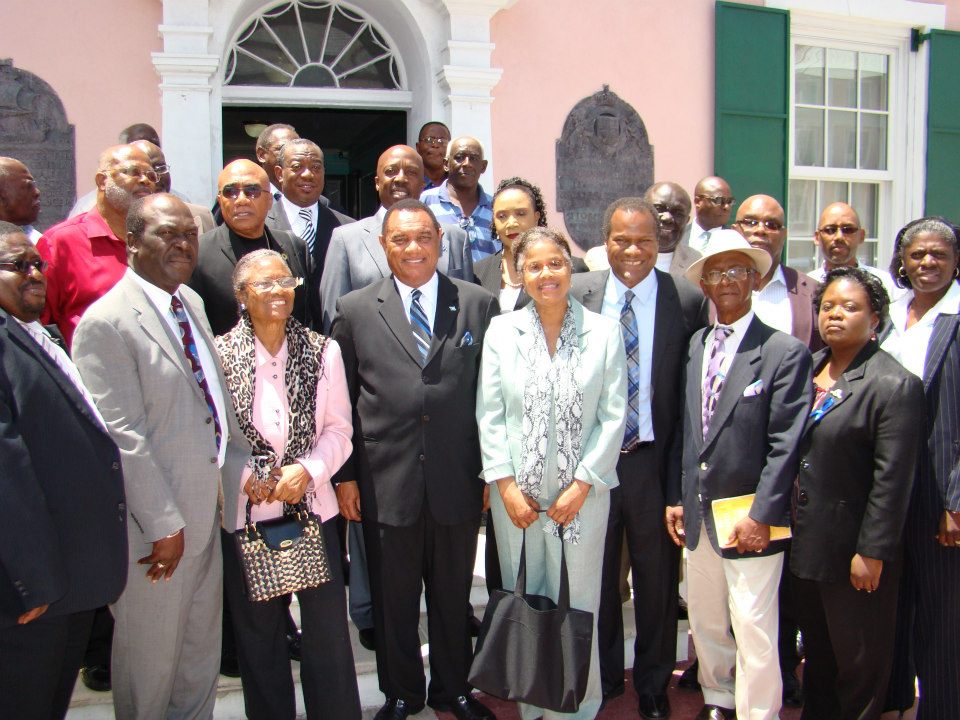
Randol Fawkes Labour Day_2Outside parliament following debate on  Randol Fawkes labour dayIn April  2013, forty (40) years after his pivotal role in the attainment of Majority Rule, the Government of The Bahamas passed a Bill to rename Labour Day as Sir Randol Fawkes Labour Day, which was celebrated on Friday, 7th June 2013.