Conclusion: Xenophobia

By Rosemary C. Hanna 

Too many Bahamians suffer from xenophobia which comes from ignorance of their history or the deliberate distortion of that history by some who refuse to recognize and acknowledge the contributions of many of the persons upon whose shoulders we stand.   When I was growing up under Colonialism we were taught English history and brainwashed into thinking that anything English or white was better than we Bahamians were.  I well remember the days when I was at Western Junior School when we, the descendents of black slaves, were herded down to Clifford Park to celebrate Empire Day, wave the Union Jack and sing: “Rule Britannia…. Britons, never, never, never shall be slaves!”  Then we were rewarded with a little brown bag of goodies.  At the same time, discrimination was the order of the day and blacks were not allowed to enter certain establishments or be on Bay Street after a certain time, without explanation.

It is a sad reality that in the year 2011 some people still suffer from self-loathing and are pre-occupied with skin colour by burning themselves with bleaching creams and wearing ridiculous hair weaves and extensions so that they can appear to have “good” hair.

Many of us are also unaware of the bonds that tie us to our brothers and sisters to the South in the Caribbean.  The heritage of many prominent and ordinary Bahamians of the past is rooted in the Caribbean.  Former   Prime Minister, The Right Honourable Sir Lynden Oscar Pindling’s father was a policeman recruited from Jamaica; the father of the former Deputy Prime Minister, Sir Clement Maynard was from Barbados and his wife’s parents Dr. Roland Cumberbatch and Meta Davis Cumberbatch were from Trinidad; the family of Stephen Dillett, after whom a school is named, was from Haiti; the father and mother of the current Governor General Sir Arthur Foulkes came Jamaica and Haiti respectively. The Royal Bahamas Police Force was also largely built upon recruits from the Caribbean Islands such as Barbados, Trinidad and Jamaica.

Many of the West Indians who came and established families in The Bahamas were educated people who were also proficient in other trades.   For example R. M. Bailey of Barbados, who was educated at Codrington College, was also a master tailor.  He arrived in The Bahamas in 1899 and made this his home.  It was he who pushed for the establishment of a high school for black children that resulted in the establishment of the Government High School in 1925, which started with five students, including two of his children, Millicent and Robert.   Mr. Bailey’s grandchildren include Rosemarie Thompson (widow of Archdeacon William E. Thompson), attorney Carmen Bostwick and Cleophas Adderley, attorney and composer of the first Bahamian opera “Our Boys”, who is also the Director of The Bahamas National Youth Choir. Cleophas is also a tailor.   The R. M. Bailey Senior High School is named in honour of Mr. Bailey.

Americans, Muriel Eneas and Mabel Walker were among some other prominent educators who came to The Bahamas from elsewhere.   When these women came to The Bahamas, the Colonials looked down upon American degrees as inferior to the British.   However, Muriel Eneas, Mabel Walker and others like Laura Ritchie of Jamaica gave their best to their adopted country.   Mrs. Eneas taught at St. John’s College and became Principal of St. Anne’s High School.  Mrs. Walker was Principal at the Woodcock Primary School and founder of The Bahamas Teachers’ Union.  Muriel Eneas and Mabel Walker were also founding members of the women’s suffrage movement.  Mrs. Ritchie was Principal of St. John’s Preparatory School and she opened her home to give private lessons to children.   Vincent Wilson of Barbados, who came to the Bahamas as a police recruit from Barbados, married Cloretha Munroe, a young woman from Ragged Island, whom he met at St. Agnes Church.  Vincent later became Deputy Principal at T. G. Glover Senior High School.  He was also the longest serving Police Force Education Officer.    All of the foregoing, and many others, raised beautiful Bahamian sons and daughters who are continuing to build upon the foundation laid by their parents.

The father of former Financial Secretary to The Bahamas Government, Ruth Maycock-Millar and former PLP MP, The Honourable Alfred Maycock was among a good number of fellow Barbadians who settled in and developed the Mason’s Addition area.   Many persons are also unaware of the ties between Haiti and The Bahamas, when Inagua was the hub for shipping.

Dr. Joseph Robert Love was born in Grant’s Town and he was also a member of St. Agnes Church.  He was the first black to graduate with a medical degree from the University of Buffalo and spent time in Haiti, firstly as a medical missionary, and later becoming very involved in Haitian politics.  During this time people from other parts of the Caribbean migrated to Haiti.  Dr. Love later moved to Jamaica and he influenced the great Jamaican Black Nationalist, Marcus Garvey.  There were Bahamians whose ancestors had moved to Haiti many years ago, including some Hannas, who returned to The Bahamas when the government changed in 1967 and reclaimed their Bahamian citizenship.

Many thousands of Turks Islanders also came to The Bahamas and made significant contributions to the development of the country.   I found it very interesting when visiting the Turks Islands, that they played more Bahamian music in their public places than we do in The Bahamas.

Many prominent persons, including:  Governors General, ambassadors, parliamentarians, religious leaders, educators, doctors, lawyers, businessmen, engineers, accountants and other professionals, came from Over-The-Hill and they, along with other ordinary and upstanding individuals, were the building blocks upon which our nation was built.

Researching this book has been an educationally exhilarating experience for me.  I was truly amazed by and am grateful for the positive and enthusiastic support of all of those persons who allowed me to come into their homes, told me their stories, and provided the beautiful family photographs that are pictured in the book.    However, I have only scratched the surface and there are many more stories that need to be written.  So I encourage readers to record your own stories for future generations.
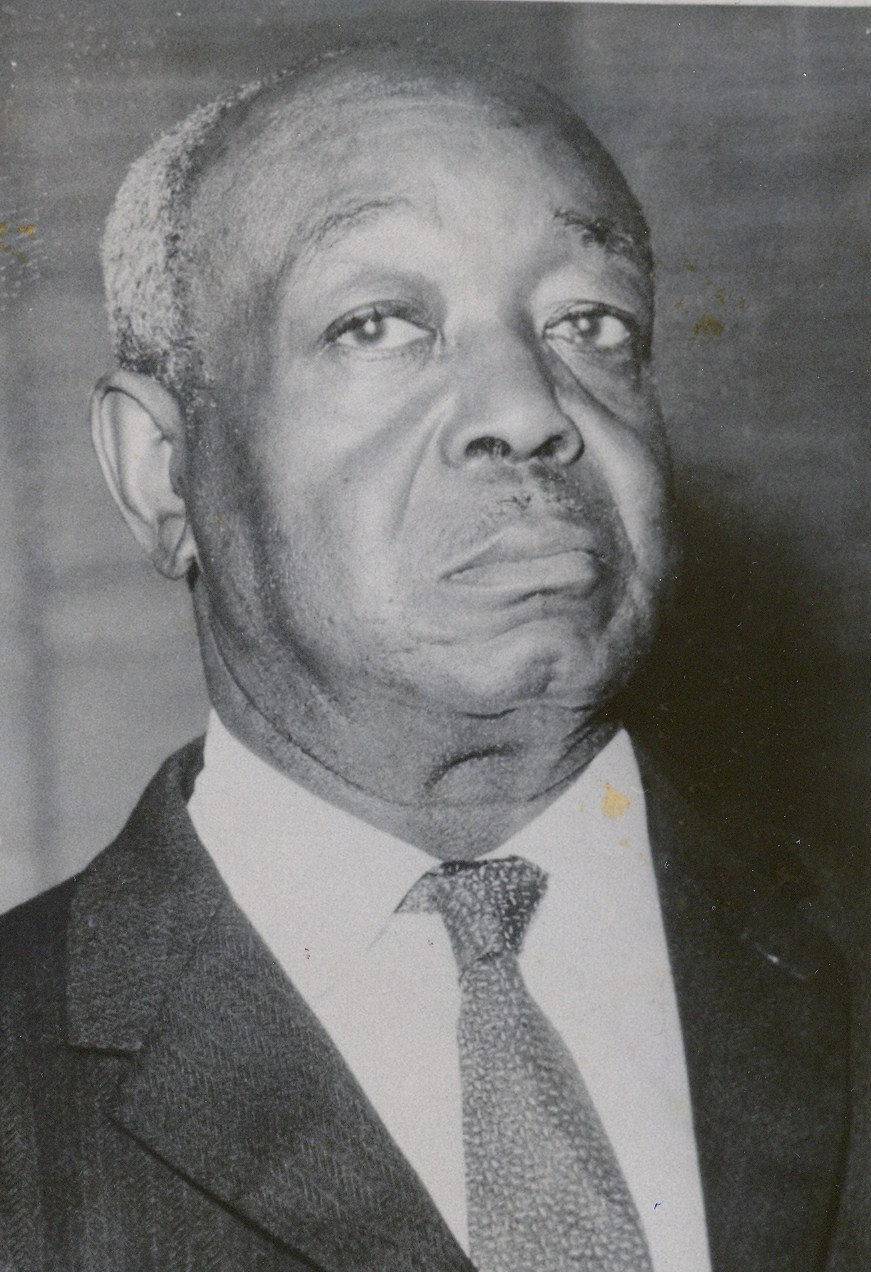


Dr. Claudius Roland Walker, M.D. – Bain Town

Claudius WalkerClaudius Roland Walker, MD, was an extraordinarily brilliant man who was born and lived most of his life in Bain Town.   He was born on 6th May 1897, and he was an only child.  His parents were Claudius F. and Patience Walker (nee Robinson).  He was an accomplished musician who played the organ, piano and double bass, and he was a linguist who spoke Spanish, French and German.  He also taught mathematics and established the Bahamas Technical Institute, an evening school for adults.  Classes were held at St. Agnes Schoolroom.

He attended the Boys’ Central School in Nassau and he furthered his education at the Rhodes Preparatory School and College of Liberal Arts in New York.  He obtained a Bachelor of Science Degree from Howard, Washington, D.C.   It was in a German class at Howard University that he met Mabel Holloway of Greensville, South Carolina. He subsequently entered Meharry medical School in Nashville, Tennessee and graduated in 1929.

Aside from all of his professional and academic accomplishments, Dr. Walker was also a builder and he constructed the Reinhard Hotel at the corner of Blue Hill Road to accommodate black visitors who were not allowed to stay in the established hotels because of race discrimination.  In the late thirties he moved his medical office which was located in rooms on the South side of his home. He later moved his practice to the ground floor of the hotel where there was also a pharmacy.

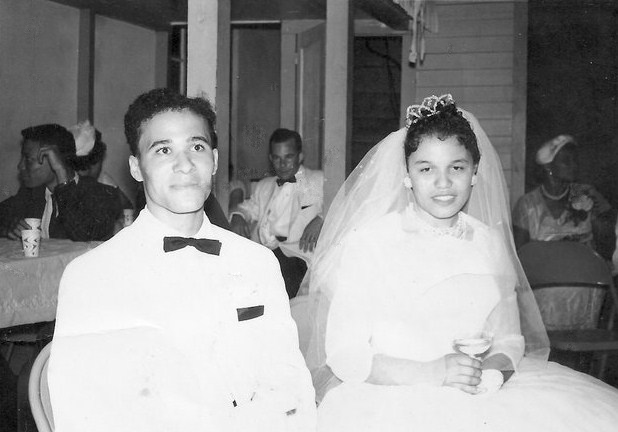
The Reinhard Hotel was also the venue for wedding receptions and other social events.   David and Annette Cartwright, who were married at St. Agnes Church, are pictured at right at their wedding reception at the Reinhard Hotel in 1961.   The hotel was also the headquarters for the Progressive Liberal party (PLP) leading up to the historic 1967 elections.  I was working in the office as a volunteer and this is where I first met Arthur Foulkes and Oswald Pyfrom who were in charge of the headquarters office. Cartwrights_Rheinhardt

In the aftermath of the Burma Road Riot on 1st June 1942, Dr. Walker was chosen by The Bahamas Federation of Labour to be its spokesman to address the Duke of Windsor’s Committee on behalf of the Bahamian workers.  In his book, “The Faith That Moved the Mountain”, Sir Randol Fawkes quotes Dr.  Walker as he spoke on 3rd June 1943:

“We Bahamians are the sons and grandsons, the daughters and granddaughters of those who arrived.  We seek to reclaim that which was snatched from us over 300 years ago – our dignity and self-respect as human beings.

“During the interval between then and now, we have become the most brainwashed people in the world.  You see, teachers and missionaries did not tell us that there was a period in ancient history when Rome was barbarous and Greece slept but Africa flourished with its own governments, economic systems, and military forces, religious and social organisations.  Indeed, in the very beginnings of mankind, the African nation of Egypt occupied a central role in world history.

“We were taught that our ancestors contributed nothing to the advancement of civilization.  Yet it was common knowledge that Africans were the first to practice agriculture – the first of the cultures – along the banks of the Niger River. Neither did they tell my people, Gentlemen, that the earliest known pottery was created in Africa more than thirty thousand years ago, during the Paleolithic (stone) age.

“…It is a psychological truism that an oppressed and rejected people soon come to see themselves through the eyes of the oppressors.  As a result, the black man soon learned to hate himself and others in his own race.”

Former Deputy Prime Minister and later Governor General A.D. Hanna describes Dr. Walker as the bravest man he ever knew considering the fact that, during the darkest days of discrimination, he fought alone against Bay street in his efforts to improve the condition of blacks in The Bahamas.  He kept the people informed by producing his newspaper, The Voice, and gave it away if they could not afford to pay.  In hindsight, AD thinks that the PLP should have embraced Dr. Walker.

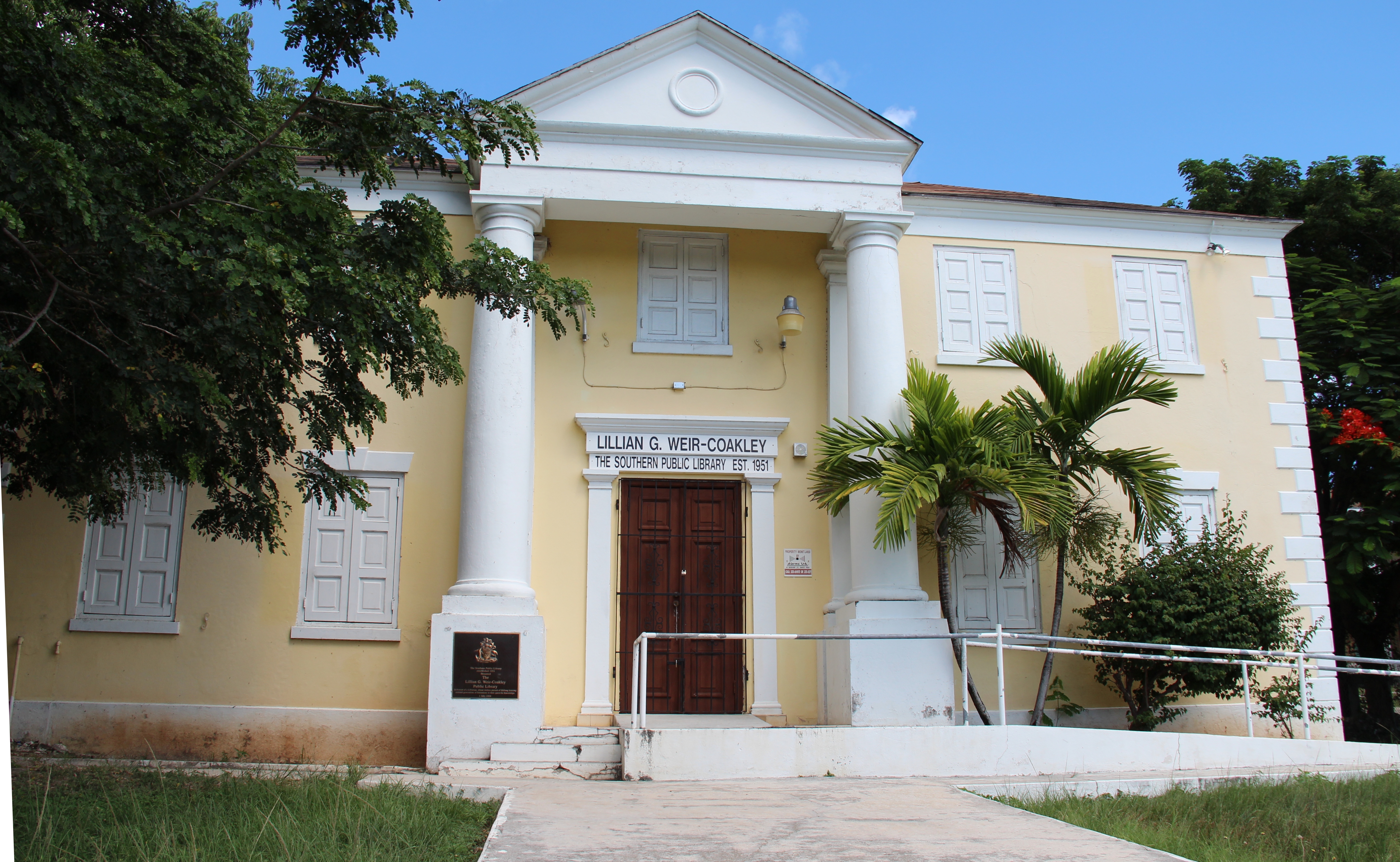
IMG_5439During the forties and fifties, Dr. Walker was one of the representatives for the Southern District of New Providence in the House of Assembly. He pushed for the establishment of the Southern Public Library which took place in 1951. The library is located on the North side of the Southern Recreation Grounds.  In 2004 the name was changed to The Lillian G. Weir-Coakley Public Library in honour of the long time librarian who assisted generations of Bahamians in their quest for knowledge.

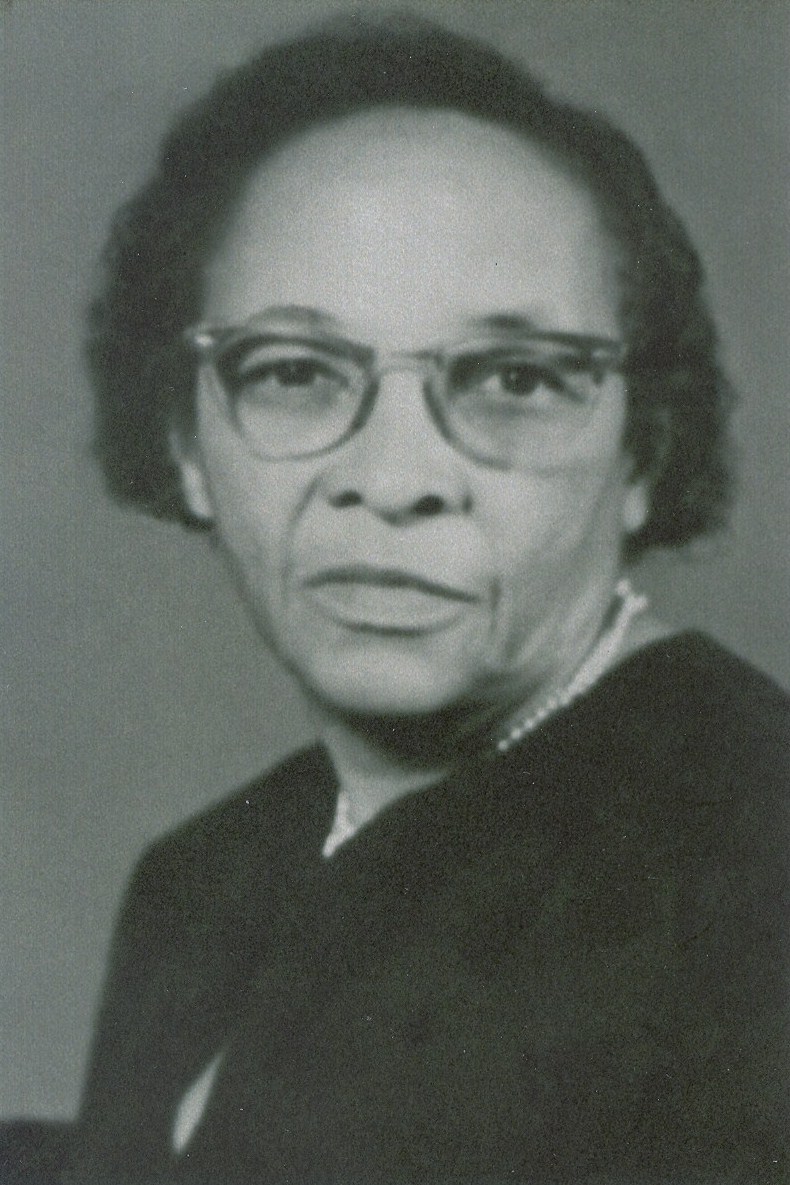
Mabel Walker_2Mrs. Walker was also an active member of and Secretary in the Elks Lodge, Curfew Temple.

Dr. Walker and Daddy were childhood neighbours and friends in Bain Town. They were both the only child of their parents, attended St. Agnes Church and played the organ, and they were known as the “Princes of Hospital Lane.”   Claudius Walker was also a tailor.  When his children were going off to college he made his sons’ suits and the winter coats for his daughters.

Dr. Walker was the leader in the redevelopment of Scottish Free Masonry in The Bahamas in 1964.  He travelled to Scotland to obtain permission to start the Lodge of St. Michael which initially fell under the jurisdiction of the Jamaican Lodge.  Some of the founding members of St. Michael’s Lodge were my uncle, Charles Butler, Ulric J. Mortimer, Sr., Lester J. Mortimer, Arthur Richardson, Mark Murray and Sidney Whitfield, the latter being the only survivor of the names mentioned.

Two schools, C. R. Walker Senior High and the Mabel Walker Primary School were named in honour of Dr. & Mrs. Walker.  The Teachers’ Union Hall is also named in honour of Mabel Walker.


Foreword – “Pictorial History and Memories of Nassau’s Over-The-Hill”

By Sir Orville Turnquest, GCMG, QC, LL.B., JP

Former Governor-General of The Bahamas

(A Grant’s Town Boy from “Over-The-Hill”)

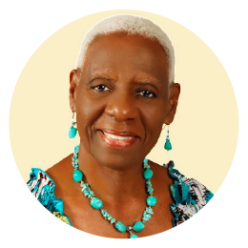
Sir Orville TurnquestI feel very honoured to have been given the privilege to read the Manuscript of this detailed text by Ms. Rosemary C. Hanna, and invited to write this Foreword.  This volume contains references to traditional Grant’s Town family names, such as Bullard, Coakley, Hanna, Johnson, Rolle, Turnquest and Williams.   Such surnames and many others were the names of well-known established families who for many years resided “Over the Hill” in Grant’s Town, in the Southern District of the Island of New Providence.

The story of “Over the Hill” is the history of a proud and aspiring people.   It is the story of freed slaves who had been forcibly taken from their native land in West Africa and settled in a new land across the Atlantic Ocean.   It is a story of the preservation of many aspects of an ancient culture, combined with the acquisition of modern skills, and quality education, in order to achieve success in a new land.   It is a story of an entire area in the centre of the Island of New Providence – an area which was a distinct Settlement known as Grant’s Town, and which was once the mecca of future leaders, builders, educators, politicians, business and professional people, as well as musicians, ordinary artisans and workers, all of whom lived there and developed the area as they established a fine record of black families and proud neighbourhoods.

Sadly, that reputation has changed in recent decades, as “Over the Hill” is now fast becoming a symbol of the deterioration of those same neighbourhoods “Over the Hill”.     It is still important, however, that as we reflect from time to time on who we are, we should also recall where we have come from.  In those early days, if you lived or hailed from an area like Grant’s Town “Over the Hill”, you were not only a black or coloured person, but you were also underprivileged and attached with an automatic badge of social inferiority and subservience.  Hence, one frequently was dismissed with the assessed and rhetorical condemnation, adapted from the age-old Biblical question: “Can any good thing come out of Grant’s Town?”

Apart from being the business and civic hub of the Island, the Town of Nassau was also the residential area of the white and mulatto population, as well as a middle-class minority comprising the racially mixed and most of the then affluent population.   As the population grew, these City dwellers correspondingly extended their residences both eastwards and westwards from the City limits, along or near the northern waterfront of the Island, but never southwards over the hill ridge……no, never “Over the Hill”.  On the other hand, the mass of the black population also expanded, as their numbers increased, into areas outside the original “Over the Hill” neighbourhoods into what became known as the new Subdivisions such as Coconut Grove, Shirley Heights, Culmersville, Sears Addition, Greater Chippingham, Pinewood Gardens and others.  “Over the Hill” was essentially a geographic description, but it was also a culture, a concept, an identity, a heritage, and a way of life.

Again, I am happy to congratulate the Author, Ms. Rosemary Hanna, for this historical compilation which should prove not only of great interest but of great sociological value in tracing our Bahamian roots.