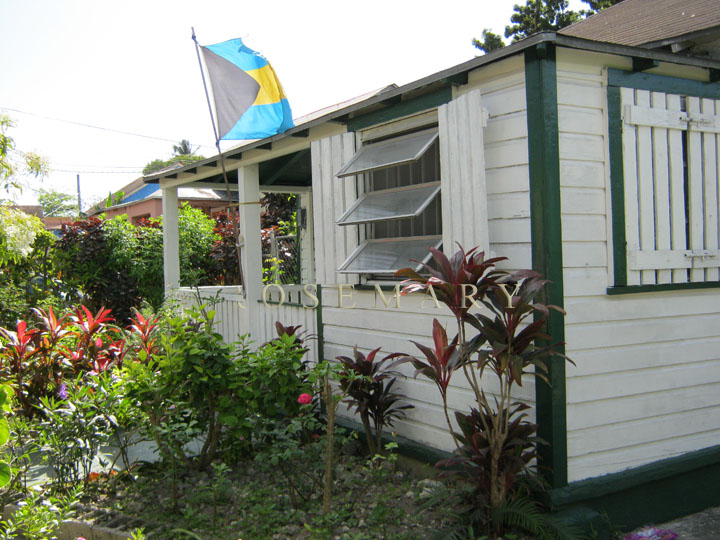
In the late 1940s and before the new road Glinton Square was opened, McPherson Street (or Bethell’s Addition as it was then called), was a quiet cul-de-sac, and the families who lived there enjoyed their closely knit little enclave.
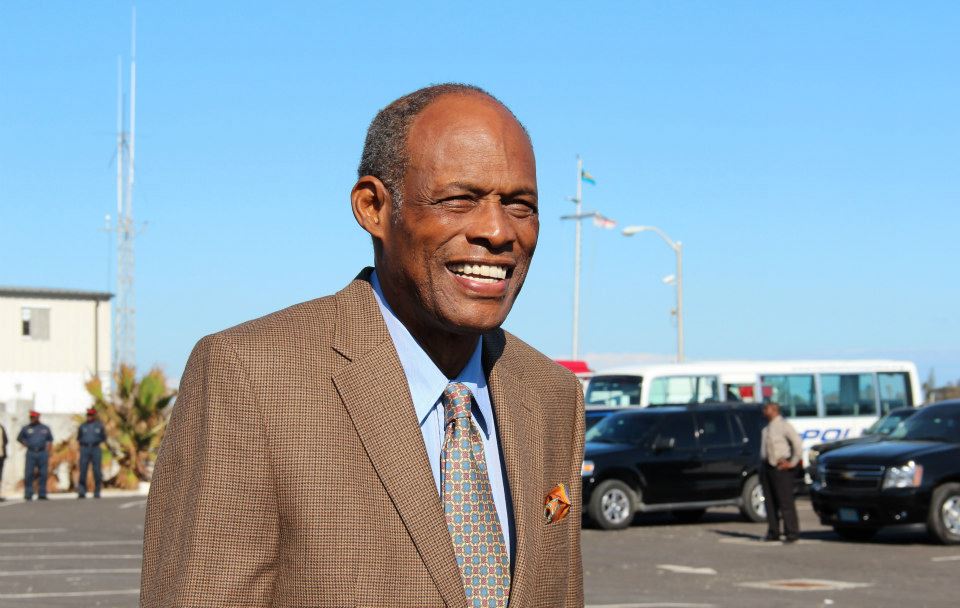
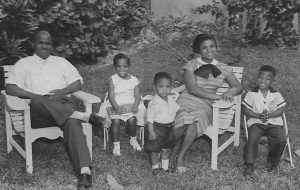 Sir Randol F. Fawkes is regarded as the Father of Labour in The Bahamas. Although small in stature he was a giant of a man who suffered many personal hardships and adversities in his fight to uplift the down trodden workers of The Bahamas. He was a very pleasant man who greeted everyone with a smile and he always walked briskly.
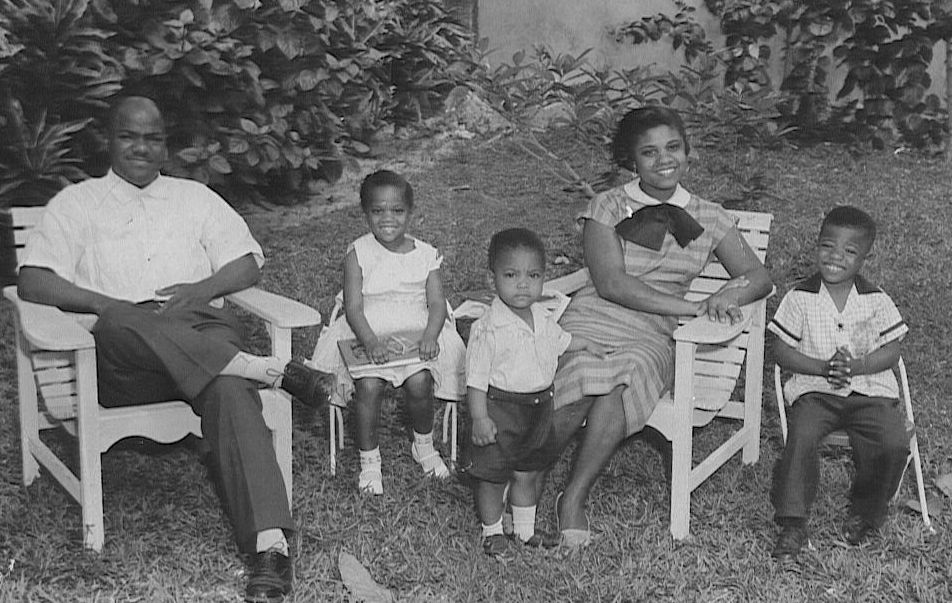
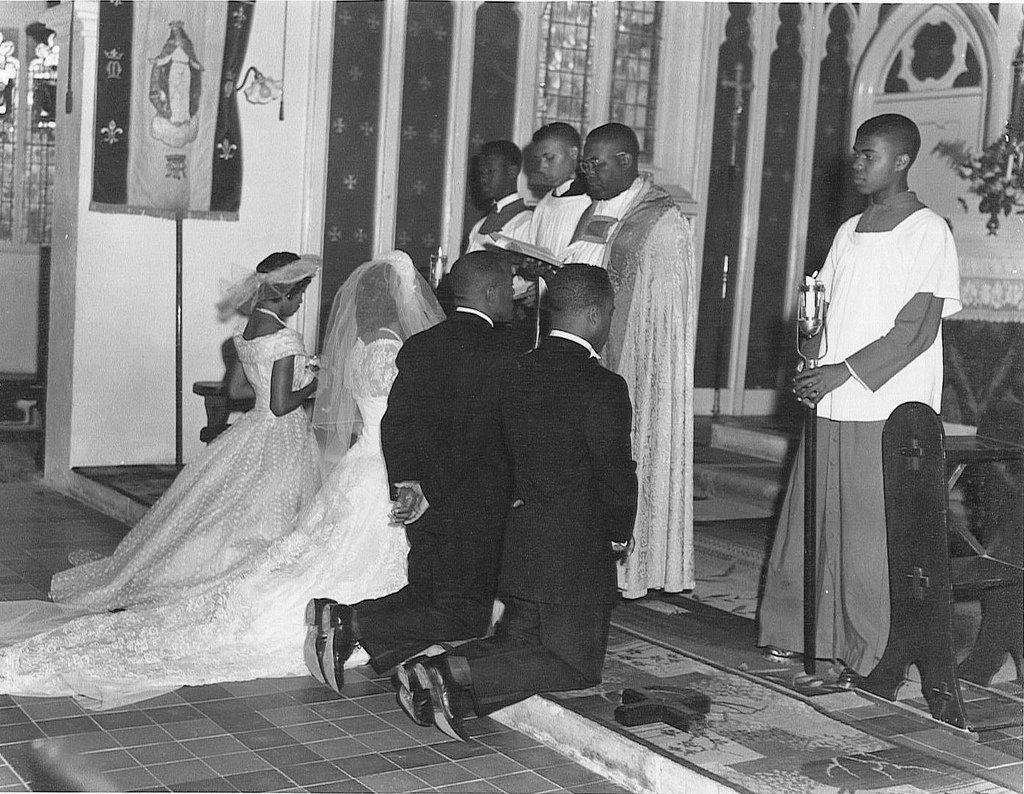
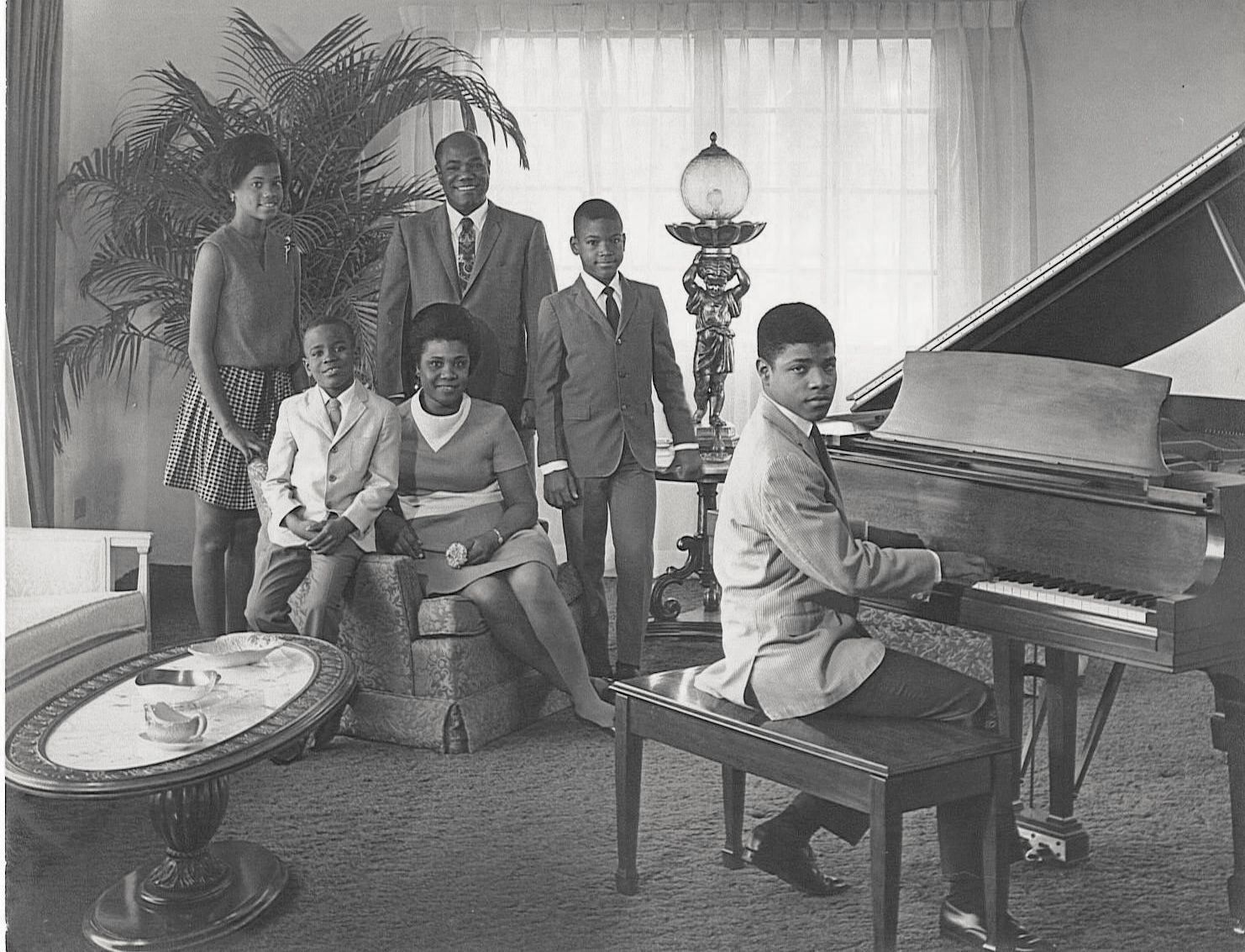
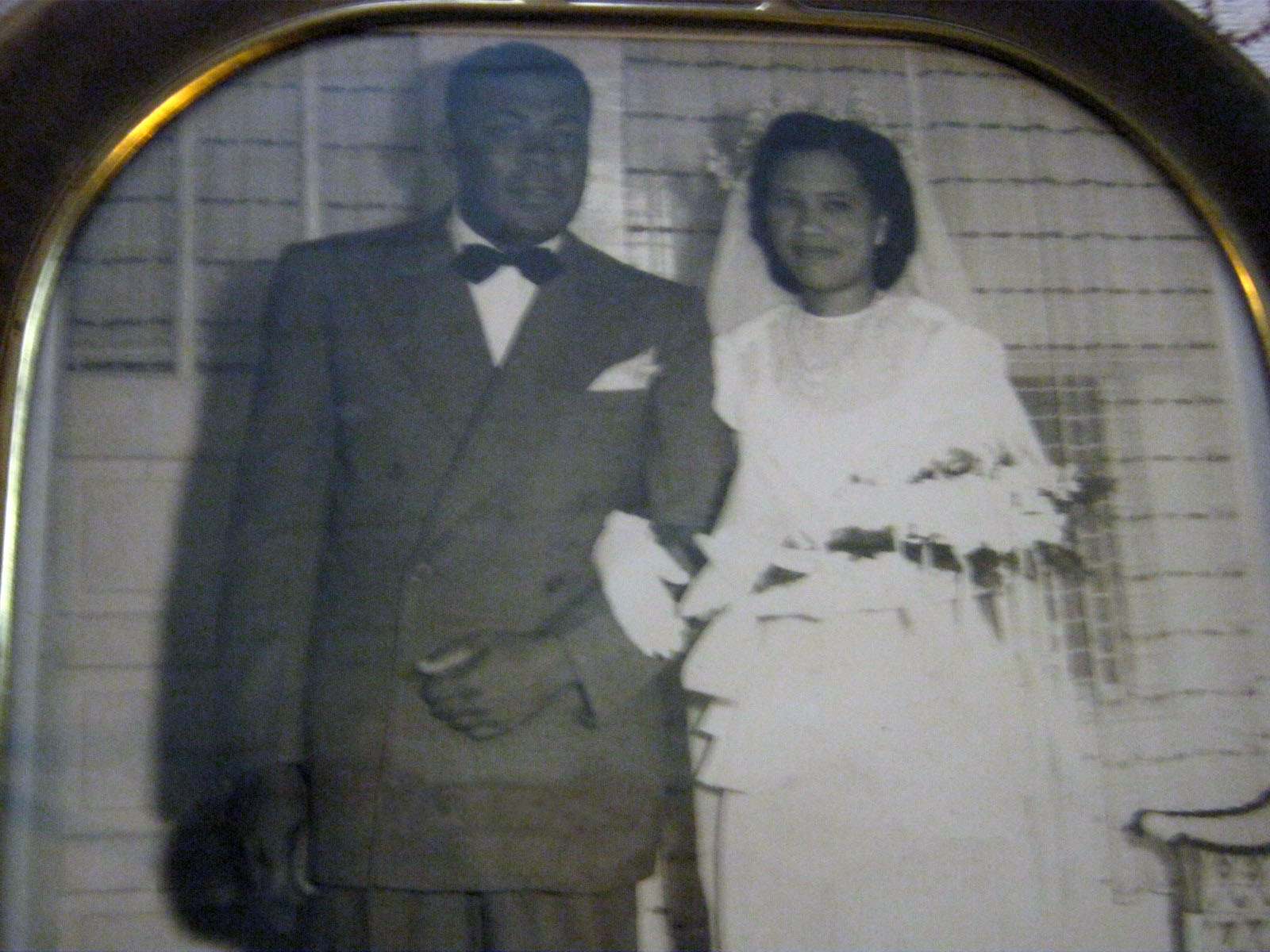
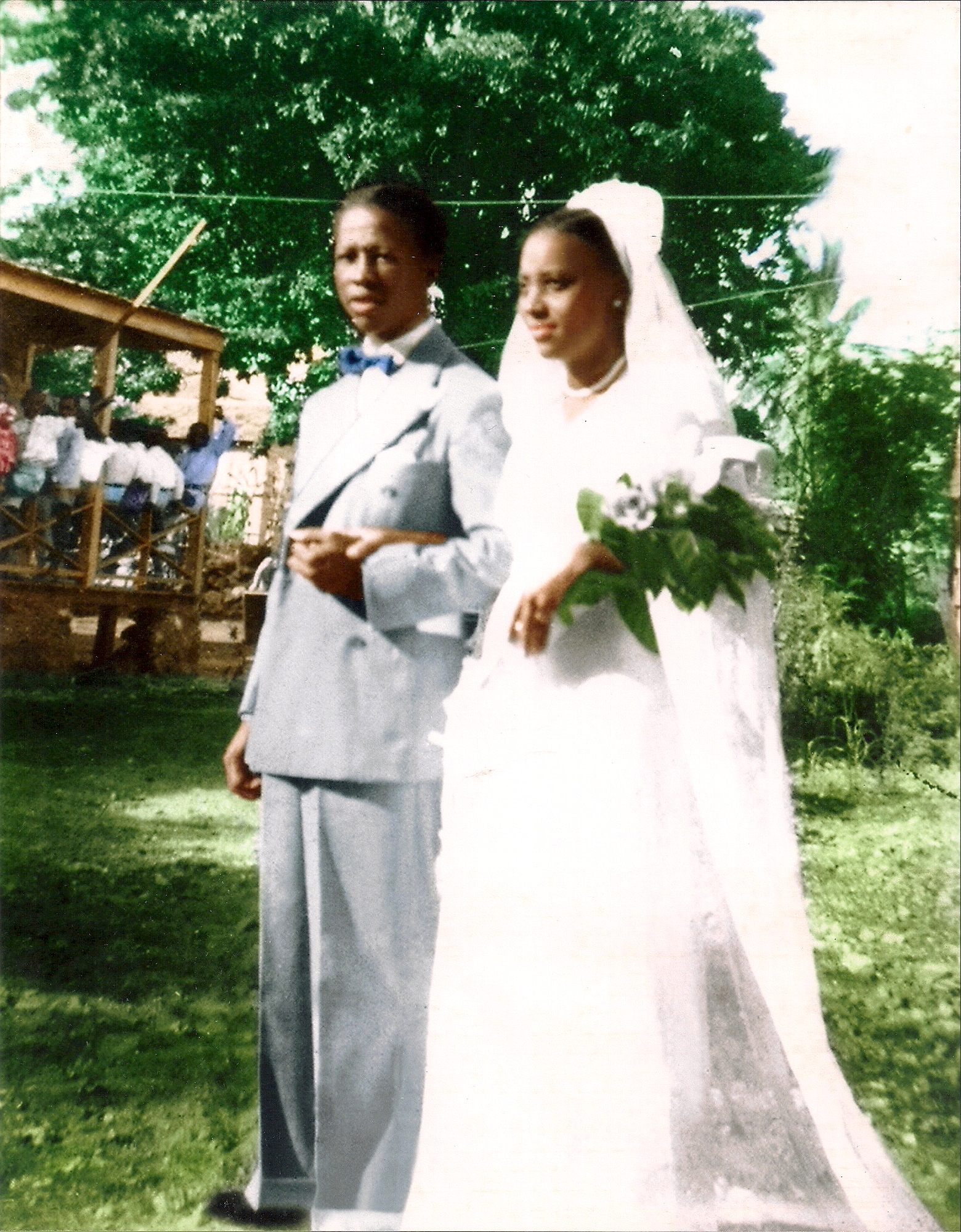
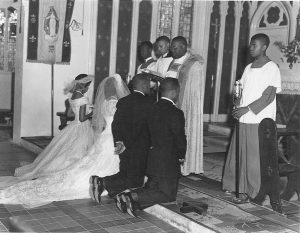 Randol Fawkes was called to the Bar in 1948. In June 1951, he married the former Jacqueline Bethel at St. Agnes Church and the ceremony was performed by Canon Milton E. Cooper, with William E. Thompson serving as an acolyte. Randol and his wife had four children, Francis, Rosalie, Douglas and David.
Early in his practice as a lawyer Fawkes became aware of the inequities with regard to representation of the poor before the legal system. He realized that the Bar Association was not effective and, with the help of Norman Manley and Basil Rowe of Jamaica, he got a copy of the Jamaican Bar Association constitution and adapted it to the Bahamian situation. He fought hard for the establishment of Court of Appeal. He also petitioned for the abolition of the all white male jury system. Following a court case in which he represented a Civil Servant, Fawkes was suspended from practicing law for two years. His Notary Public License was revoked and the Board of Education would not allow him to carry out his duties as the duly elected Chairman of the Parent-Teachers’ Association of Western Senior School.
As result of the foregoing, in 1954 he left his young family and travelled to New York where he held a number of menial jobs. Upon his return to The Bahamas and the restoration of his license to practice law, he continued undaunted in his struggle for the poor man. He described himself as David fighting against the formidable power structure of the white minority Goliaths, who were determined to keep blacks enslaved through poor wages and lack of education.
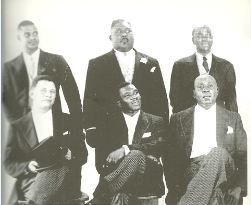 Fawkes ran on the Progressive LIberal Party (PLP) ticket in the 1956 election and he was one of the Magnificent Six PLP candidates who won seats in that historic election. Seated l-r: Cyril Stevenson, Lynden O. Pindling, Clarence Bain; Standing l-r: Samuel Isaacs, Milo B. Butler and Randol Fawkes..
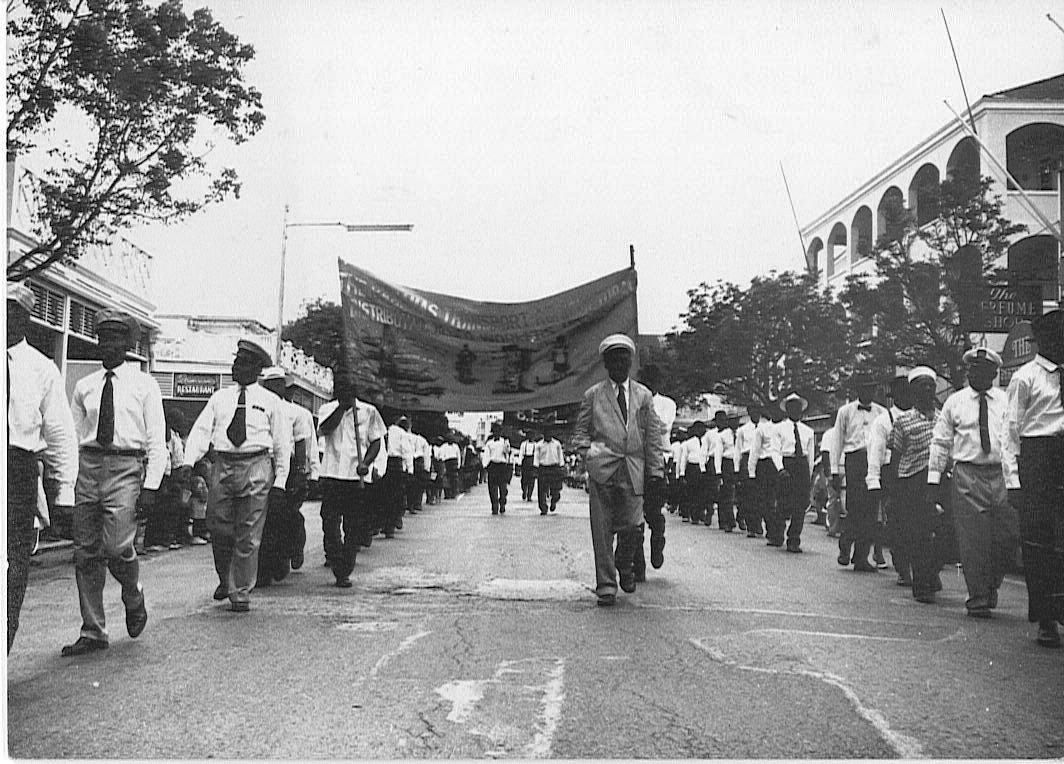
Fawkes was one of the leaders of the 1958 General Strike which came about, yet again, because of the blatant discrimination of the minority white ruling class. Late in 1957, The Bahamas Government granted the white owned tour companies exclusive franchises to transport tourists to and from the newly constructed Nassau International Airport. As a result of this a group of taxi drivers led by Clifford Darling (later Sir Clifford and Governor General) and others used their taxi-cabs to block all access to and from the airport. In 1958 the members of the Taxi-Cab Union sought the assistance of The Bahamas Federation of Labour in their fight with the tour company operators. On 13th January 1958, Randol Fawkes and Lynden Pindling and others travelled to the various hotels and gave the order for work to stop. The strike spread to all sectors and finally came to end on 29th January 1958, after the Governor brought representatives the government, the taxi drivers and the tour companies together.
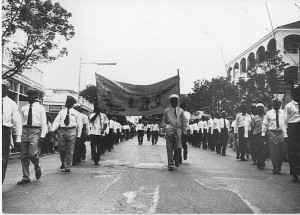 But that was not the end of Fawkes’s problems. Sometime later in 1958, he was charged with trespassing and disorderly conduct because of his having met with mill workers in Abaco to hear their grievances concerning their poor working conditions and pay. I don’t know when the accidents occurred but, my sister-in-law’s father, James Roy Williams and his brother Reginald, lost a hand and foot respectively in the Abaco mills and they had no recourse. Fawkes was given a suspended sentence by Magistrate Maxwell J. Thompson, and bound over to keep the peace for three years. However, that did not deter him and he proceeded to have a meeting at Windsor Park on 8th August, 1958, the same evening of the day on which he was bound over to keep the peace. The following day he was arrested and charged with sedition (treason) and hauled off to jail.
He was brought to trial before a white Judge and a jury of eleven white and one black man. Fawkes was represented by Vivian O. S. Blake of Jamaica, who fought an uphill battle on behalf of his client, which ultimately resulted in the Judge ordering a not guilty verdict.
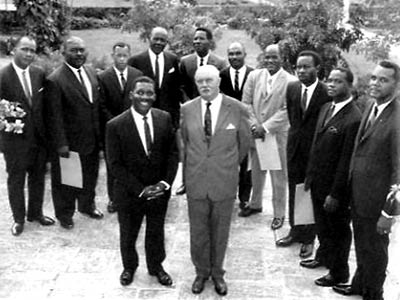
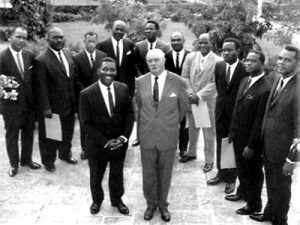 In the historic January 1967 general elections, the PLP and UBP parties both won eighteen seats. Randol Fawkes who had run on the Labour ticket also won and Alvin Braynen, a white man who had fallen out with the UBP won as an independent, so the balance of power hung in the hands of these two gentlemen. Fawkes was persuaded to join with the PLP and thus was born the PLP-Labour Coalition Government with Alvin Braynen accepting the position of Speaker of the House. Pictured are: Front l-r, Lynden O. Pindling, Premier and Sir Ralph Grey, Governor; back l-r: Cecil Wallace-Whitfield, Milo B. Butler, Arthur D. Hanna, Clarence Bain, Jeffery Thompson, Carlton Francis, Randol F. Fawkes, Warren Levarity, Curtis McMillan and Clement T. Maynard.
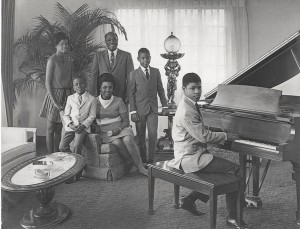 The Fawkes family moved from McPherson Street to their estate, “La Campanella” on JFK Drive where Lady Fawkes still resides. Their former house at McPherson was later occupied by the R. M. Bailey tailor business.
In an 18th May 1998 interview with the magazine, Consumerism Today, published in its June/July 2001 issue under the heading: “Profile of a Great Bahamian” Sir Randol is quoted as follows:
“Today, both political parties are trying to ride the bandwagons of the TUC and others. As a result they (the Labour movement) are not as effective as they can be, for the poor people. I hope there will be another Bahamas Federation of Labour, but is takes a long time to build a man.”
And further:
“The only advice I can give them is that they have to study Business Administration. How they can bring the administration together without losing any power or sovereignty of separate unions. In fact, you said they are not united, and asked me for advice for them; well they should unite and stay clear of these political parties. Because, no matter what they do the political parties want to get on the bandwagon. And in getting on the bandwagon, they adulterate the aspirations of the labour movement, and eventually they will destroy it.”
Sir Randol fought for and was the author of the Bill that established Labour Day as a public holiday. The first official Labour Day was celebrated in 1962. Yet, forty-nine years later in June 2010, P. Anthony White wrote concerning Randol Fawkes:
“Six years were to elapse before a stubborn, shortsighted Bay Street would reluctantly cause the first Friday in June each year to be observed as Labour Day and a public holiday. But it was Randol Fawkes’s dream and desire for the workers of The Bahamas, and it came about largely because he, even more stubborn than Bay Street, harboured a faith that would, indeed, one day move the mountain. “Yes, Sir Randol Fawkes was the determined man who made it all happen. The nation has not yet completed its task of according him his deserving reward and recognition.”
Other great Bahamians and, in my estimation some not so great, have had public buildings, schools, highways and monuments named in their honour. Yet successive Governments of The Bahamas have failed to bestow any such honour in memory of The Father of Labour.
ADDENDUM
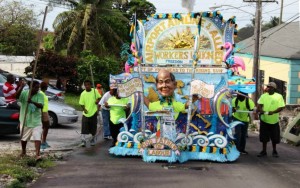
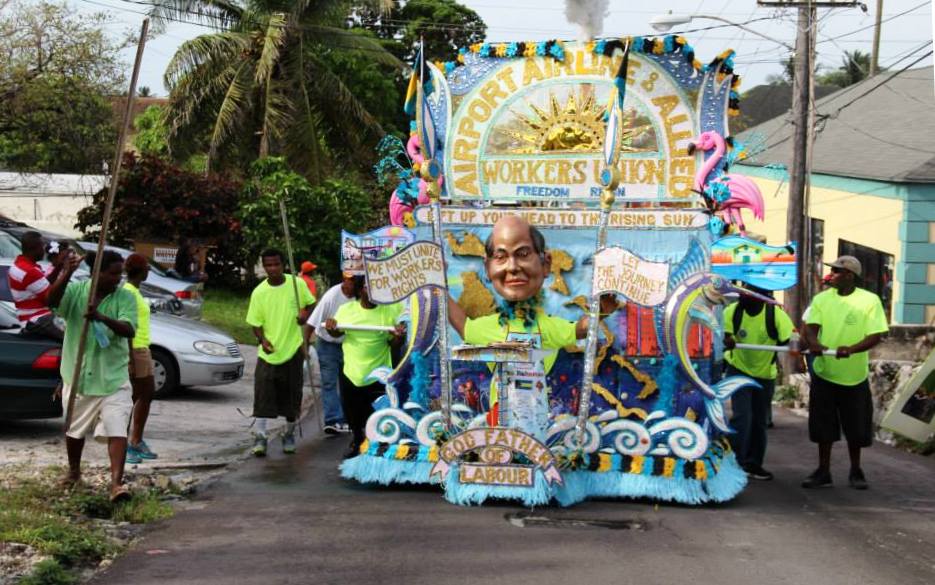
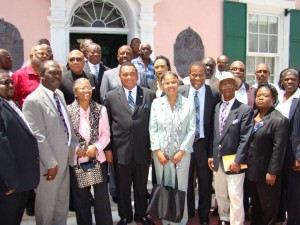 In April 2013, forty (40) years after his pivotal role in the attainment of Majority Rule, the Government of The Bahamas passed a Bill to rename Labour Day as Sir Randol Fawkes Labour Day, which was celebrated on Friday, 7th June 2013.