Why the Hannas are Lifelong Members of St. Agnes Anglican Church

WHY THE HANNAS ARE LIFELONG MEMBERS OF ST. AGNES ANGLICAN CHURCH

© 2023 Rosemary Clarice Hanna

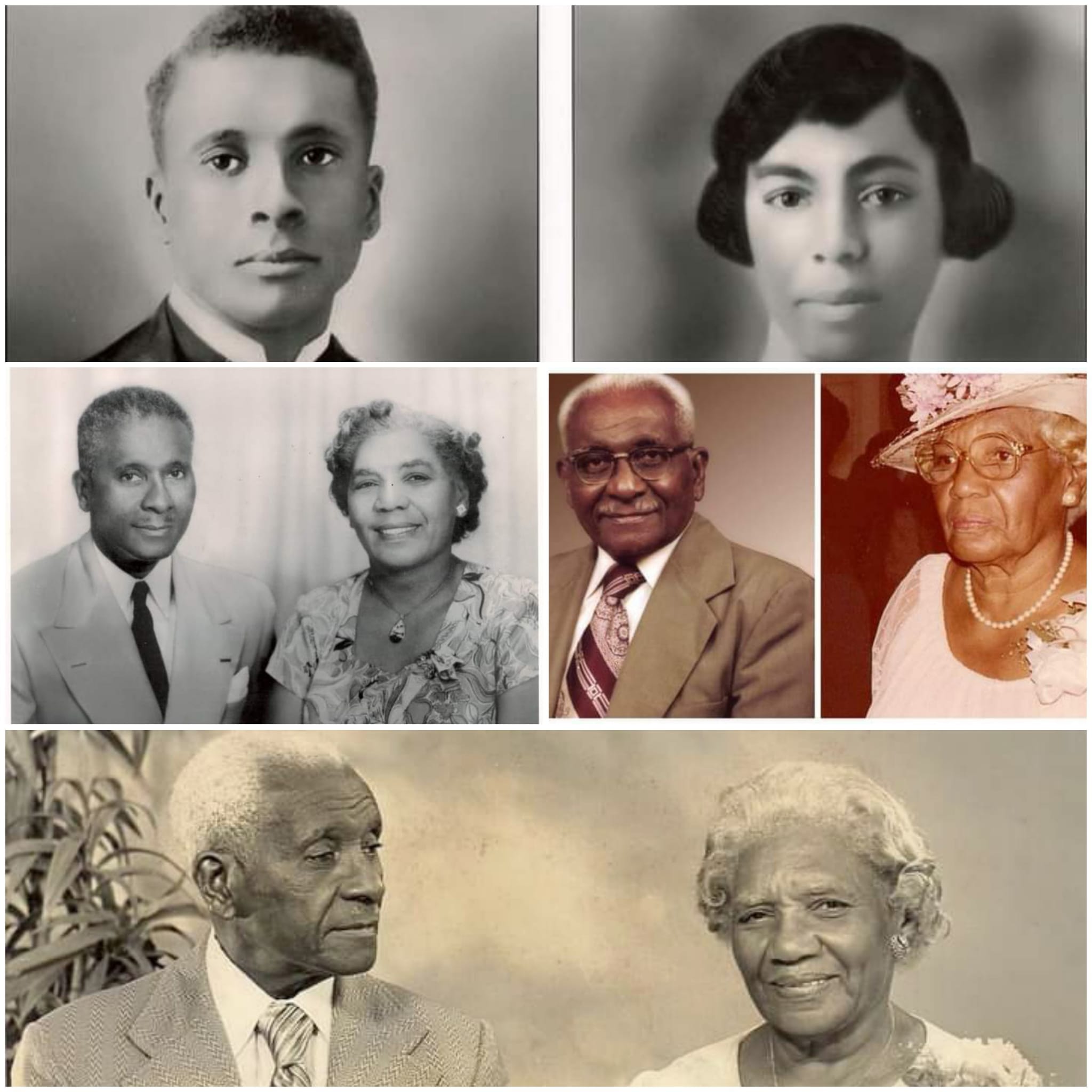
I love St. Agnes Church which is deeply embedded in my heart.  Why has the family been faithful member of this Church dating back to the early 1920s? The simple answer is that we had no choice! My parents, Percival James Hanna and Leona Aurelia Butler, were married here on 4th November 1925 and, during the Percy_Ona 1925-1980scourse of their 59 year marriage they produced five sons and two daughters namely: James, Allan, Ivan (deceased), Percival (decades), Paul (deceased) me and Andree. Thro0ughtout the years Mother and Daddy were involved with whatever was going on in the Church and they made sure that we will attended regularly. I will take you through an abbreviated 75 year journey of our participation in the life at St. Agnes.
As children, we were all involved in many activities, and attended church three times on Sunday, beginning with 9 am Sunday School in the Schoolroom and then marching quietly in two along Cockburn Street to attend Mass here at the Church at 10:30 am. Then there was Sunday School again at 4 pm here at the Church led by the Rector himself, Canon Milton Cooper. Church was usually full and there was no mingling of boys and girls, with the boys sitting on the south side of the nave and girls on the north.  Back then funerals led by lodges and marching bands, were held on Sundays and whenever a funeral was approaching Fr. Cooper wCanon Milton Cooperould have the western door closed so that we would not be distracted. Church continued at 7 pm when we all returned with our parents for Evensong and Benediction which was a delight for me and many others, because we loved to hear Fr. Cooper’s beautiful and melodious voice, especially when he sang the “Divine Praises” during Benediction. The custom of separating males and females during services continued for a long time and to top it off, men went up for communion first followed by the ladies. I don’t remember when that was discontinued, but I was happy when it was stopped.
Some of you may not be aware that we had a Junior Choir during the fifties that was led by none other than Mr. Timothy Gibson – the composer of the National Anthem of The Bahamas – who was also the Headmaster of Western Junior School at the time. My sister-in-law Dolores, Fay Gibson (Callender), Freddie Turnquest (McCartney) and Shirley Sawyer (Cunningham) were among the members of that choir. They sat in the front pews on the north side in front of the pulpit. As a child I wondered why Mr. Gibson conducted the choir with a little white stick which I later learnt was a baton. The Senior Choir also sat in the same area, and the Hammond organ was in the spot where the piano is now located.

Childhood activities at St. Agnes included the annual picnic when we travelled by boat to Hog Island (later renamed Paradise Island) and, in addition to the beach we also enjoyed rambling through the bushes and catching soldier crabs. We also had a Girls Guild that was led by Sister Thecla Mary who was the last English nun to serve at St. Agnes. One of our church members is named after her but prefers to use her middle name. We also had the Boys Brigade led by Mr. Alleyne from Ross Corner who was from Barbados.

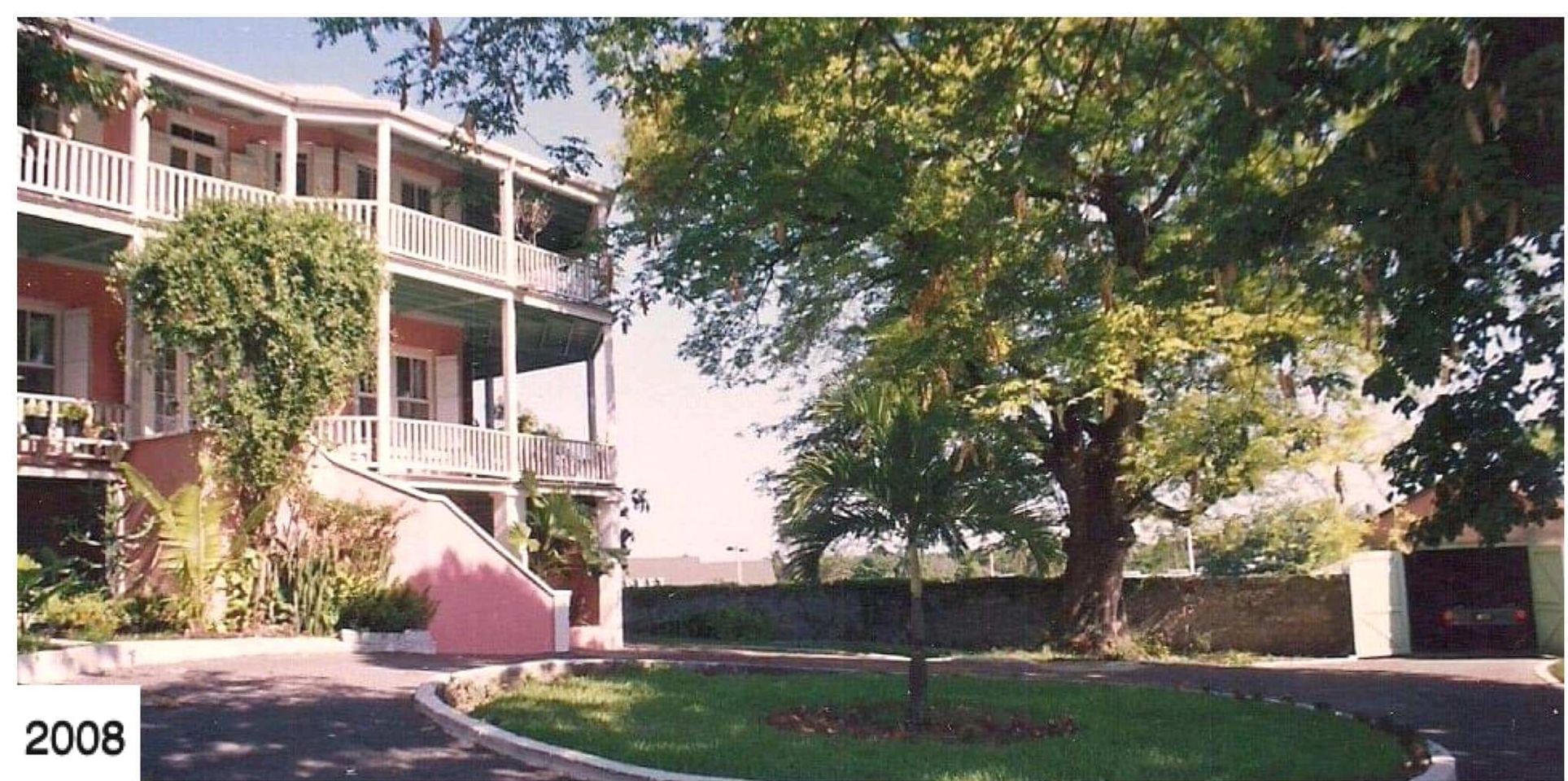
Another wonderful childhood memory that I have was spending Saturday afternoons here with my Godmother GwennieSt. Agnes Rectory Cooper (wife of the Rector Canon Cooper) and my good friend Jackie Williams Smith cleaning the brass vases, making floral arrangements and dressing the Altar.  Jackie’s mother Mrs. Nellie Williams took care of the Altar linens. In those days the flowers came from the members’ gardens and Goddie had a most beautiful one in the large circle at the front of the Rectory at the top of Market Street which, most unfortunately, has been replaced by a parking lot. Easter time was special with Altar being decorated with Queen Anne’s Lace and Larkspur flowers all from the Rectory garden. That is where I met D’Yanza and Doyle Burrows as they used to come down to help their aunt Gwennie in the garden. Doyle still keeps a beautiful garden.
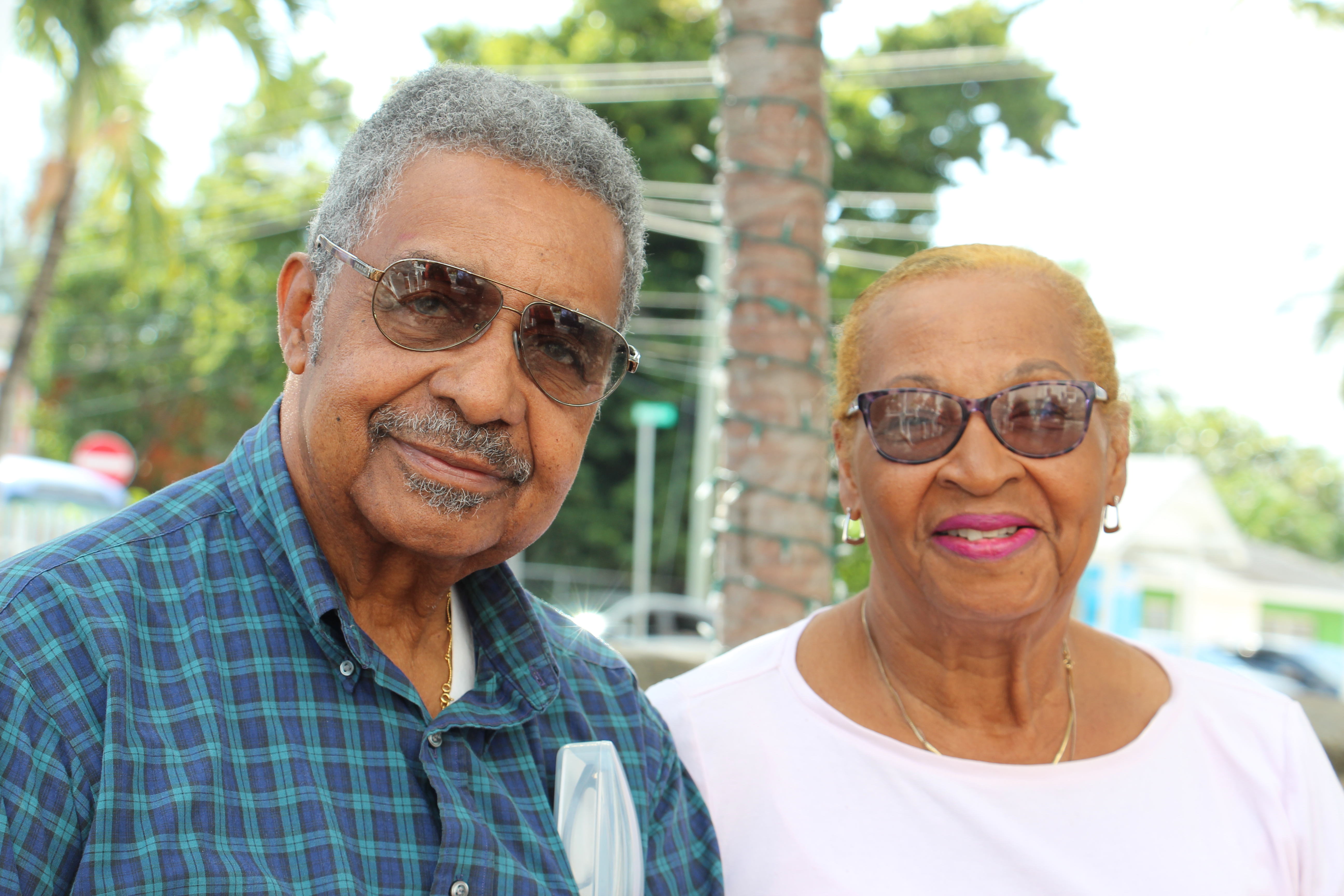
Long before TV our main form of entertainment included the regular programmes and plays held at the Schoolroom. Back then we also put on plays which were usually produced by the late great Basil Saunders who studied drama in the UK. Basil produced and directed a particular play in which the lovebirds Andy Gomez and then Louise Johnson IMG_4098had a romanArchdeacon Thompsontic scene. And there was astonishment and a lot of giggling amongst us 12-14 year olds when Andy planted real a real kiss and not a quick peck on Louise’s lips. And here they are still inseparable after 63 years of marriage, six children and eight grandchildren.
As young adults we had the Anglican Young People’s Association (A.Y.P.A.) which was sell supported and we interacted with young people from other parishes for joint activities, including debating against each other on current affairs and serious topics. Livingstone Bostwick and I represented St. Agnes in these debates and Archdeacon Thompson was our coach. Life was taken seriously back then and, as young people, we stayed abreast of what was going on around us.
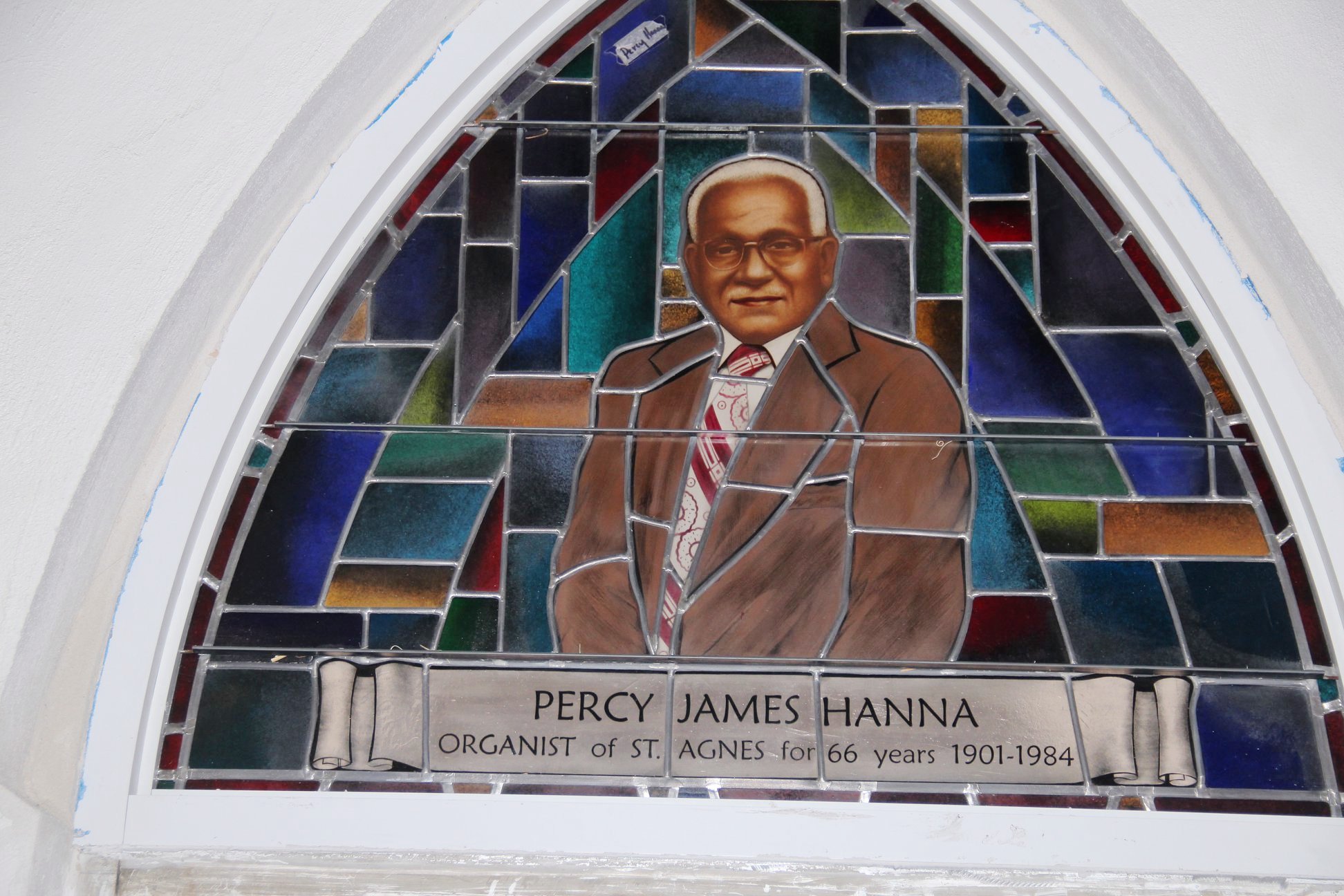
Daddy stained glass window_2As many of you are aware Daddy served as Organist here for approximately 60 years and he was ably assisted by my brother Ivan who also served for 57 years including the time he assisted Daddy. Portraits of both of them are up in the choir loft and Daddy’s image is in the stained glass window over the southern door. He was a stickler for being on time and was always present at church at least a half hour before services and played beautiful soft and soothing classical music for a congregation that listened quietly and appreciated it. Daddy was also a member of the Vestry during most of my childhood, and a founding member of the Anglican Church Men organization. He served as secretary for both groups for many years.

Ivan was a superb all round musician. As an organist he was known for his beautiful and melodious hymn interludes and the skill and smooth manner in which he modulated from one key to the next without jumping into another key as is so prevalent among some musicians today. He was also a great singer and, for many years, he led the St. Agnes Marching Band while blowing his trumpet. Ivan was a devout Christian and I remember his daughter Gina saying that whenever the family went on vacation they had to find their way to a church on Sundays.Hanna Girls_Dads at St. Agnes

Very few can remember when the Church had a wooden floor and a separate wooden bell tower which was located near the sitting area in the southwest area of the garden. Daddy designed the new bell tower and choir loft and my brother Paul was the engineer on the project. Before the loft and new pipe organ were constructed and installed Ivan invited me to assist him with the choir which I did happily up to the time of his death in 1999 and continued for a total of 20 years. His daughter Gina now conducts the choir and my sister Andree still sings in the alto section.

Long before the Anglican Church Women organization was established by Bishop Bernard Markham there was the St. Agnes Volunteer Group which included Mother, Mrs. Culmer, Mrs. Johnson, Mrs. Gay, Mrs. Bostwick, Mrs. Hepburn, Mrs. Tinker, Mrs. Ferguson, Mrs. Gomez and others. They held events to raise funds for the church. Upon the establishment of the ACW, Mother was elected as the first president and she also served on the ACW Council.

Aside from home, St. Agnes has always been an anchor, not only for the Hanna family but most of our neighbours including the Wilkinsons, Culmers, Johnsons, McDonalds, Gays, Gibsons, Minnises, Bostwicks, Adderleys, Gomezes, Coakleys and others, Despite the fact that most of us have from Over-The-Hill we still come back from all over the Island to worship at this place on Sundays and for other special occasions. When my daughter and I moved to the then wilderness of what is now Seabreeze Lane in 1974, we worshipped at Holy Cross Parish and she was confirmed there. However, St. Agnes kept pulling at my heart and Archdeacon Thompson was happy to welcome s back a few years later.
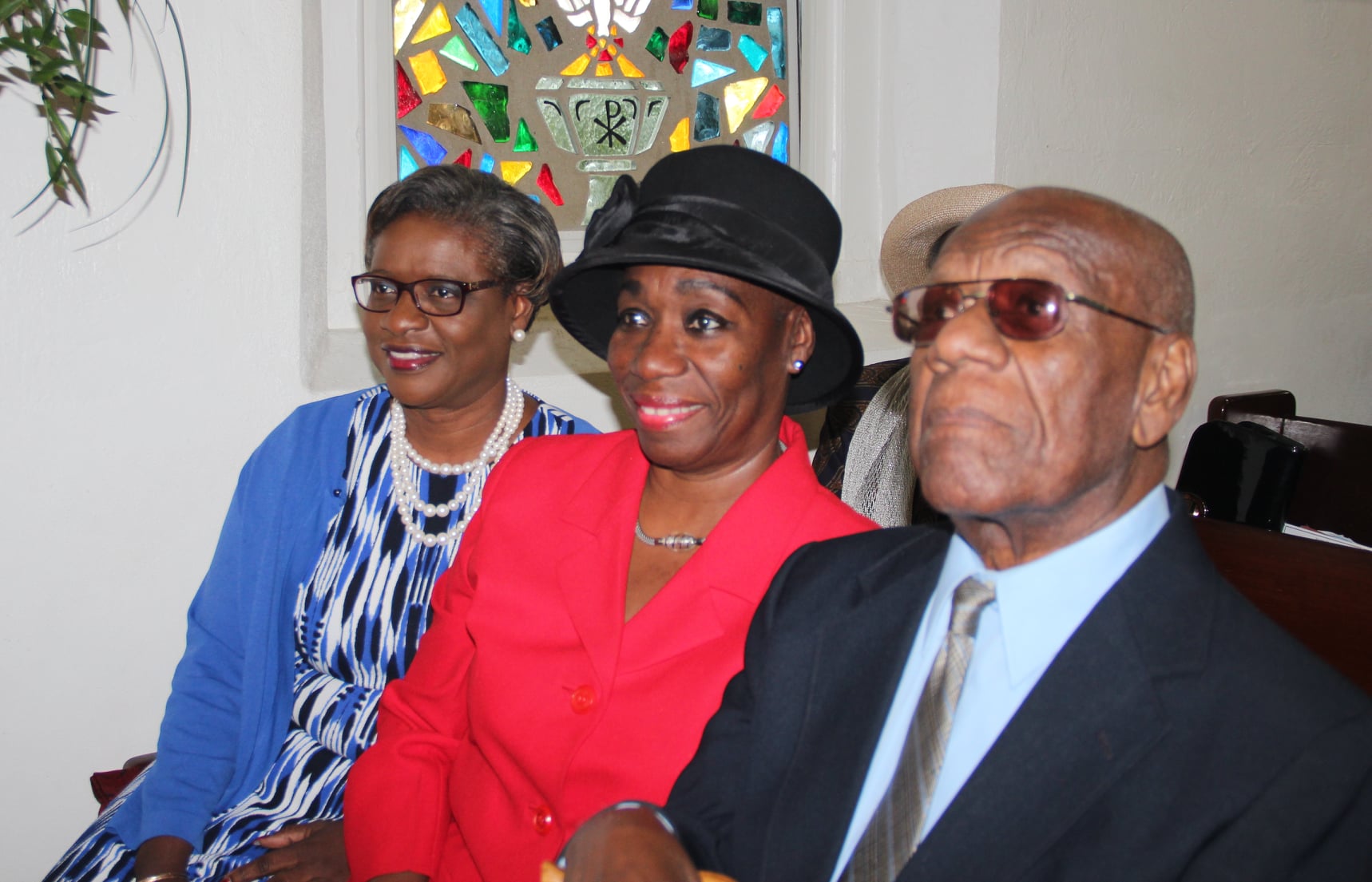
Constance_Garnell_AllanTo demonstrate how deep the Hanna commitment to St. Agnes is, my now 95 year old brother Allan married a St. Mary’s woman Marinetta Rolle in May 1952 and he never left St. Agnes. By the same token Marrie, as we called her, never left her precious St. Mary’s. However, their children were brought up in St. Agnes. For years after his retirement, Allan delivered soup to the poor and shut in members of the parish. Before the pandemic he never missed a Sunday 7 am Mass and sat on the southern side of the nave with his daughters Constance and Garnell (who also served as President of the ACW). I followed in Allan’s footsteps after retirement by going out with my partner Patricia Johnson to deliver soup to people who lived between Blue Hill Road and Collins Wall. It was through this activity that I saw firsthand how much the area had changed. It was sad to see how our mostly elderly people were living. This led to my taking pictures of the old homes that still stood; writing a book and producing a documentary film about Over-The-Hill. It was because of St. Agnes that I was able to document the significant role that many of our members and others played in the development of the nation. The documentary can be viewed on YouTube.

Speaking about photography, I was inspired by my late brother Perce. Somehow I have morphed into being the “official” church photographer and I noticed that the real photographer, David Knowles, stopped bringing his camera to church. Through photography at church I have gained many new little friends especially among the acolytes including some of whom are pictured here. Another one, Daniel, recently asked me if he could have copies of all of the photos that I took of him and, when walking away said: “Every last St. Agnes acolytesone.” I’m working on it Daniel.
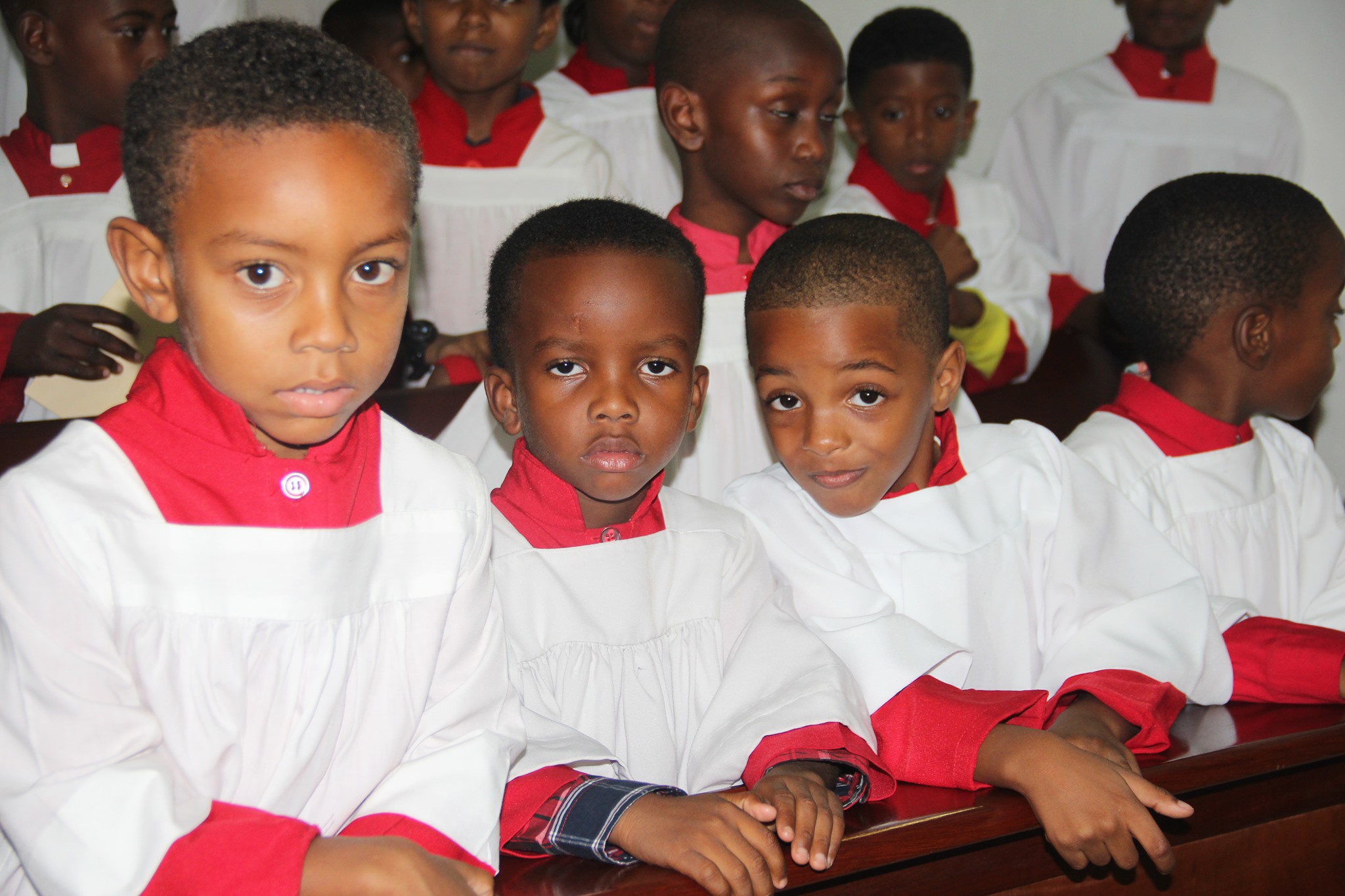
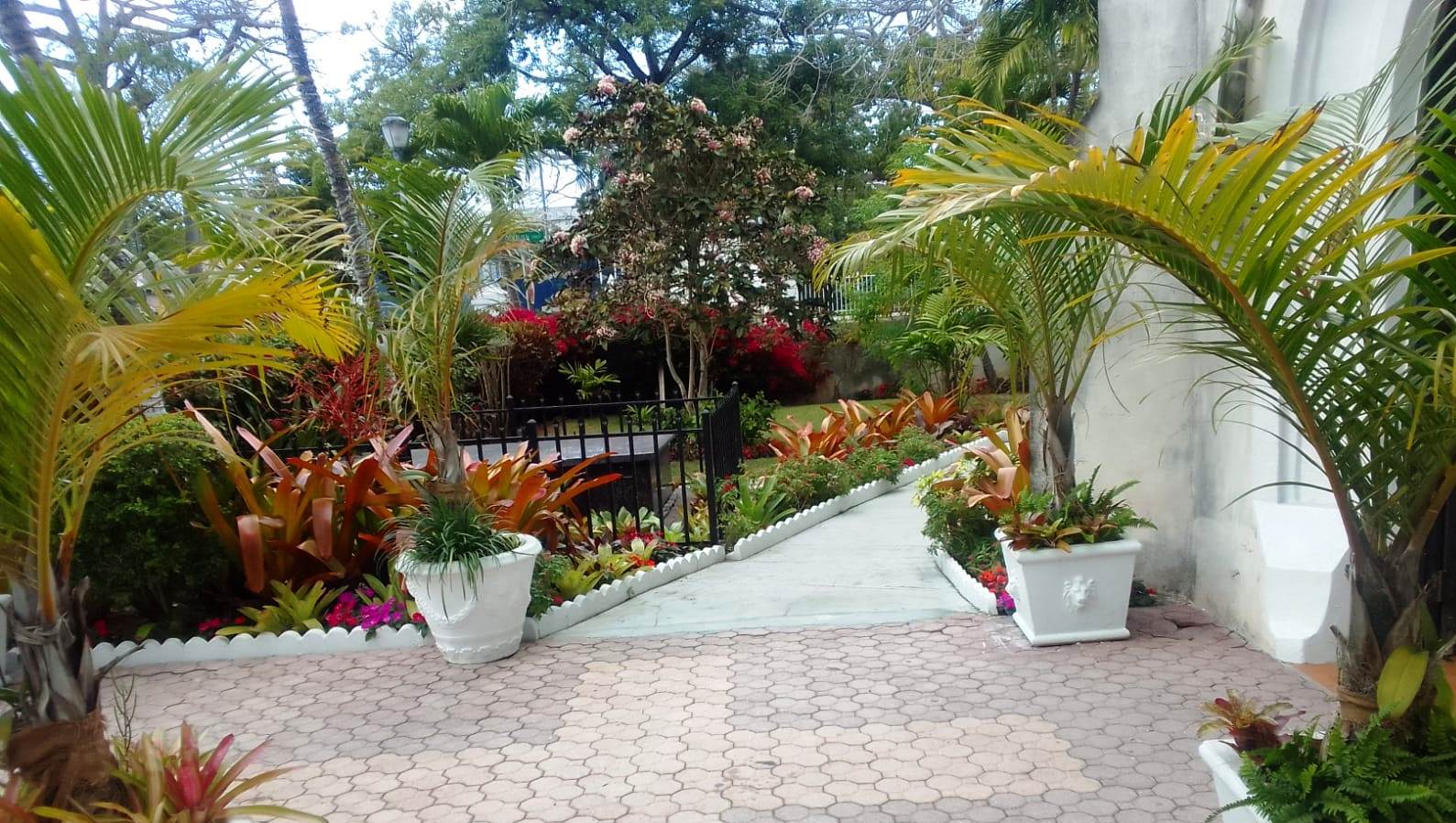
St. Agnes remains a wonderful oasis and beacon of hope in the Grant’s Town community – from the uplifting worship, the cheerfulness of the kitchen workers who feed the acolytes every Sunday, and 400+ people from the community every week, and the ever so beautiful gardens of St. Agnes, lovingly cared for by Michaella Strachan, Esnel Frael and team. I encourage those of you who have not been here for a while to come back come and become a part of a church which ministers in a most profound way to the soul and body.
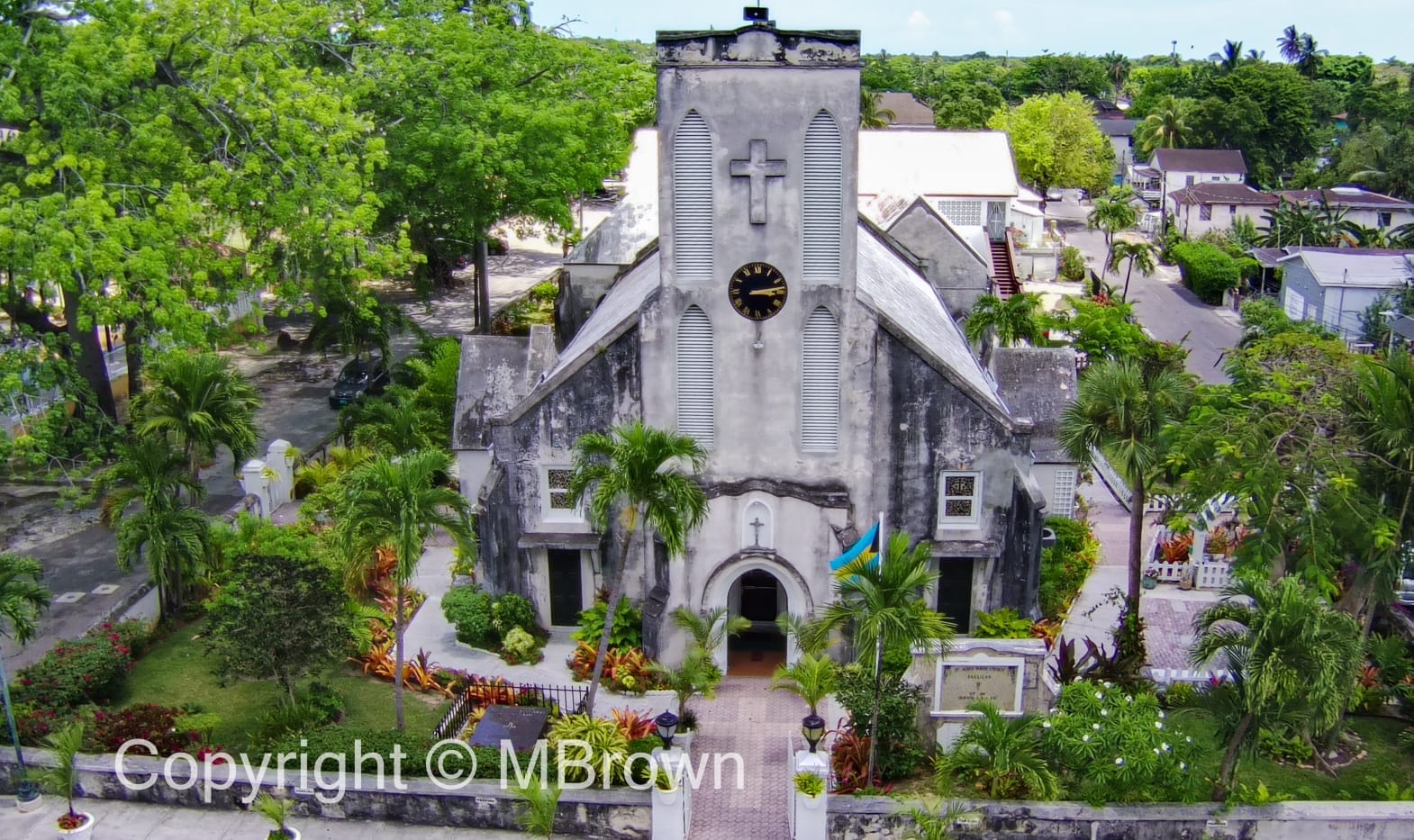
Aerial view of St. Agnes


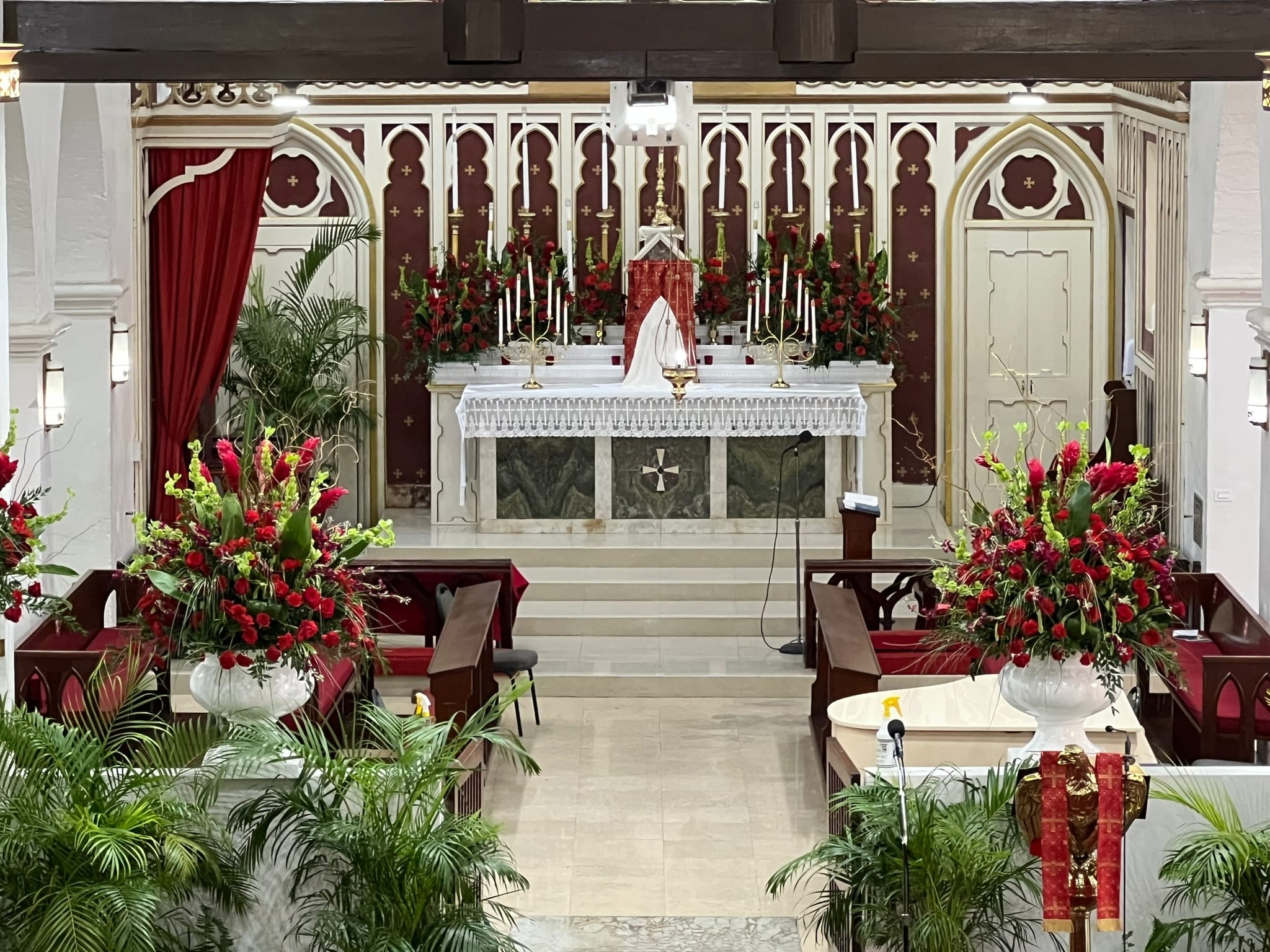
St. Agnes interior 3


St. Agnes garden 1

In closing, I want to say to Archdeacon Cartwright, that you brought much joy and happiness when you came back home as Rector of this great church. We all know how you love raising the rafters and making a joyful noise unto the Lord, especially at the podium at the end of services. However, I must say that neither you nor anyone else (including our beloved Archbishop Gomez) can hold a candle Fr. Cartwrightto Canon Milton Cooper when it comes to singing. Nevertheless, I’m going to sing my thanks via this Andrae Crouch song “My Tribute”, and Archdeacon, you are cordially invited to come up, raise the rafters and lead the congregation in the chorus.
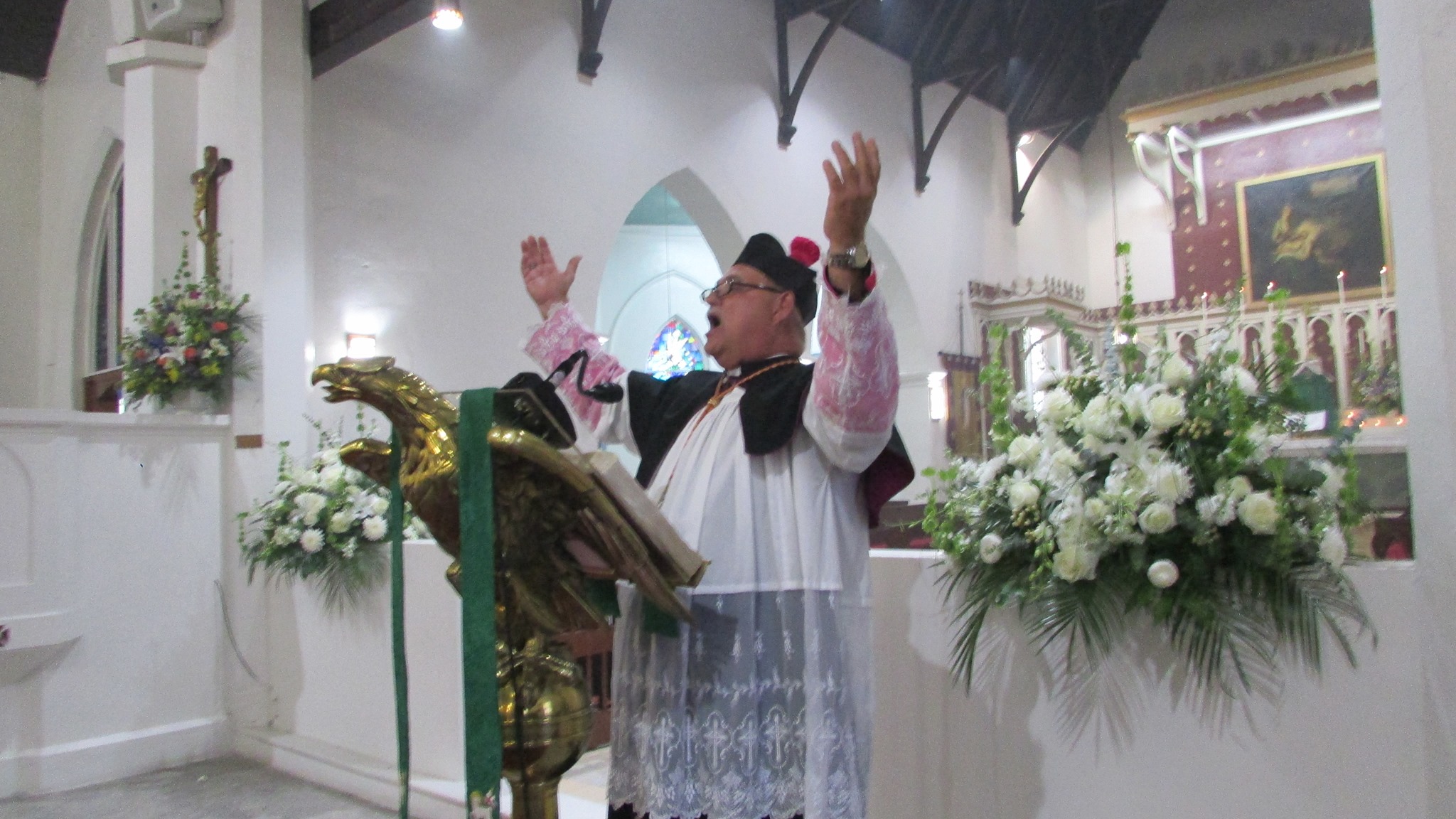
How can I say thanks
For the things You have done for me?
Things so undeserved
Yet You gave to prove Your love for me
The voices of a million angels
Could not express my gratitude
All that I am and ever hope to be
I owe it all to Thee

To God be the glory
To God be the glory
To God be the glory
For the things He has done

With His blood He has saved me
With His power He has raised me
To God be the glory
For the things He has done

Just let me live my life
Let it pleasing, Lord to Thee
And if I gain any praise
Let it go to Calvary (Calvary)

Oh, with His blood (His blood) He has saved me (He has saved me)
With His power (His power) He has raised me (He has raised me)
To God (to God) be the glory (glory)
For the things He has done
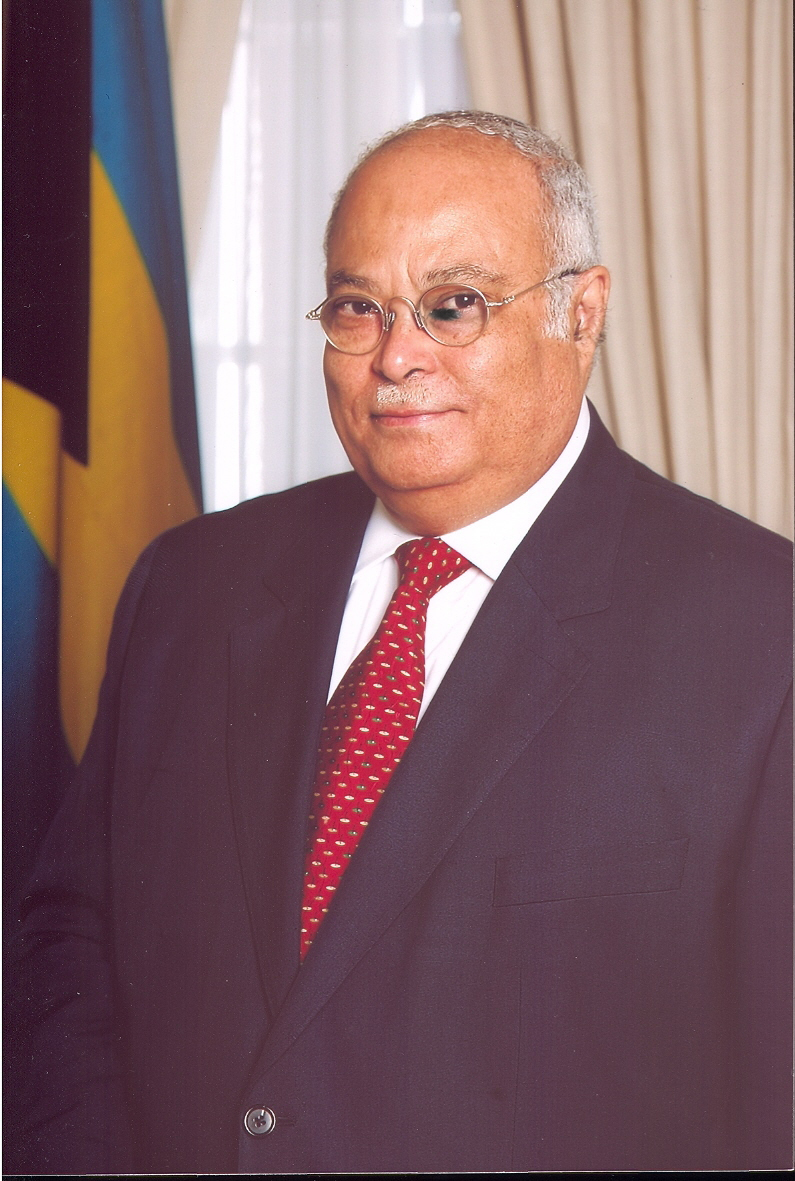
 

His Excellency Basil G. O’Brien C.M.G.

His Excellency Basil G. O’Brien C.M.G.

Basil_edited-1

Throughout its 162 years of existence, the parish church of St. Agnes produced many leaders in church and in state.  One such person is His Excellency Basil G. O’Brien, CMG, the fifth High Commissioner of the Bahamas to the Uninted Kingdom.

In December 1940 Cyril and Kathleen O’Brien, both natives of Cat Island, welcomed their third child and second son.  This third child would later be joined by five other boys and two other girls, making for a family of ten: seven boys and three girls.

At the time of his birth, Kathleen and Cyril O’Brien had no idea that the child whom they called Basil Godwin would ultimately become the head of the public service as Secretary to the Cabinet.  Having entered the public service in 1969 as Higher Executive Officer in the Ministry of External Affairs and progressing through the ranks of Assistant Secretary, Cabinet Office 1970, (rising to the rank of Deputy Permanent Secretary), Permanent Secretary, Ministry of Tourism,1978, Permanent Secretary, Ministry of Foreign Affairs 1986, Permanent Secretary, Ministry of Agriculture, Trade and Industry 1989, Permanent Secretary, Ministry of Education,1993, his appointment in 1994 as Secretary to the Cabinet and Head of Public Service, made him the second member of the St. Agnes congregation to fill this post, Mrs. Magaret McDonald being the other.

Soon after his birth, Basil’s family relocated from Cat Island to New Providence, where they settled in Mason’s Addition, an area located within the physical boundaries of the parish of St. Agnes.  It was not accidental, therefore, that as staunch Anglicans his family, who were ministered to by Canon Milton Cooper in Cat Island, joined the St. Agnes family and Basil along with his older brother Charles became an acolyte, a service which he still practices whenever he is in the country.

The establishment of St. John’s College in 1947, increased the opportunity for people of colour to obtain a secondary education. Basil seized this opportunity.  While a student at St. John’s, Basil became Head Boy and was greatly influenced by Canon Milton E. Cooper, who had encuraged a number of his acolytes to test vocations for Holy Orders. It was accepted that Basil would proceed to Codrington College and follow in the steps of other acolytes of St. Agnes who would later become distinguished Fathers of the Church. However, this was not to be and on hisgraduation from St. John’s College in 1958 he was employed briefly in the Civil Aviation Department and shortly thereafter he proceeded to London to pursue post secondary education at the University Turorial College and the University of London.

Simultaneous with the appointment to the court of St. James as the fifth High Commissioner of The Bahamas to the United Kingdom in 1999, he was appointed Ambassador to the European Union, Belgium, France, Germany and Italy.  At the same time he was accredited as Permanent Representative to the International Maritime Organization, in London, the International Organization for Migration and the World Trade Organization in Geneva and the Bureau of International Expositions in Paris.

Basil_MarleneAs a career civil servant,  Basil’s counsel is sought after by civic and religious groups. Thus he has served as Chairman of the Board of Governors of St. John’s College; member of the Anglican Central Education Authority; Director of The Bahamas Hotel Training College and Director of Bahamasair Holdings Company.

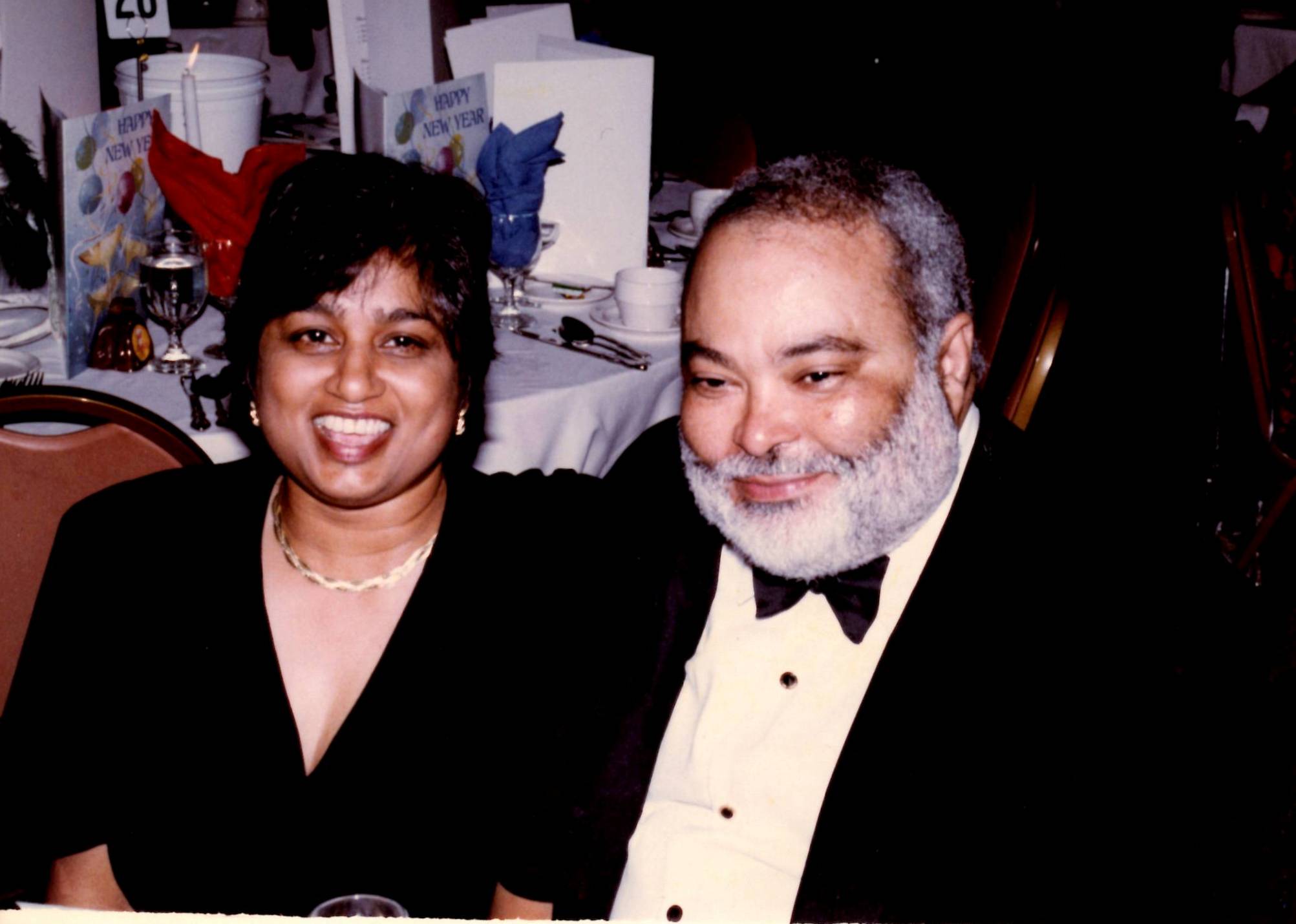
During his sojourn as a student in London, he met and fell in love with  Marlene Devika Chand, a native of Guyana, who like many other Commonwealth citizens had migrated to the UK to complete studies as a registered nurse.  Their marriage produced two children: David Krishna and Tariq Jeremy.

Basil retired in 1999 as Secretary to the Cabinet and folllowing is tenure as High Commissioner/Ambassadors he retired finally in 2008.

He has been a lifelong member of the Guild of St. Ambrose at St Agnes. He enjoys reading and continues to be a keen observer of international affairs.  He is a member of SKAL: International Persons in the Travel Industry, Chaine des Rotisseurs, The Royal Automobile Club, Royal Overseas league and The Royal Commonwealth Society.


Blyden Family – Lewis Street – Excerpt from “Pictorial History and Memories of Nassau’s Over-The-Hill”

By Rosemary C. Hanna

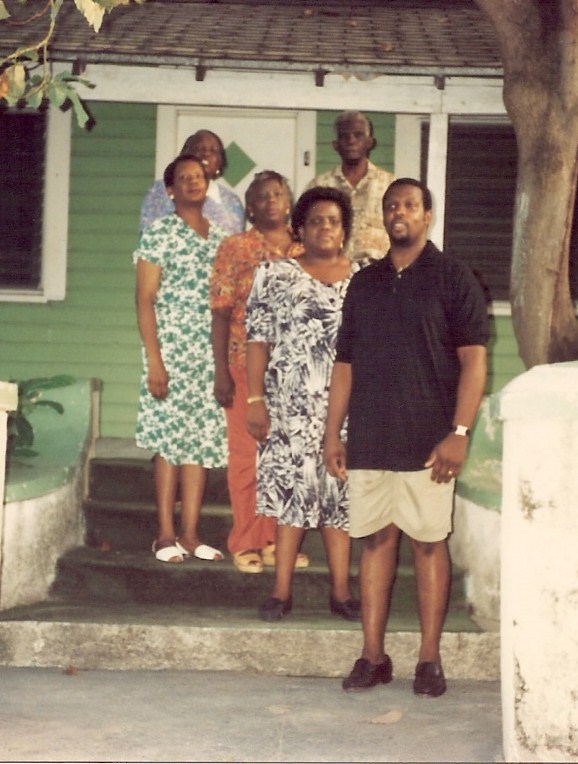
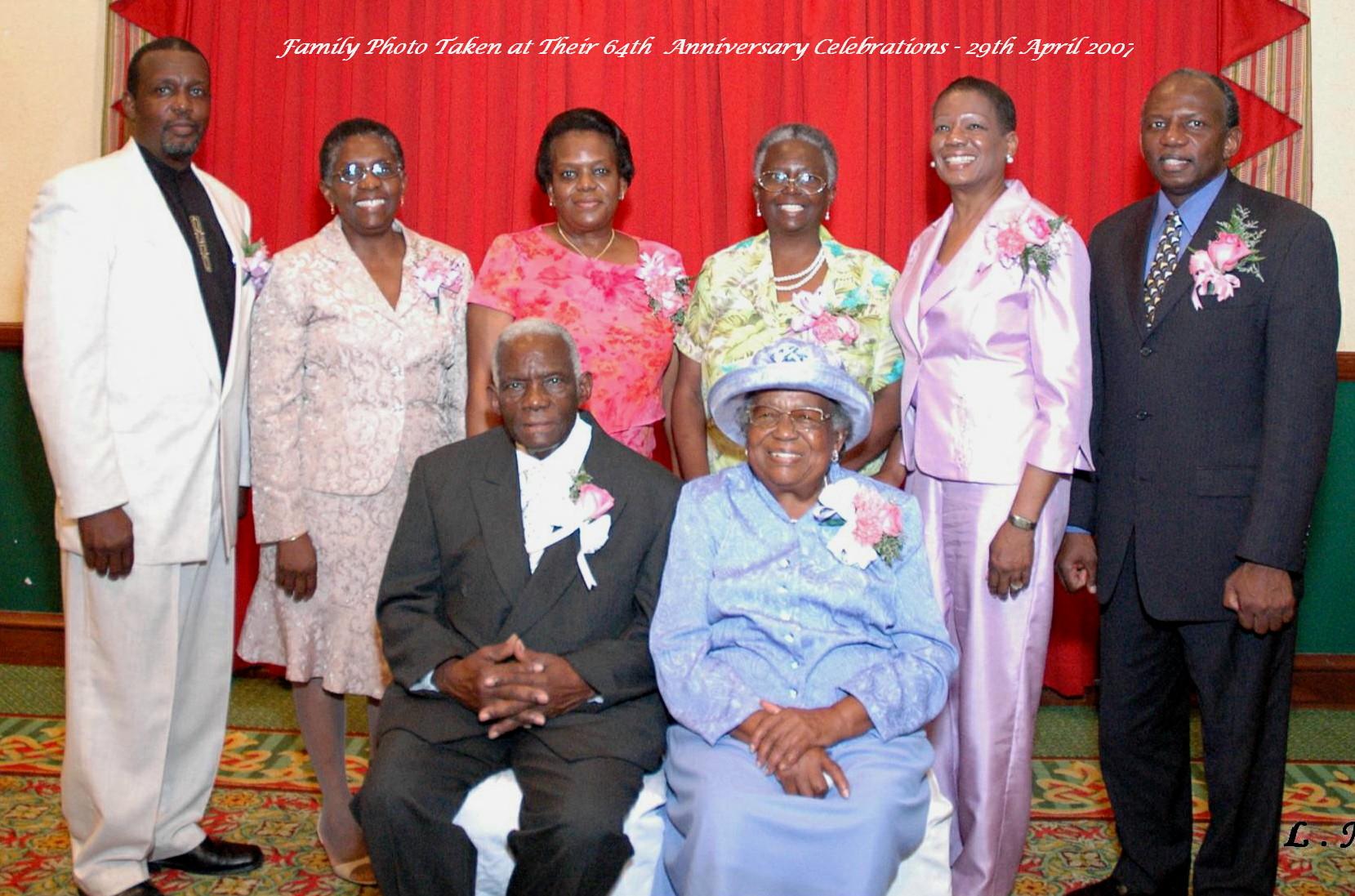
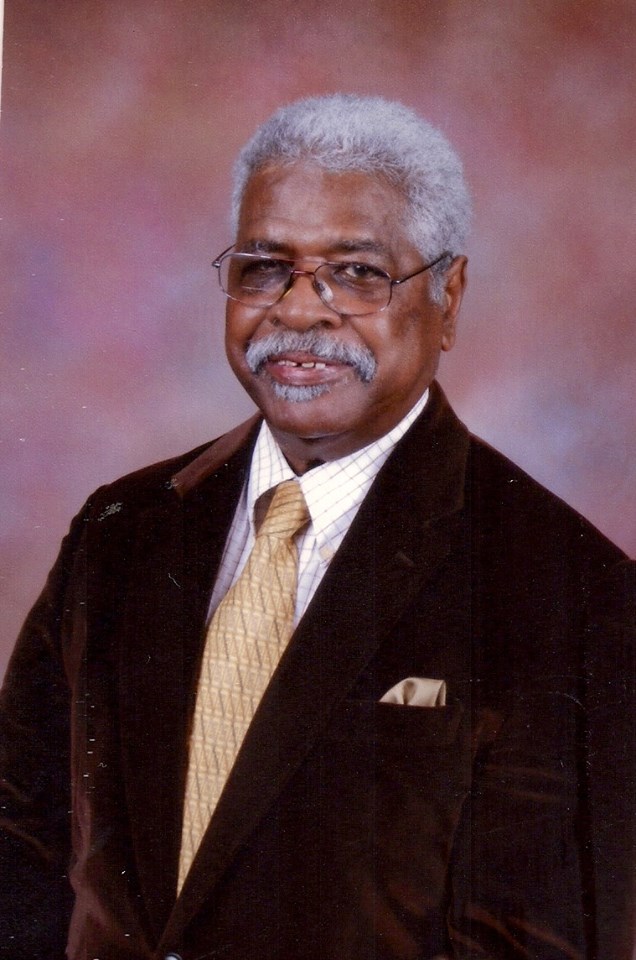
BlydensThe Percival (Percy) Blyden Family lived on the south side of Lewis Street opposite St. Agnes Church.  Mrs. Sybil Blyden was a member of the Nicolls family from Tin Shop Corner in Grant’s Town.  She was the third of eleven children in her family.  The Blydens later moved to Farrington Road.  The picture at left was taken at their sixty-fourth wedding anniversary.  Mrs. Blyden was baptized at Wesley Grant’s Town Methodist Church where she was actively involved until in 1964 she became a founding member of St. Michael Methodist Church, where she was also involved in every aspect of the Church.  Mr. Blyden was a member of St. Agnes Church.

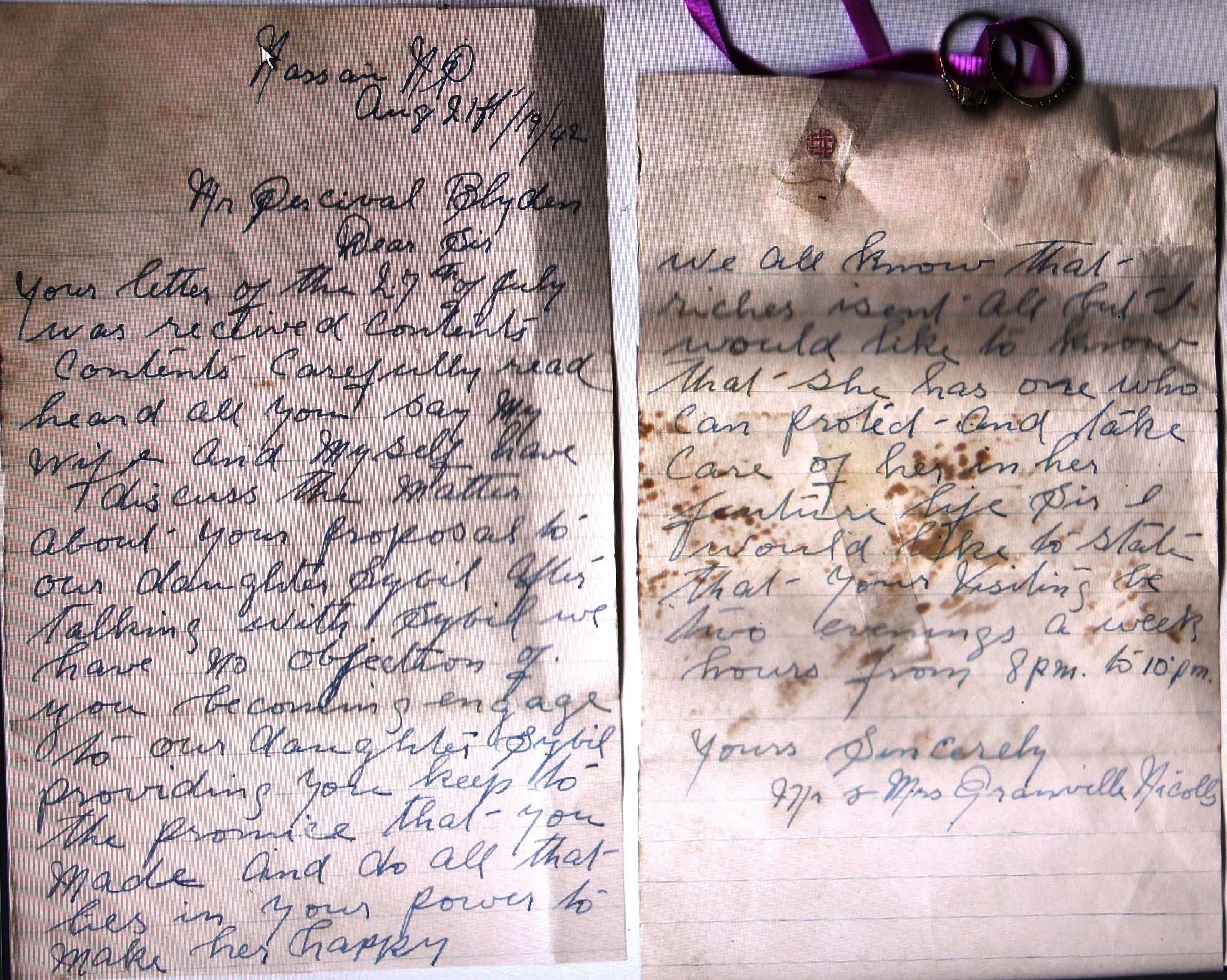
OCTOBER - BlydensI knew the Blydens all of my life and attended Sunday School with their children at St. Agnes.  However, I got to know Mr. Blyden better when we were part of a church group that travelled to the Holy Land in the early nineties, and we became good friends.   Percy and Sybil were married on 29th April 1943. When I visited with them a few years prior to their deaths, Mr. Blyden very proudly showed me the original framed “visitation” letter that he received from Mr. Nicolls giving permission for Percy and Sybil to be engaged and setting visiting hours at two evenings per week from 8:00 – 10:00 p.m.  The Blydens had six children:  Veta Brown, Calliope Williams, Persis Hepburn, Dr. Gershwin, Louise and John.

Blydens At Lewis St. HousePercy was a carpenter and he worked for a number of the large construction companies, including McAlpine, Sunco Builders and, Cavalier Construction where he held the position as site foreman. He was a quiet gentleman who grew just about everything in the dense garden on the eastern side of his yard at Farrington Road including rose bushes, other flowering trees, avocados, breadfruit, plums, bananas, sapodillas, citrus and many others.    On a few occasions I rambled through the garden with him as he showed and shared his crops with me.

Blyden Family_1Sybil initially worked as a seamstress, and later as an Assistant Teacher at Woodcock Primary School.   However, at the age of 38 years, with six children, and with the full support of her husband, she undertook to become a fully qualified teacher.   This meant that after a full day’s work teaching she got on her bicycle and went to evening classes in order to prepare herself.  It did not bother her that she was the most mature among the many young students.  She successfully obtained her professional qualifications at The Bahamas Teachers’ College and the Maria Gray College in England, and rose to become the pioneering Principal of the Stapledon School for the Mentally Retarded.   A special site was designated on the Stapledon School grounds for a building to be constructed in honour of Mrs. Blyden in 2008, prior to her death.  The building was subsequently constructed, commissioned and officially named in April 2010.  She received the Queen’s Certificate of merit and the Victor Sassoon Golden heart Award in 1971.  One of the streets in the Millennium Gardens Subdivision is also named in her honour.

Blyden Visitation Letter_2Veta is a Health Management consultant.  She is married to Granville Brown and they have two children, one daughter and one son: Gravette and Gerard.   Calliope is a High School Guidance Counsellor in New York.  She is married to Darwin Williams and they have no Children.  Persis is employed at the Eugene Dupuch Law School as a secretary.  She is married to William Hepburn, Sr. and they have two sons: William II and John, two grandchildren twins, Kyle and Katherine.  Gershwin is a medical doctor practicing in Miami, Florida specializing in Hematology and Oncology.  He is married to the former Donna Russell and has one son Gershon. Louise is employed as an Accounts Supervisor at the National Flag Carrier, Bahamasair.  She has one son Lamon and one grandson Jaden.  John is employed at Chekard as the Office Manager.  He is married to the former Princess Butler and they have three children: one daughter Johnneice Blyden-Williams, two sons Percy “PJ”, Prince, and one son-in-law Robert Williams.  John is a member of the Senior Choir and a soloist at St. Agnes.

Mrs. Blyden died on 11th May 2009 and Mr. Blyden passed away on 6th October the same year.

ADDENDUM:  You can see the original “Visitation” letter and learn more about the Nicolls family in the special exhibit in the Pompey Museum, Bay Street, Nassau, N.P., which includes the family links to the last known documented slave ship to land in The Bahamas. 

© Copyright Rosemary C. Hanna 2013 


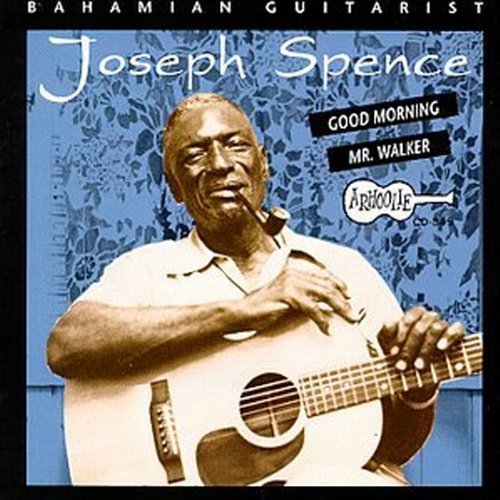
JOSEPH SPENCE – by P. Anthony White

Joseph Spence:   Who dares follow in his giant strides?

By P. Anthony White

“Who follows in his train?”
From THE SON OF GOD GOES FORTH TO WAR

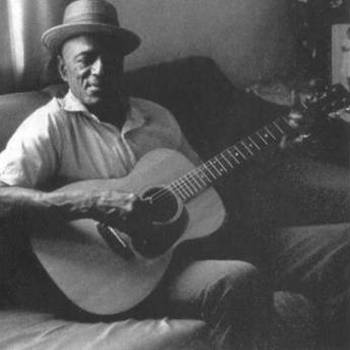
P. Anthony WhiteJoseph Spence_1Up through the years as The Bahamas developed admirably on the social, economic and political fronts, there has also been steady development in the area of culture and entertainment.

In each generation over that time, there have been entertainers who have been stand-outs who have left their indelible imprints, and many of their young successors on the entertainment stage have been greatly inspired by their glittering examples and have attempted to follow in their giant footsteps.

To his immense credit, for many years outstanding Bahamian radio personality Charles Carter, who has also been an executive at the Broadcasting Corporation of The Bahamas, a Member of Parliament, and a cabinet minister, has done an extraordinarily thorough and commendable job, wherever he could, of researching and transcribing the lives, times, and accomplishments of Bahamian entertainers over time.
He has exposed, through radio and other media, both the faces and the flip sides of  performers and entertainers such as the late George Moxey, Blind Blake, Maureen Duvalier, Priscilla Rollins, Freddie Munnings, and, of course, the unforgettable Tony “The Obeah Man” McKay from Canaan Lane.

However, perhaps of late Charles Carter, who was a fellow student of Tony McKay and The White Boy at Rhodes high school in New York City way back when, has also widely headlined the famous Berkeley “Peanuts” Taylor, and Ronnie Butler who, along with Count Bernadino, insists that age is nothing but a number.

Yet Charles Carter, who must be hailed as The Bahamas’ chairman of the radio entertainment board, has always, stretching back to the 1960s, quite sensibly and with abiding admiration left no research hill unscaled  with regard to the most ancient of the country’s pioneer entertainers whose influence over the years tentacled to faraway climes.

The reference here is, of course, to the inimitable, timeless, and unforgettable Joseph Spence who, had he been yet alive, would have celebrated his 100th birthday two days ago, on 3 August.

But who, exactly, was Joseph Spence? Many thousands of Bahamians would put that question, and well they deserve to know the answer. Art is long and time is fleeting, as Henry Wadsworth Longfellow advised and Sir Randol Fawkes was fond of repeating. Be patient.

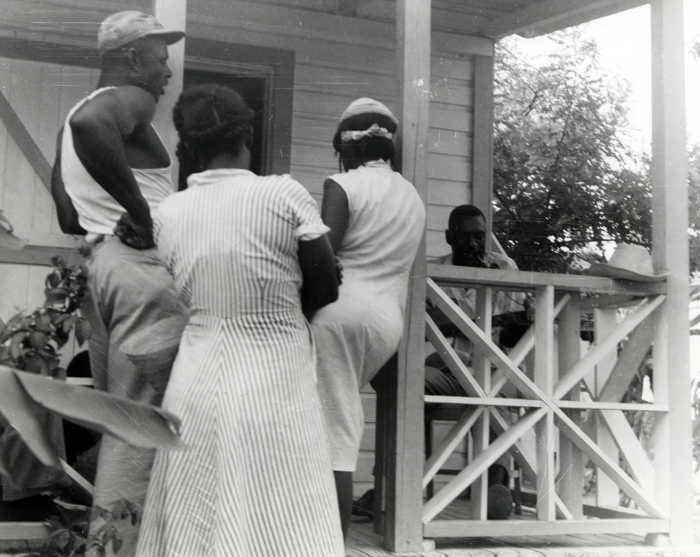
Joseph Spence_4Joseph Spence was an Andros sponge fisherman who was born on 3 August 1910, four years before the assassination of Archduke Franz Ferdinand of Austria sparked World War I, supposedly the “war to end all wars”.

When he was barely nine years old, Spence was given a guitar by an uncle who resided in the United States, and although he had not the slightest clue what to do with the thing, that instrument triggered  the foundation and direction of a long  and intriguing life of music.

He painstakingly taught himself to play the instrument, no doubt encouraged by
another uncle, who lived in The Bahamas, and who was popular and sought-after as a flute player.

Eventually young Spence, his uncle and two percussionists began playing for dances in Andros, performing rhythms that included quadrilles, waltzes, polkas, and calypso pieces.

However, no matter how much Joseph Spence loved his music, and how proficient he became as a guitarist, he obviously could hardly earn a living from his performances for friends, and so from the age of 16 he began going down to the sea in ships.

That was around 1926. The war had ended in 1918, and there was a kind of peace around the world. It was also the golden, lucrative age of sponging in The Bahamas, and especially in Andros. He became a sponge fisherman. For some reason music and the ad hoc singing of spirituals had become associated with sponging, and so Spence took his faithful guitar along on his trips at sea.

On those occasions he carefully wrapped the instrument in a cloth and kept it below deck so that the strings would not rust in the salt air. It was perhaps when he played the guitar at sea, probably with a few of the other fishermen chiming in, there was most likely slowly developed the Bahamian tradition of “rhyming”, in which you made up line after line as you went along.

Interestingly, “rhyming” has long been considered an early ancestor of rap music, in which black folk made up verses usually based on Bible stories or traditional hymns. Joseph Spence, who had grown up in the church at Small Hope, Andros in a musical Bahamas, particularly specialised in that style of singing, bringing to bear his guitar-influenced version of the style.

Thus his specialised and personalised  versions of spirituals dominated all other versions, becoming recorded and eventually performed on the international scene, particularly after the American company, Nonesuch Records, featured them prominently on releases.

Although truly unforgettable was Joseph Spence’s rendition of Down by the Riverside, the memory of which recently was so vividly and beautifully evoked by the exotic Naomi Taylor during the Sunday jazz session at Indigo, Spence had a number of other spiritual numbers as part of his expansive musical repertoire.

They were such as A Closer Walk With Thee. All Hail The Power Of Jesus Name, Be a Friend To Jesus, Living on The Hallelujah Side, Glory, Coming In On  A Wing and a Prayer, Kneeling Down Inside the Gate,  and the ever popular Bye and Bye  which so many grieving Andros families requested he come and sing at the setting-up for departed members.

Tragedy came in 1938 when a blight killed the sponge beds around The Bahamas,  and the sponge fishermen at Andros, including Joseph Spence, found themselves without jobs. Yet the musical sponge fisherman, Joseph Spence, was hardly discouraged, but with his simple faith interpreted the catastrophe in quite a different way.

Describing the blight to American writers John Stropes and Justin Segal, he explained: “God destroy all the sponge. You see, when the spongers used to bring the boat to the merchant, sinking down loaded with sponge, when they sell the sponge they still left in debt. They don’t hardly get nothing. So I figure the father say, ‘Well, I see they’re doing too much with this poor people having to kill these sponge. I better put them on something else.'”

Joseph Spence_5It has never been quite clear what else the Almighty had in store for the other fisherman, but He apparently inspired Spence to move to New Providence. A year after the sponge beds had died World War II broke out, and thousands of young Americans had to be deployed to fighting fronts in Europe and the Pacific. America had a shortage of manpower to work the farms and factories, particularly in the South.

Blessedly, in August 1940 the Duke of Windsor, who had given up the British throne for the woman he loved, arrived in Nassau to become Governor of the Bahama Islands. That was a tough economic season, when thousands of Bahamians, especially young men, were out of work.

The Duke has always been applauded for his initiative in travelling to Washington where he met with U.S. President Franklin D. Roosevelt and worked out a plan – the “Project” or “Contract” — in which Bahamians were allowed to travel and work on agricultural farms in the southeastern states.

Spence and his wife Louise took advantage of that opportunity and for two years worked on “The Contract”, his trusty guitar never far from him. That period helped his musical development tremendously, as he was exposed to American string traditions, eventually incorporating them – together with blues and country music – into his own techniques and emerging with a guitar style no one has to this date been able to duplicate.

In late 1938, some of his songs were recorded by the American folklorist Alan Lomax. However, interestingly, as Joseph Spence developed into an entertainment virtuoso, he had little regard for any kind of commercial success, and in fact owned no rights to his own works as recorded by many others..

In his time Joseph Spence popularized a  number of secular songs, leaving on them his special mark of the guitar which as any point at one time sounded for all the world as three or four different stringed instruments played in perfect accord, much like the four parts of a musical score.

In fact it has been said that because Spence often sounded as if he was playing several guitars at once, some suspicious or simply inquisitive or doubting foreign professional musicians, upon listening to Spence for the first time, were certain the Androsian had another musician hidden nearby as an accompanist.

That was the effect of Spence’s guitar expertise, though unconventional and perhaps considered out-of-tune by regular standards. Yet in his description of Spence’s rendition of “Good Morning, Mr. Walker”, the renowned Jack Viertal, wrote thus about what Spence had produced: “There is no sloppiness in this, he tunes very precisely by playing the same figures over and over again until he is satisfied, and the guitar is always tuned to the same pitches.”

Secular songs he performed utilising that unique style included such as “Good Morning, Mr. Walker”, “Conch Ain’t Got No Bone”, “Crow Calypso”, “Diamond on Earth”, “Don’t Let Nobody Burn Down”, “Sloop John B”, Burma Road”, “Bimini Gal”, Brown Skin Gal,  and “Don’t Take everybody To Be Your Friend”.

Having had his fill of travel, Joseph Spence returned to Nassau in 1946, a year after the war ended, finding work as a stone mason during the day, and at nights performing his beloved music at local hotels and upon requests aboard yachts moored in the harbour.

Yet, gradually, time was taking its toll on this unusual guitarist who for years had been celebrated far more grandly abroad than at home.

He suffered a heart attack in the mid 1970s, roughly around the time he was encountered by Charles Carter, without doubt his most faithful and adoring fan, who set out on a relentless odyssey of talking, interviewing, recording, and essentially capturing the real essence of Joseph Spence, essentially the quintessence of the real Bahamas.

But Spence bounced back from his illness, and became a night watchman at a primary school. Even then, in his mid 60s, he taught himself the piano, in fact creating on the keyboard a sound imitative of his guitar. By that time an American musical album had used some of the renderings of Joseph Spence in the widely-acclaimed compendium labelled, yes, The Real Bahamas.

Joseph Spence passed from the scene on 18 March 1984, just short of his 83rd birthday, and with his passing there expired from the cultural and entertainment stage of The Bahamas and indeed the world a stroke of musical genius ambitious aspirants will perhaps endlessly attempt to reproduce and imitate.

In his lifetime, Joseph Spence had spanned generations, plucking his guitar and singing from a boy during the first world war, through the second global conflict and the Korean War, and even through the 1960s when at least a handful of Bahamians were involved on the Viet Nam battlefronts.

He had crossed over the tenure of two powerful ruling political regimes, and indeed the year he died cabinet ministers Hubert Ingraham and Perry Christie were summarily dismissed from the government of the late Sir Lynden Pindling, and came to represent a new political culture and dispensation in The Bahamas.

At home and, intermittently abroad, Joseph Spence had seen life fully and seen it whole, and whatever else altered around him at home and abroad, he remained steady and consistent, particularly with regard to his unique music styling.

Yes, Joseph Spence, born a century ago and having passed from the scene a quarter of a century ago, was a living musical legend with a style uniquely his own, a winning style truly worthy of imitation or emulation.

Yet amongst today’s galaxy of budding entertainers, there must surely be those who will dare attempt to follow in his train. Who so dares… for what it’s worth?

P. Anthony White

5th August 2010

This article is posted here by kind permission of the children of P. Anthony White

P. Anthony White.. Online: https://pawbahamas.wordpress.com/ 

P. Anthony White on Facebook:  https://www.facebook.com/P-Anthony-White-164631210228066/?ref=ts&fref=ts


The Lucayan Chorale

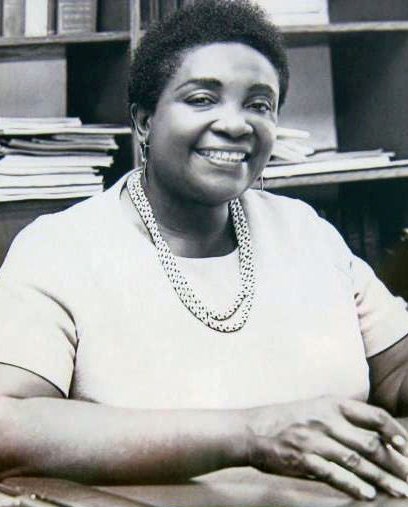
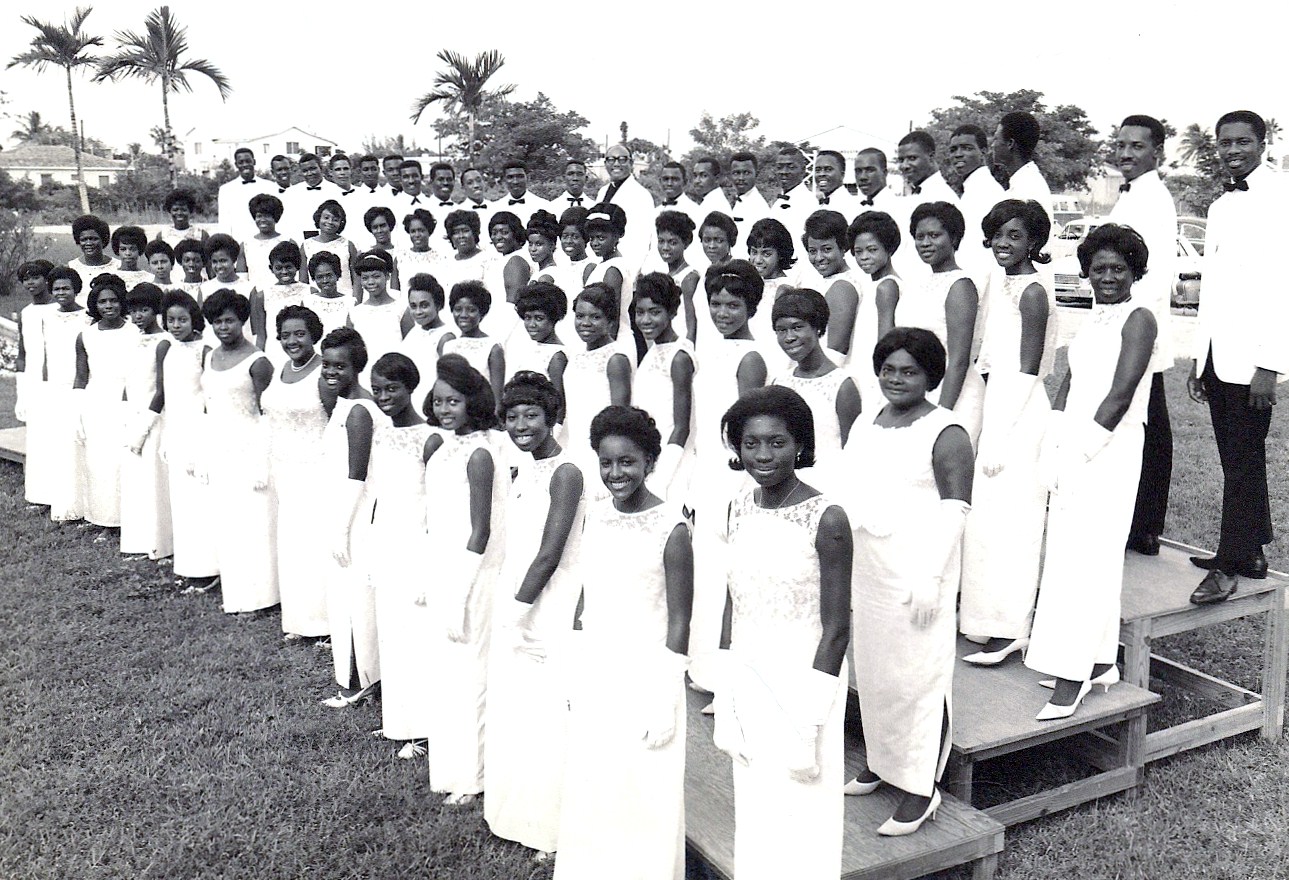
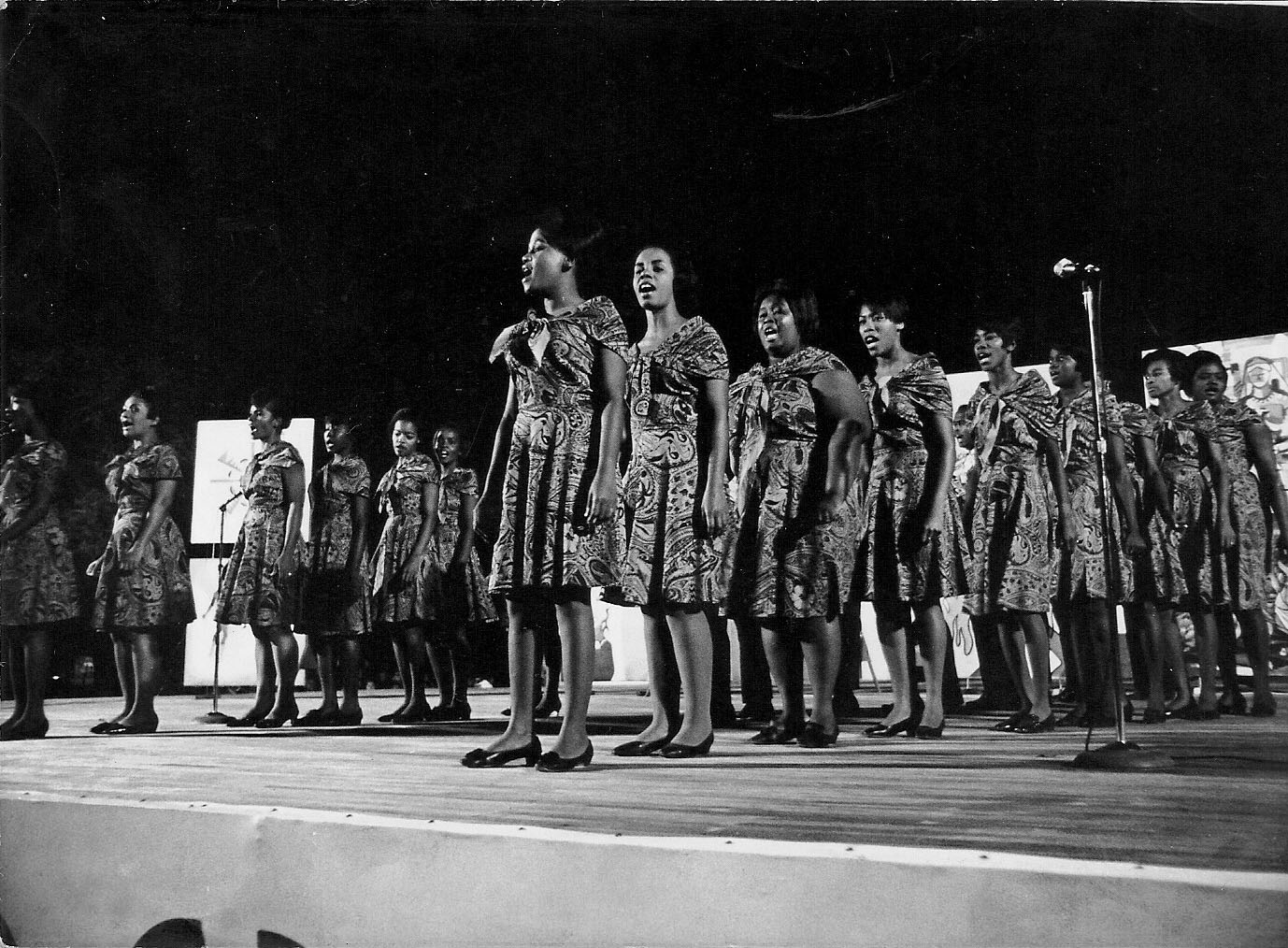
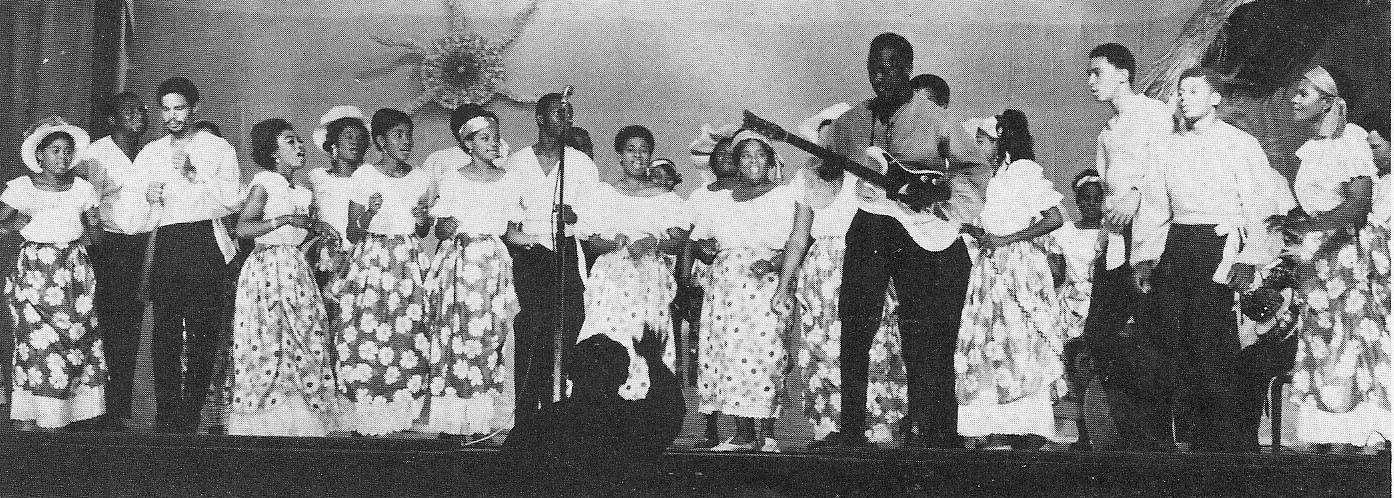
Dame Dr. Doris JohnsonLucayan Chorale c. 1969

The Lucayan Chorale was born in Bethel Baptist Church,
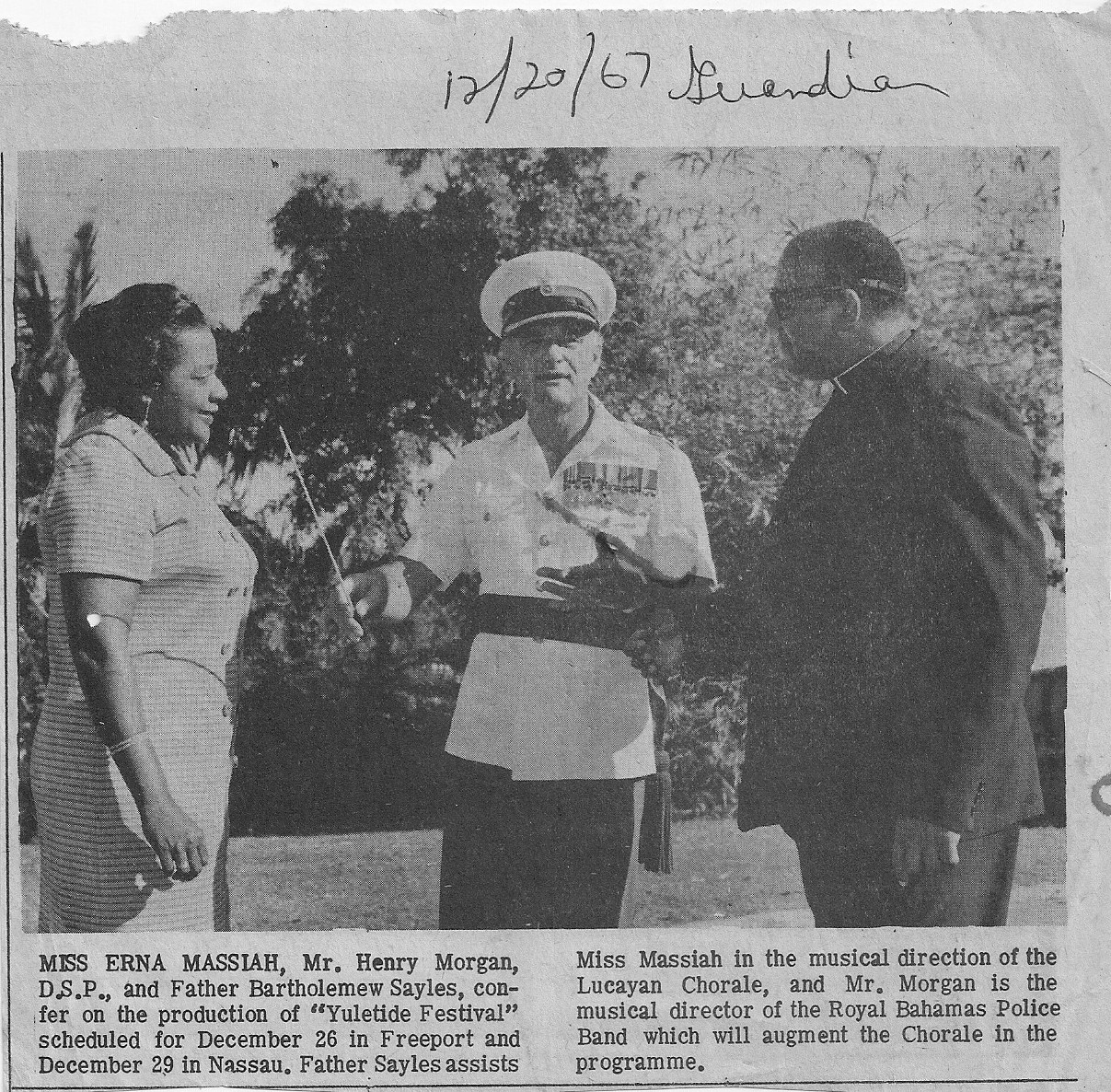
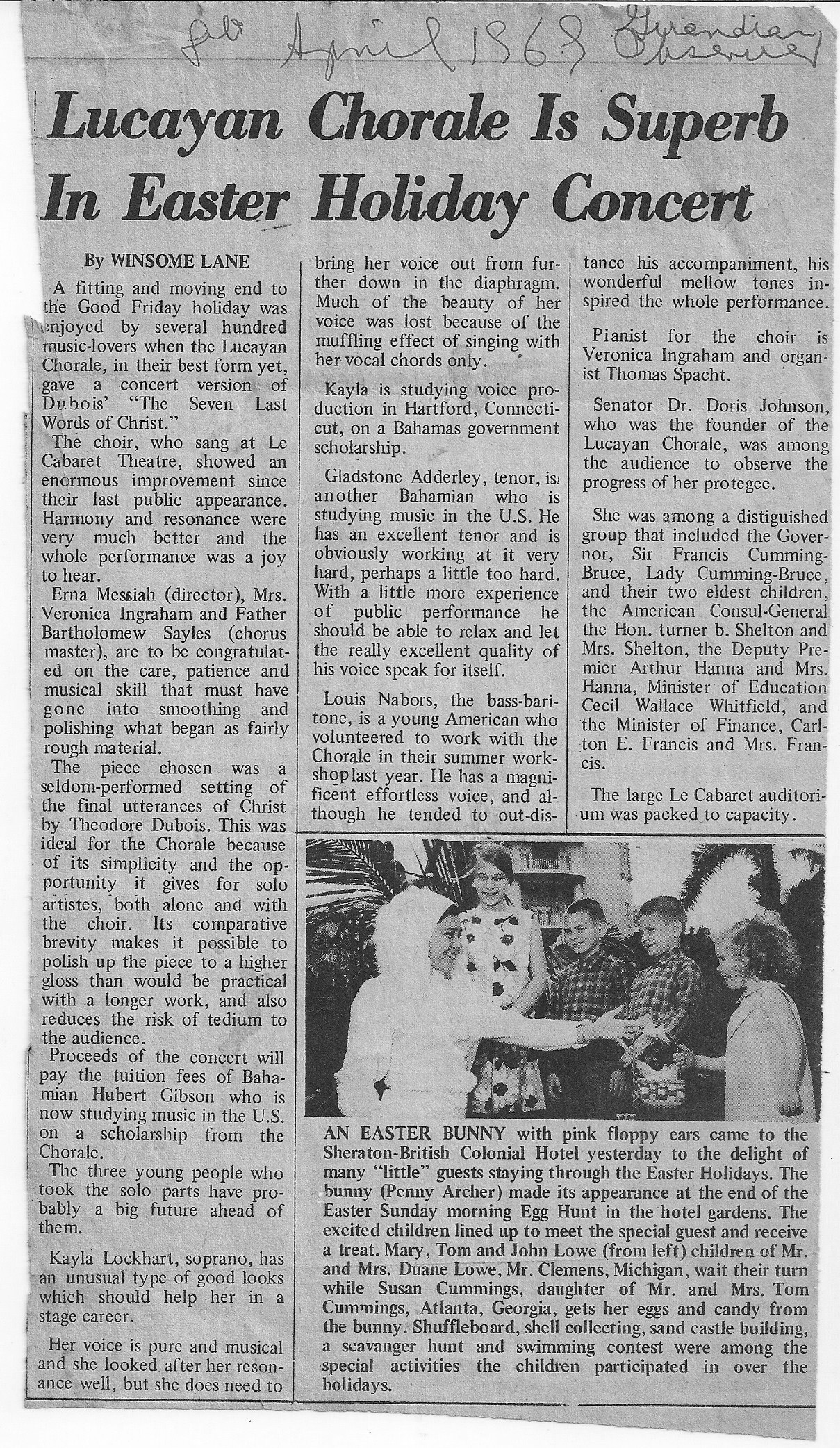
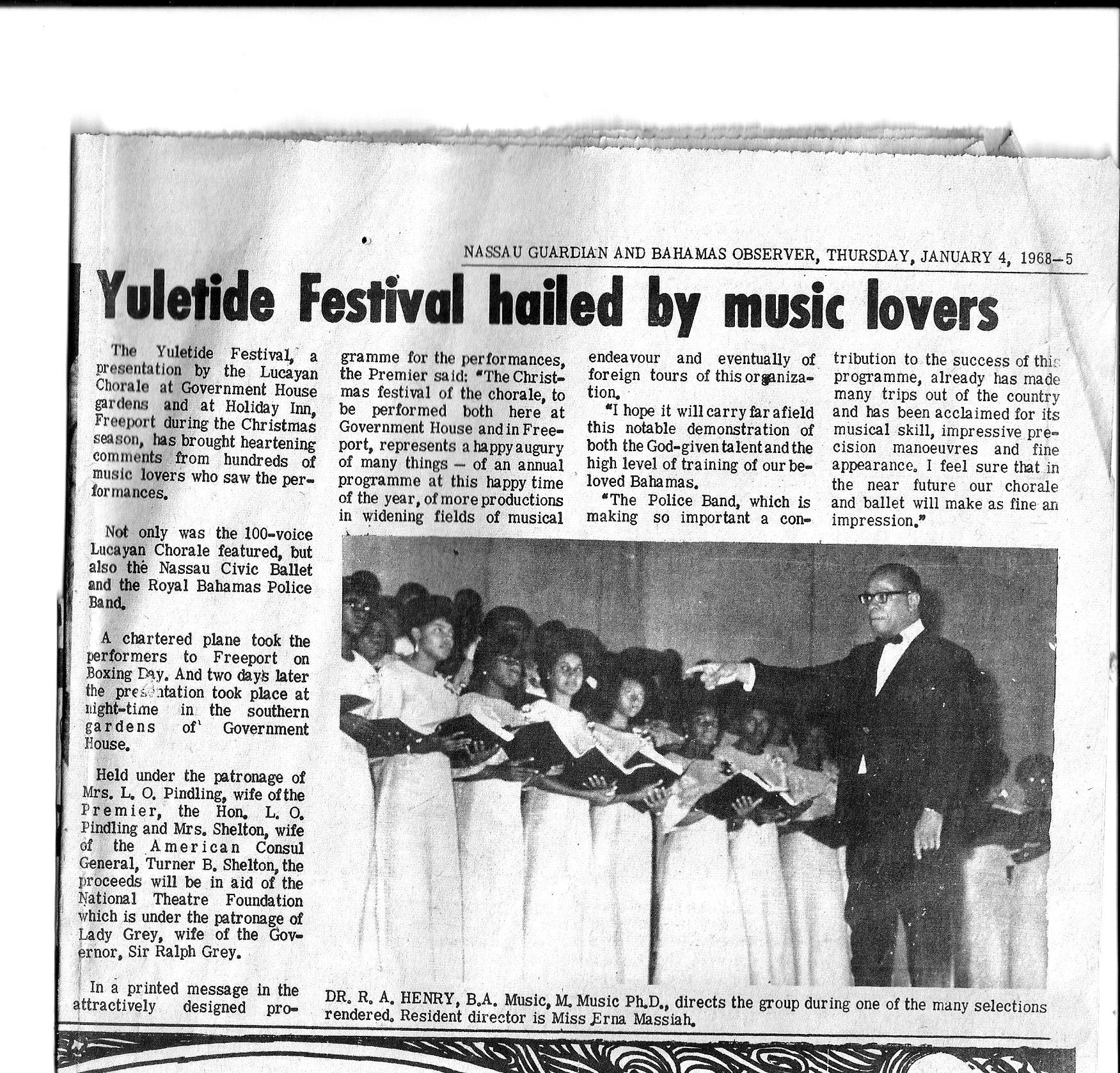
Meeting Street, which is the oldest Baptist Church in The Bahamas. The Chorale was the brainchild of the late Dame Dr. Doris L. Johnson. an educator who later served as the first female President of The Senate in The Bahamas. Dr. Johnson was a member of Bethel Baptist Church, and she invited her former colleague, the late Dr. Robert A, Henry, of Huston Texas and Ms. Erna Massiah (a teacher from Barbados and former leader of The Y Choral Society), to assist the Lucayan Chorale. Consequent Ms. Massiah Dr. Robert A. Henrybecame the resident director and Dr. Henry (often accompanied by a few of his music students from Prairie View University) came to The Bahamas for number of years to conduct workshops for the Chorale which culminated in concerts held at Paradise Island, The British colonial Hotel, various churches and also in Freeport. E. Clement Bethel and Father Bartholomew Sayles and  Father Fred Fleischer (St. Augustine College) also lent their expertise to the group; and Veronica Ingraham (then organist at Zion Baptist Church) was also an accompanist. This was truly a community group, comprised of people from all walks of life. The group sang various genres of music including classical, Negro Spirituals, folk, calypso, etc. A number of marriages came about  through membership or association with the Lucayan Chorale.

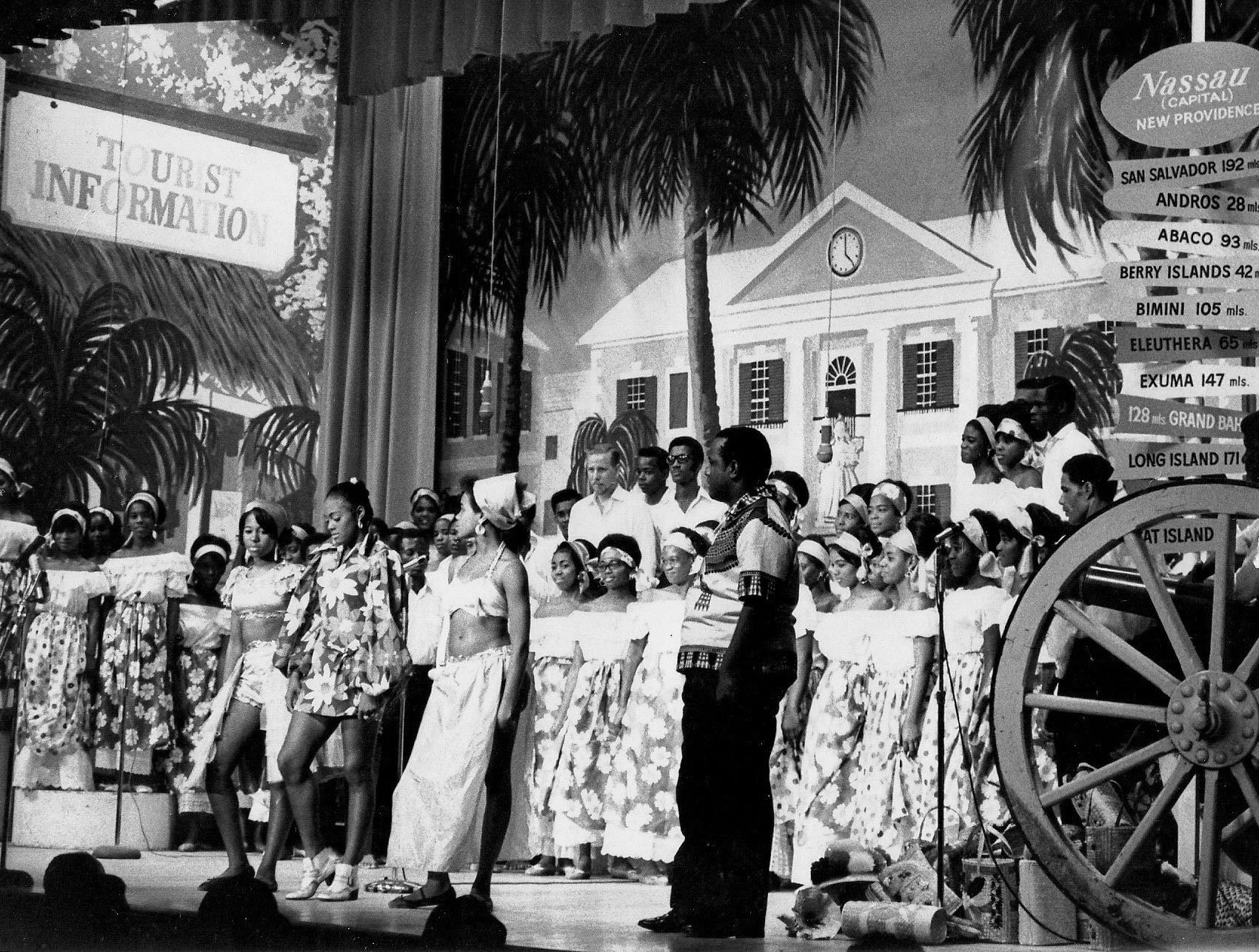
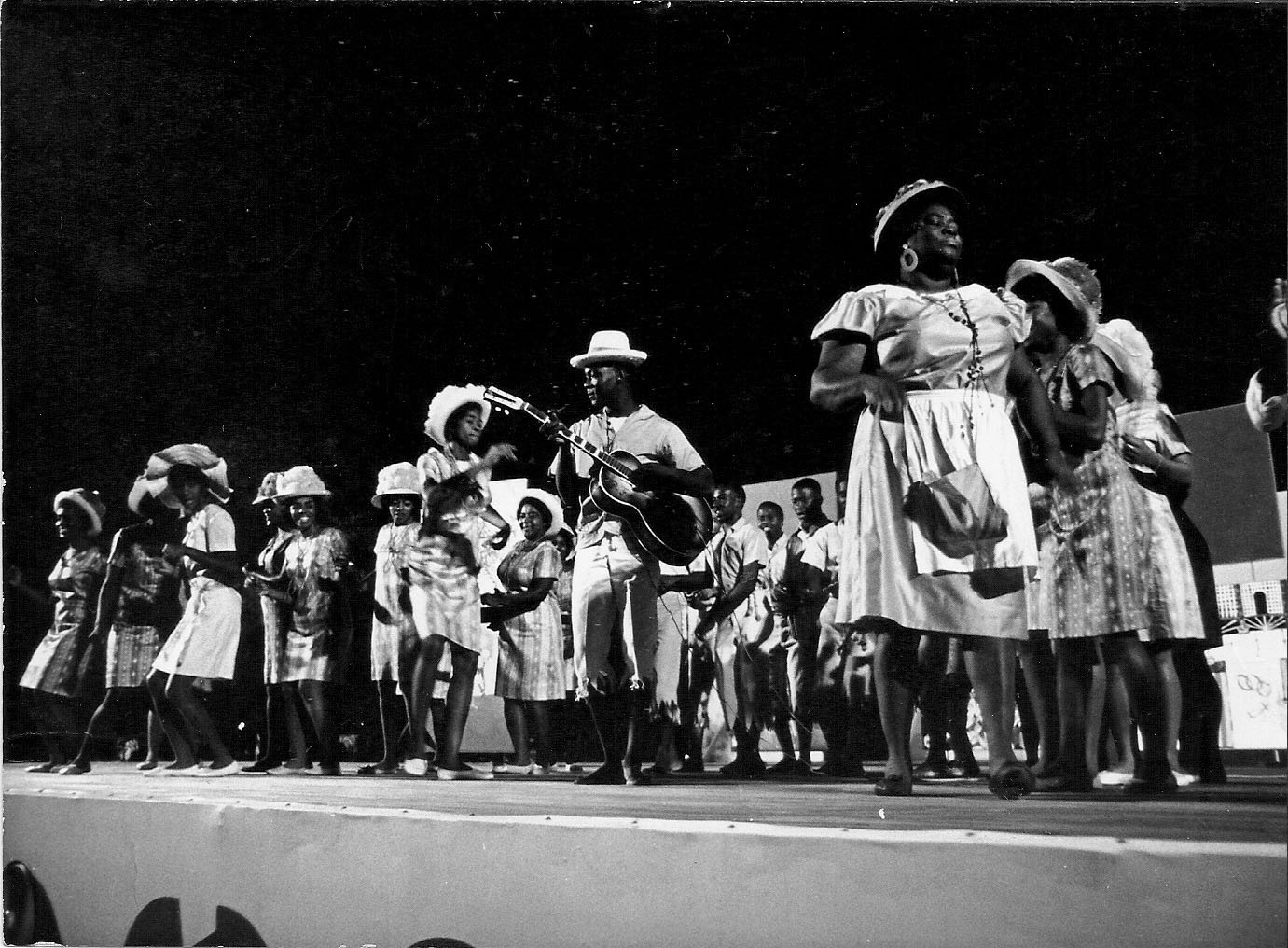
LucayanChorale_LeCabaret Theatre 1967Lucayan Chorale_Massiah_Morgan_SaylesThe Chorale is pictured at left  at Le Cabaret Theatre, Paradise Island 1967, singing the music of Irving Burgie (Lord Burgess), who wrote songs such as “Jamaica Farewell” made famous by Harry Belafonte. Lord Burgess was a friend of the Director, the late Erna Massiah (pictured with Dennis Morgan, then leader of the Royal Bahamas Police Force Band and Father Bartholomew Sayles), and he was present at the show. Lord Burgess’ mother was from Barbados and they were family friends of the Massiahs. The late Sonny Johnson and Ishmael Lightbourne were soloists. The Lucayan Chorale was the first group commissioned to sing The Bahamas National Anthem. The Chorale was also a part of the Folklore Group, led by E. Clement Bethel, that travelled to Mexico City to perform at various cultural venues during the 1968 Olympic games.

BahFolkloreGroup_Mexico_1968 Bahamas Folklore Group_Mexico_1968Lucayan Chorale_2_1968The Lucayan Chorale 4Prominent Bahamian musicians who studied with Dr. Henry at Prairie View University include Father Crosley Walkine, Jeffrey Sturrup, Gladstone Adderley, Cleveland Williams, Kendrick Coleby, and Cora Johnson. Others who were influenced by Dr. Henry include Patricia Bazard, Audrey Dean-Wright, Florence Carter-Gittens and Rosemary C. Hanna. Through their affiliation with the Lucayan chorale other Bahamians got the opportunity to receive a tertiary education at Prairie View, first among them being Maxwell Poitier. Other alumni include Philip Dorsett, Cecil Dorsett and members of the Zonicle family.

Lucayan Chorale_Foklore Show

© Copyright Rosemary C. Hanna 2016

The Bahamas Choraleers of the 1950s

By Kendrick L. Williams

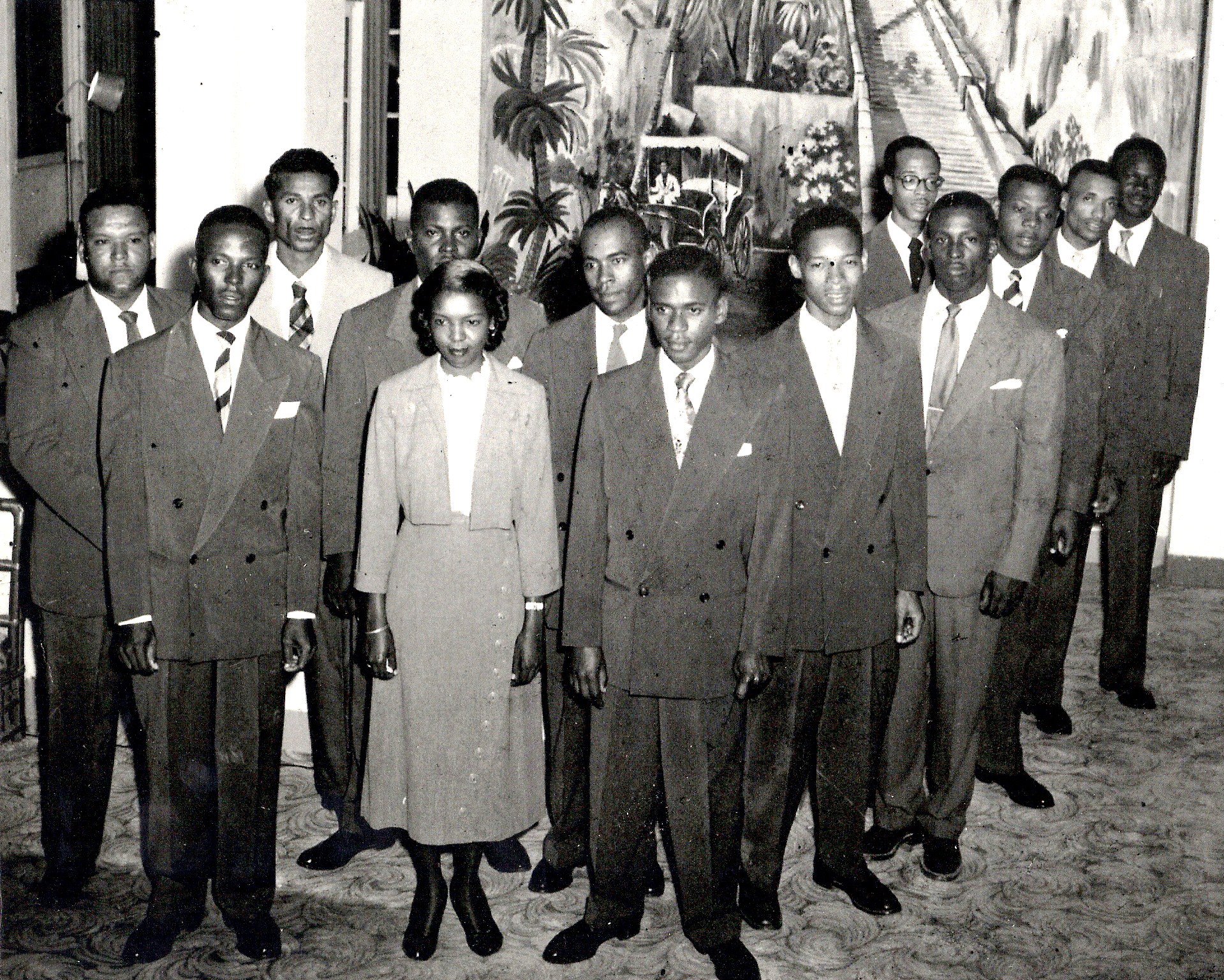
Bahamas ChoraleersThe Bahamas Choraleers first got together, under the leadership of Addington Cambridge and met at the home of his parents, Bert and Doris Cambridge on Hay Street, New Providence. The Group performed for approximately ten years from the late 1940s until the late 1950s. At the beginning, it was comprised of six males and a lady named Miss Gwendolyn Munnings (later McDeigan) who sang with the group throughout the entire period of its existence. The group also practiced at the home of Percival and Leona Hanna on Anderson Street.

The repertoire of the Choraleers included a variety of choral music – unison, four part harmony, solos, mostly accompanied by George Kerr on the piano or organ, sometimes a capella, religious, classical, secular, negro spirituals and humorous pieces.

The group usually performed on Sunday afternoons and, at the beginning, the main performance venues were: the British Colonial, the Fort Montagu Beach Hotel, the Royal Victoria Hotel and the Buena Vista. They also performed at the Balmoral and later the Emerald Beach hotels on Cable Beach. The Choraleers also sang at churches, weddings, funerals, private parties, and old fashioned concerts, etc.

Over the period of its existence, membership fluctuated from a low of six to high of fourteen. It is interesting to note that the members never agreed on just one spelling of the name: Some used “Choraleers” and others used “Choralaires”.

The Group was very popular and well received. Pictured above are: Alvin Bailey, Matthew Sawyer, Aaron “Cat” Cartwright, Gwendolyn Munnings-McDeigan, George Kerr, Ivan A. Hanna, Kendrick L. Williams, Addington Cambridge, J. Edison Deleveaux, Francis Albury, Leon Knowles and Roderick Simms.


November 2011

St. Agnes Anglican Church, Blue Hill Road, Grant’s Town, New Providence, The Bahamas

Excerpt from “Pictorial History and Memories of Nassau’s Over-The-Hill”

By Rosemary C. Hanna

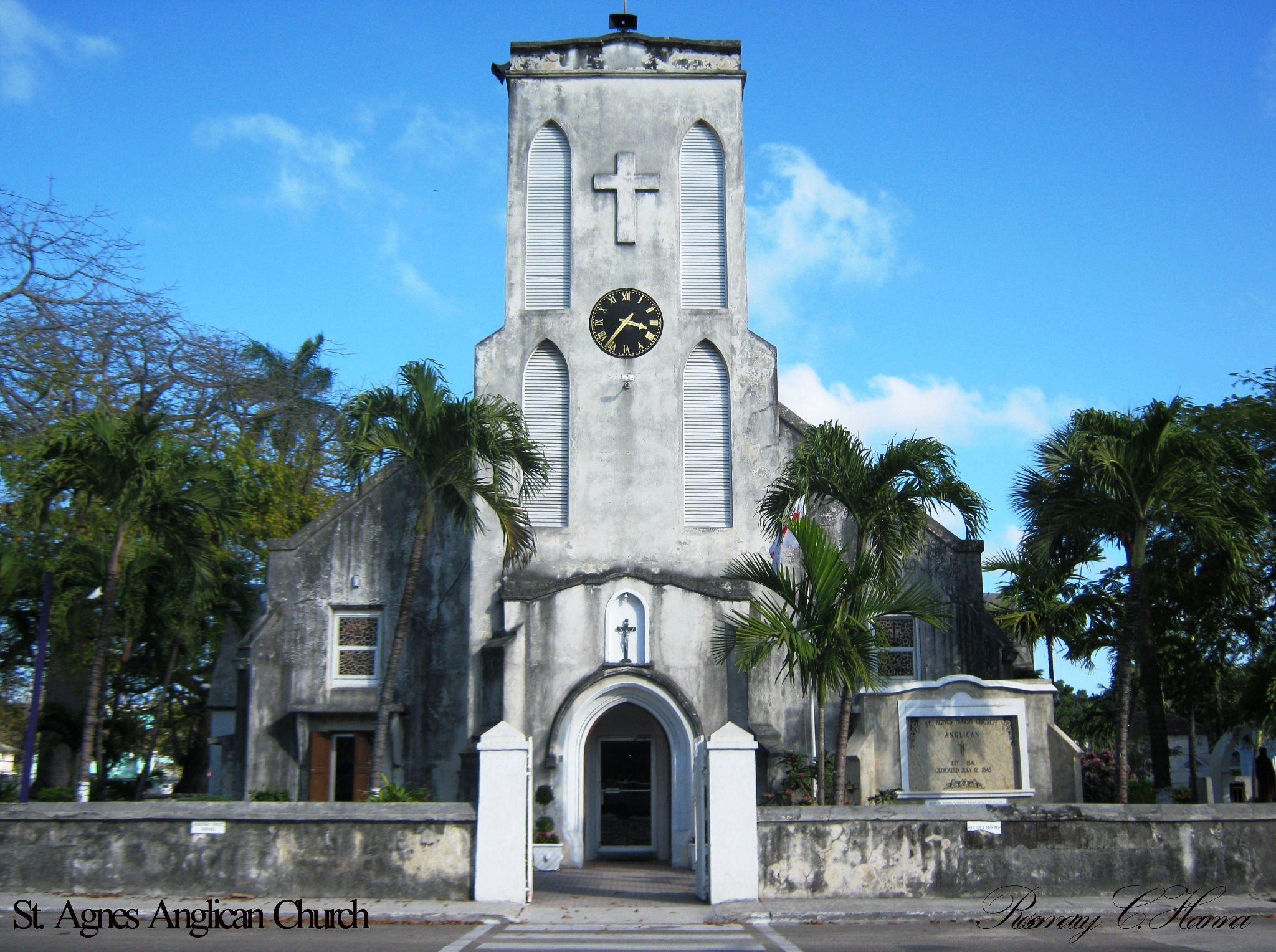
St.Agnes ChurchSt. Agnes Anglican Church played a pivotal role in the lives of my family and many others Over-the-Hill.  When I was a child all of the families that lived on Gaol Alley were members of and actively involved in the life of the Church.  Parents took their children to Church and children attended Sunday School, were involved in the Guilds, Boys Brigade, Anglican Young people’s Association (AYPA) and other organisations.

The Church was established in 1841 and dedicated on 12th July 1845.   It was established to provide a place of worship for the freed slaves who had settled in Grant’s Town.  Both St. Agnes and the Parish Church of St. Mary the Virgin were Chapels of Ease under Christ Church Cathedral and designated parishes on 18th July 1889.  The current Rector of St. Agnes, Archdeacon I. Ranfurly Brown, points out that St. Agnes and other churches Over-The-Hill played an importnt role in the education of the people.    The Anglican Church first established schools in The Bahamas in the 1700s.

In 1840 Deacon Edward Jordan Rodgers came to The Bahamas from Falmouth, England as a missionary.  He was the first Anglican Priest to work with the freed black slaves in Grant’s Town.   He returned to England in 1843 to be ordained as a priest.  Rodgers held the first St. Agnes services in the old African School House in 1841. He served at St. Agnes from 1841 to 1847. At the time The Bahamas was part of the Diocese of Jamaica.  The Bahamas became a diocese on its own in 1861.

Reverend William John Woodcock  was ordained as a Deacon on  12th November 1848 by the Lord Bishop of Jamaica, Aubrey George Spencer, and licensed as Assistant Curate at Christ Church Cathedral, New Providence, with charge of the St. Agnes District Chapel. At that time the Chapel was located at the present site of the St. Agnes Pre School.  Woodcock began his duties at St.Agnes District Chapel on 1st Janury 1849 and he served the Church until 1851.

He realized that good schools were of paramount importance in the district and opened the Woodcock School on 28th March 1849.  The wooden building with thatched roof accommodated seventy students and the attendance quickly expanded, making it necessry to add another room. Father Woodcock left all of his assets to the Woodcock School.  His remains are interred inside the Chancel Gate at St. Agnes Church.

Reverend James Fisher served as Rector for fifty years (1856-1906). He was te first rector to be called “Father”.  It was during his tenure that the new Church was built on Blue Hill Road to include a new Chancel and Lady Chapel.

Reverend Audley Browne was appointed Rector on 14th October 1906 and he served until 1925He was made  Archdeacon of Nassau in 1918.  He was an accomplished musician who built and repaired organs and installed the the first organ in St. Agnes.  He and Mr. Austin Destoup taught my father, Percival Hanna, to play the organ.   St. Agnes had other accomplished instrumentalists and vocalists who took part in church services and regularly presented concerts.

In 1916 the porch at the Western entrance to the Church was erected and dedicated in memory of Father Fisher and the former rectors of the parish.  The addition was planned by Father Fisher but he did not live to see it come to fruition and the project was completed by Archdeacon Browne.

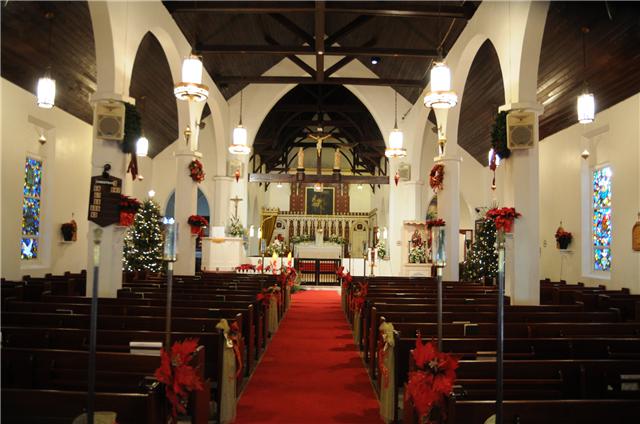
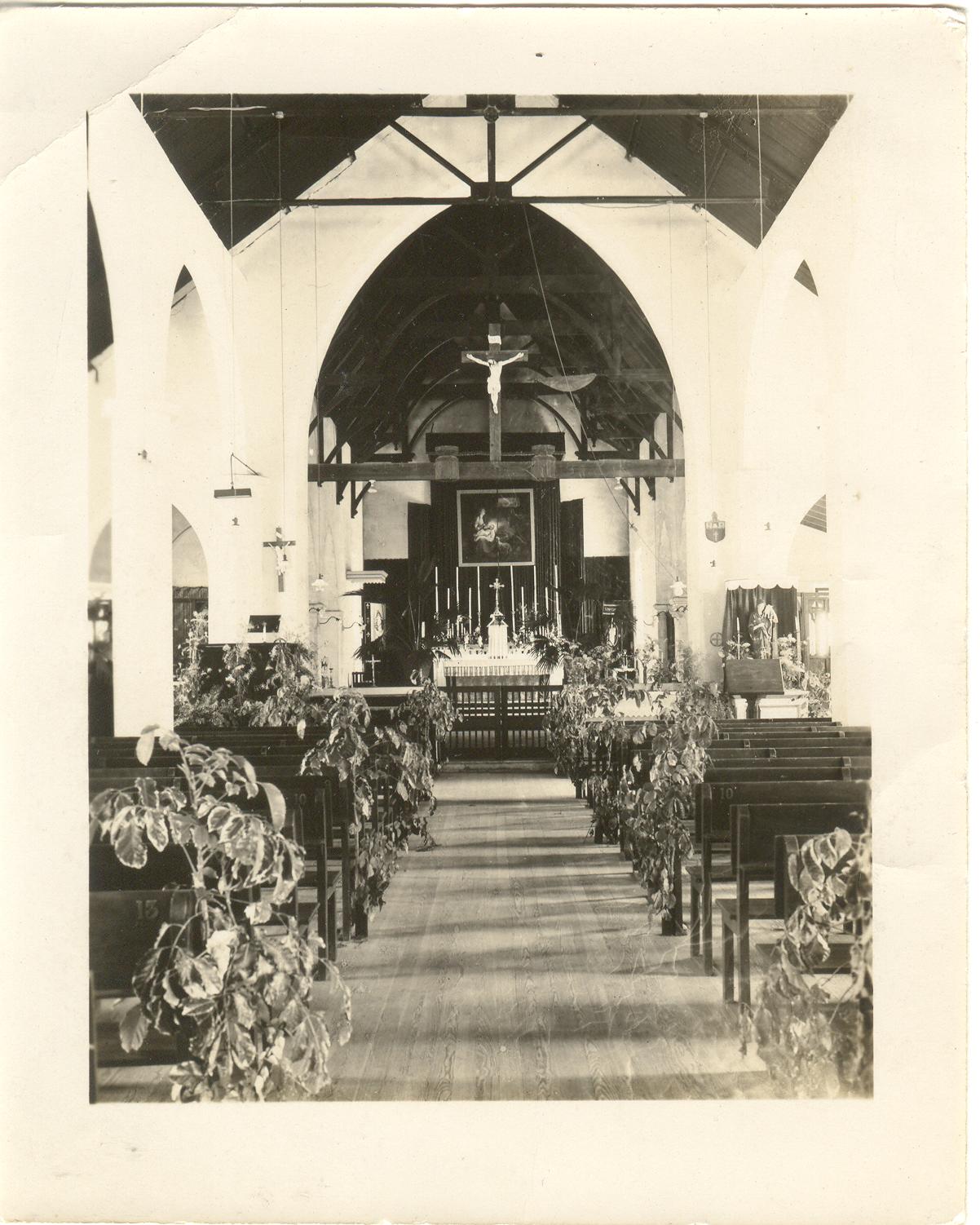
Reverend Herbert George was Rector from 1925 to 1936.   During his tenure the Church was destroyed during the 1929 hurricane.  During the time that the Church was being renovated, services were held at the schoolroom and at the Woodcock School.  The newly renovated Church included the enlarged nave and other changes shown in the 1952 and 2009 pictures below.Church Interior Dec.08St. Agnes Interior c.1952


Bahamian Rectors of St. Agnes Church

Canon George Loran PyfromCanon George Loran Pyfrom was born on 16th April 1883, the only son of George Loran Pyfrom, a pineapple farmer, and his wife Elizabeth of Governor’s Harbour, Eleuthera.  They also had three daughters, Lucilla, Ella and Meta. George Loran was a young boy when his father died and he was greatly influenced by Reverend Charles Smith who was then the Rector of St. Patrick’s Church, Governor’s Harbour.

In 1902 George Loran and one of his sisters came to New Providence where he ran the Church’s bookstore.   He worshipped at the Church of St. Mary the Virgin on Virginia Street, and was a member of the serving choir.  In 1911 he went to England to study theology at Dorchester College. In 1913 he was ordained Deacon at St. Paul’s Cathedral, London.

After his return to The Bahamas he was ordained to the Sacred Priesthood on 17th July 1915,  by then Bishop Wilfred Hornby, at St. Mary’s Church, Virginia Street.  After his ordination he was sent to Long Island where he served for twenty-two and a half years, travelling the length and breadth of the 70 mile Island by horseback, sometimes accompanied by his wife, Ethlyn, who was from Simms, Long Island.    In 1931 he was appointed as a Canon of Christ Church Cathedral   He was honoured as a member of the Most Excellent Order of the British Empire (MBE) in 1935.

Canon Pyfrom was appointed as Rector of St. Agnes in 1936.  He was loved by his parishioners and well known for his emotional sermons.  Below is a quote from an article written by his son Roscow Napier and recorded in “The Voice of the Church”.  Lent 1988:

The beauty and dignity which still surround the services at St. Agnes are a reflection of Canon Pyfrom’s high standards for correctness and proper decorum and his passion for dignified ceremonial.  He often affectionately referred to St. Agnes as the Pro Cathedral.  The people of St. Agnes responded with affection and enthusiasm to Canon Pyfrom’s ministry among them, and together they built St. Agnes into a very vibrant institution and it most certainly became one of the leading parishes in the Anglican Church in The Bahamas.

church_history_pic1Canon Pyfrom made plans for extensive improvements to St. Agnes; however, due to ill health, he resigned in January 1947.  He died on 2nd January 1950, five months after the passing of his wife.  Their children were George Loran III, LaGloria, and Roscow Napier.

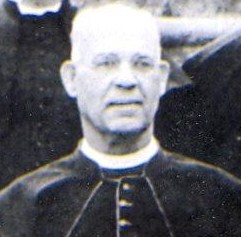
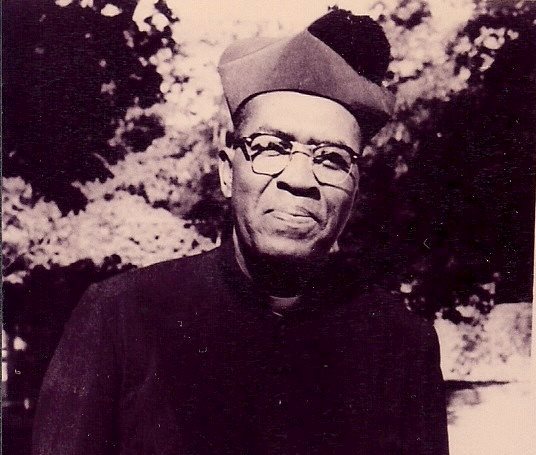
Canon Milton Cooper2Canon Milton Edward Cooper was born in Exuma on 25th May 1903.  He was the first Bahamian to go to Codrington College in Barbados.  He was ordered Deacon in 1928 and served at churches in Cat Island, Long Island and Andros before his appointment as Rector of St. Agnes.  He was made a Canon of Christ Church Cathedral in 1950.   Archbishop Drexel W. Gomez, who was an acolyte when Father Cooper came to St. Agnes, recalls that he was always impressed with the attractive manner in which Father Cooper conducted services.   Many persons who were not Anglicans used to come to Stations of the Cross at St. Agnes to observe how he conducted the service.  Father Cooper had an outstanding tenor voice and people also came to Evensong on Sundays to hear him sing the Divine Praises.

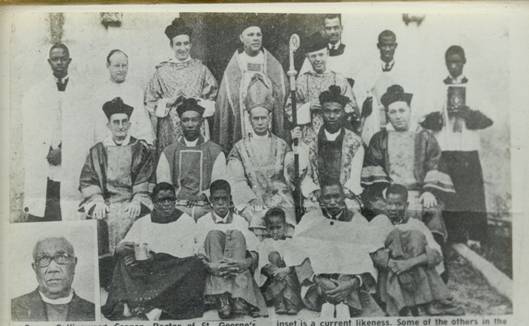
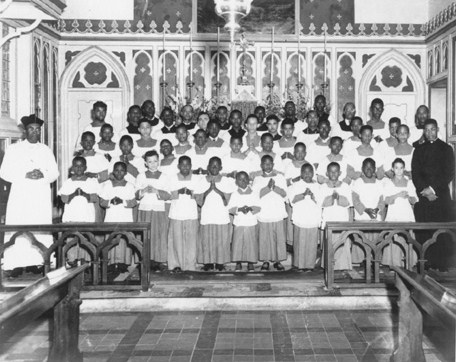
Choir_Boys_1955Father Cooper encouraged many young men to become priests, prominent among them being:  Archbishop Drexel Gomez, the late Archdeacon William Edward Thompson, Bishop Gilbert Arthur Thompson, the late Archdeacon Murillo Bonaby and the late Canon Dudley Strachan.  Archbishop Gomez states that Father Cooper was the person who solidified the parishes.  When he preached his last sermon at Evensong on 11th June 1967, Father Cooper quoted the first line of the A&M Hymn 271:  “O Jesus I have promised to serve thee to the end”.  He left the pulpit, took his seat in the Sanctuary and quietly died.

He was married to the former Gwendolyn Ramming and their two sons are Christopher, who resides in Freeport, Grand Bahama and Paul. Canon Cooper and Father John Taylor are pictured at left and right respectively in the above picture with Acoyltes.

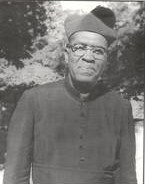
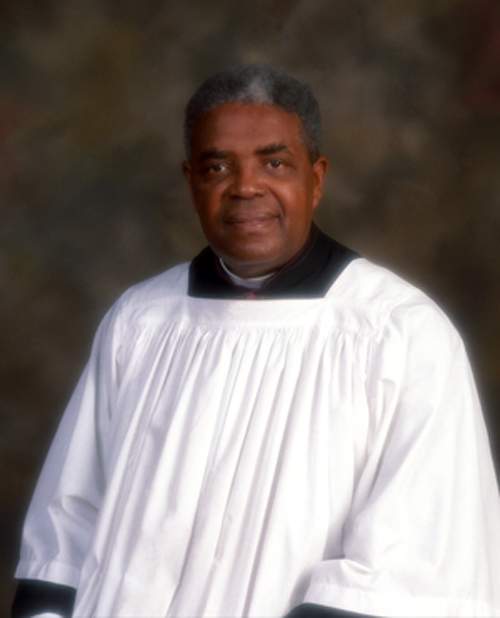
Archdeacon thompson2Archdeacon William Edward Thompson, OBE was born in Eleuthera on 17th December, 1933.   He was the oldest child of William Edward and Corene Thompson (née Hutcheson).  Father Willie, as he was affectionately called, was educated at the St. Agnes Day School, the Western Preparatory and Junior Schools and St. John’s College.  He was one of Canon Milton Cooper’s protégés and entered Codrington College in 1952.  He obtained an Honours Degree in Theology as well as a Masters Degree in Theology from the University of Durham, England.

He was made a Deacon in Barbados on 21st December 1956 and ordained to the Sacred Priesthood at Christ Church Cathedral on 21st December 1957.    He travelled throughout The Bahamas in his capacity as Diocesan Missioner.  He was Priest in Charge of Exuma from 1958 to 1961.  He subsequently returned to New Providence and taught Latin, English and Religious Studies at St. John’s College.   In 1967 he succeeded Canon Milton Cooper as Rector of St. Agnes and retired in December 1999, having served for thirty-two years.

Father Willie followed Canon Cooper’s example and mentored many young men whom he encouraged to enter the priesthood namely, Keith Cartwright, I. Ranfurly Brown, Laish Boyd, the late Brian Colebrooke, Charles Simmons, Andrew Toppin, Roland Hamilton, and others.

During his time at St. Agnes, Father Willie was made a Canon of the Cathedral, Archdeacon, Vicar General and Sub-Dean of the Cathedral.   He served the Church as Chairman of the Anglican Central Education Authority, and in many other capacities both locally and internationally.  He also served on the Anglican Consultative Conference which is made up of bishops, priests, and lay persons throughout the Anglican World Communion.  Father Willie was regarded by many as a Bahamian National Treasure.

Father Willie was married to the former Rosemarie Bailey.   He was a sports enthusiast and in 1995 the softball field in the Southern Recreation Grounds, just North of St. Agnes Church, was renamed in his honour as the Archdeacon William E. Thompson Softball Park. Tragically, he was shot by an intruder at the St. Agnes Rectory and died a few weeks later on 23rd June 2000.

Fr. Simeon Patrick JohnsonFather Simeon Patrick Johnson (Father Pat) was born in Gregory Town, Eleuthera, on 3rd November 1950.  He attended primary school in Eleuthera and later came to New Providence where he attended St. Augustine’s College. He worked at the Public Treasury in New Providence and Grand Bahama and subsequently at El Casino in Freeport.  However, from early childhood Patrick always felt the call to serve God and, after much prayer, he gave up his lucrative employment at the Casino to study for the Priesthood at Codrington College.  Upon his return to the Bahamas Father Pat was posted at several churches in the Family Islands and New Providence, prior to taking up his appointment at St. Agnes on 1st March 2000.  He died suddenly on 15th December 2005.  He was married to the former Ethel Bethel and they have two daughters.  Sonja is married to Kendyce Moss-Moultrie and they are the parents of a son and daughter, Kaleb and Kaiden.  The Johnsons’ second daughter, Shaundica, is married to N’Krumah Vontez Edwards.

In the interim, between Fathers Johnson’s death and the appointment of Archdeacon I. Ranfurly Brown, Bishop Gilbert A. Thompson served as Rector pro tempore 2006-2007.

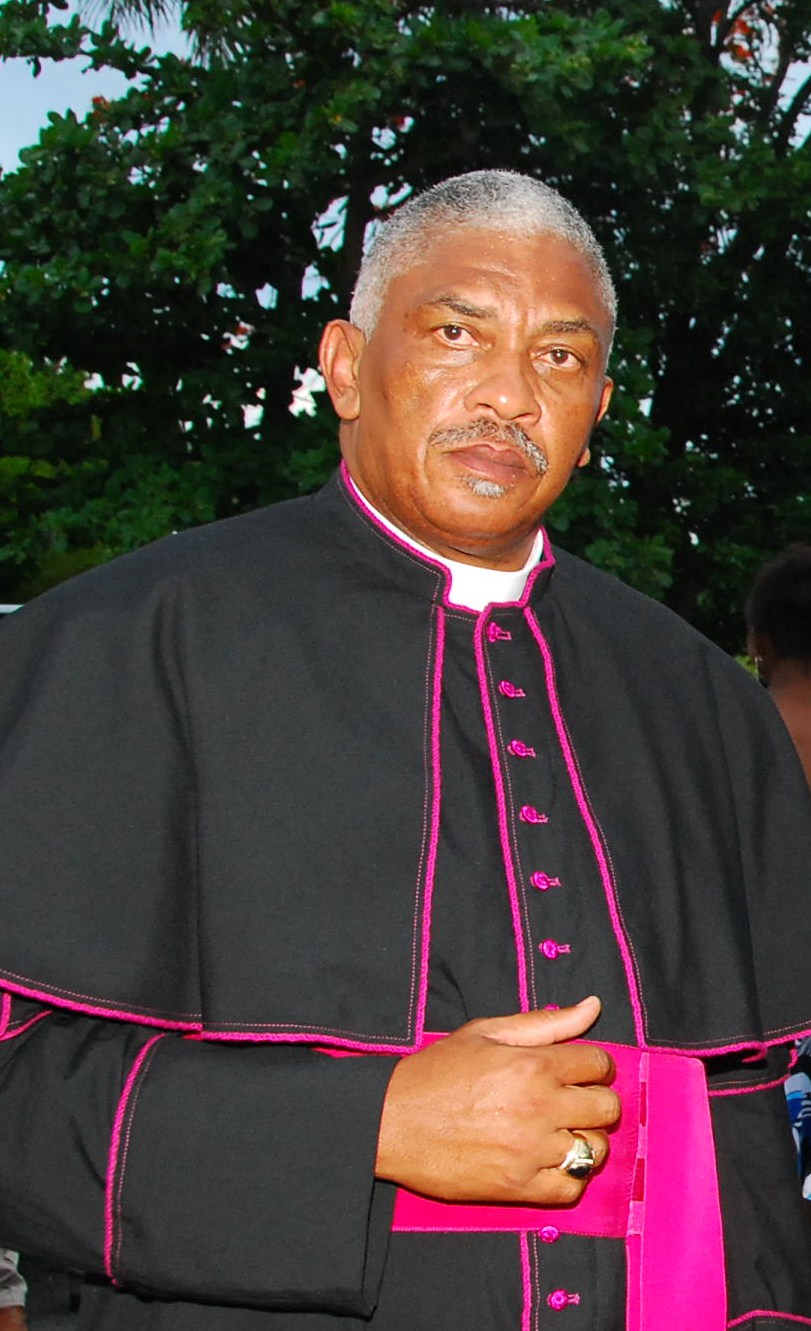
ArchdeaconIRBArchdeacon I. Ranfurly Brown was installed as Rector of St. Agnes on 1st February 2007.   A “Son of St. Agnes”, he served as an altar boy under Canon Milton Cooper and also under Archdeacon William E. Thompson.  Archdeacon Brown attended Queen’s College.  He attended Codrington College and graduated with a Licentiate in Theology from The University of The West Indies.   He also studied Urban Ministry at Colgate Divinity School in Rochester, New York and obtained a Master of Arts degree from Princeton Seminary in New Jersey.

He was made a Deacon on 24th June 1977 and ordained to the Sacred Priesthood on 24th June 1978.  He served as Rector of the Parish of Our Lady and St. Stephen in Bimini from 1980 to 1988 and as Rector of Christ the King Parish in Ridgeland Park from 1988 to 2007.  He was appointed a Canon in 1996 and as Archdeacon in 1998.

Archdeacon Brown is married to the former Olga Maria Rolle.  Their two sons, Michael and Ian, serve in the Sanctuary as members of the Guild of St. Ambrose.  A third son, I. Ranfurly Brown II, is deceased.

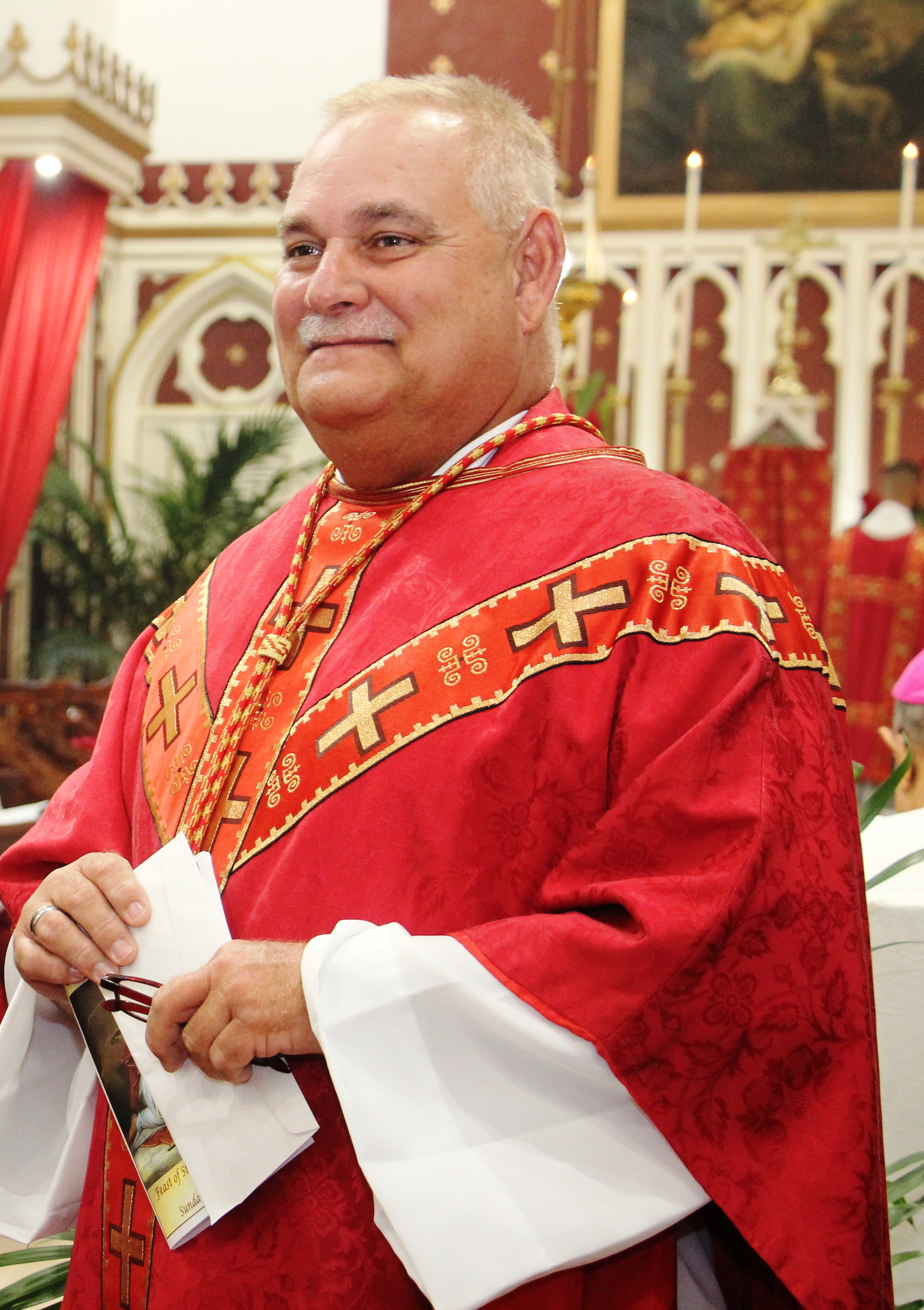
This is an update to include Archdeacon Keith Cartwright, another Son of St. Agnes, who succeeded Archdeacon Brown in…….

Archdeacon Cartwright_IMG_3085

St. Agnes Influence Abroad

The historic St. Agnes Episcopal Church in Miami, Florida had its beginnings as a result of the washtub singing of a former member of St. Agnes Anglican Church in Grant’s Town.  To quote from “The Historic Saint Agnes Episcopal Church”:

“Saint Agnes Episcopal Church, one of Miami’s oldest and largest churches had its origin in October 1897. The Reverend James O S. Huntington late Father Superior of the Holy Cross came to the Miami area accompanied by two monks to supply the religious needs of the Episcopal Church until a priest was called to replace them.

One day while Father Huntington was visiting at the home of the late John Sewell he was attracted by the voice of Mr. Sewell’s washwoman, Louise Newbold. Mrs. Newbold, a Bahamian by birth was singing lustily the hymn, “The Church Is One Foundation”, to ease the burden of her chore. Father Huntington approached Mrs. Newbold and asked if a church existed in the area where Colored Anglicans could worship. She answered no, but told him there were scores of Anglicans in Miami who desired to worship in a way which they were accustomed. Father Huntington requested that Mrs. Newbold invite some of her friends to a meeting on the following Sunday. She complied.

“Thirty members assembled with Father Huntington in a private home located on North West 2nd Avenue near Flagler Street, then known as Avenue C and 12th Street. It was then that an idea “born in a washtub” became a reality. 

“The founders chose the name of Saint Agnes for the new Church because the majority of them had been members of the popular and vigorous Saint Agnes in The Bahamas. When Father Huntington wrote to Bishop William Crane Gray to inform him of his meetings, he stated that he found the people to be quite intelligent and comfortable with the worship service.”

St. Agnes, Miami is designated as a local historic site.  Two other Episcopal churches, The Church of the Incarnation and The Church of the Transfiguration, have come out of St. Agnes, Miami.  As well, St. Paul’s Episcopal Church is a mission of St. Agnes.   The current Rector of is Canon Richard Livingstone Marquess-Barry, who was born in Miami of Bahamian parents.   Bahamian, Father Denrick Rolle, is now at St. Agnes and he is expected to succeed Canon Barry as Rector in December 2012.

The late Fathers James Edden of Lewis Street and Bruce Williamson of Blue Hill Road, who were both members of St. Agnes Church, served as priests in the United States as did Father John Taylor, who was a former Curate at St. Agnes. Father Taylor’s home Church was St. Mary The virgin.  Father Charles Simmons, a protégé of Archdeacon William Thompson, is the Rector of St. Andrew’s Episcopal Church in the Bronx, New York.

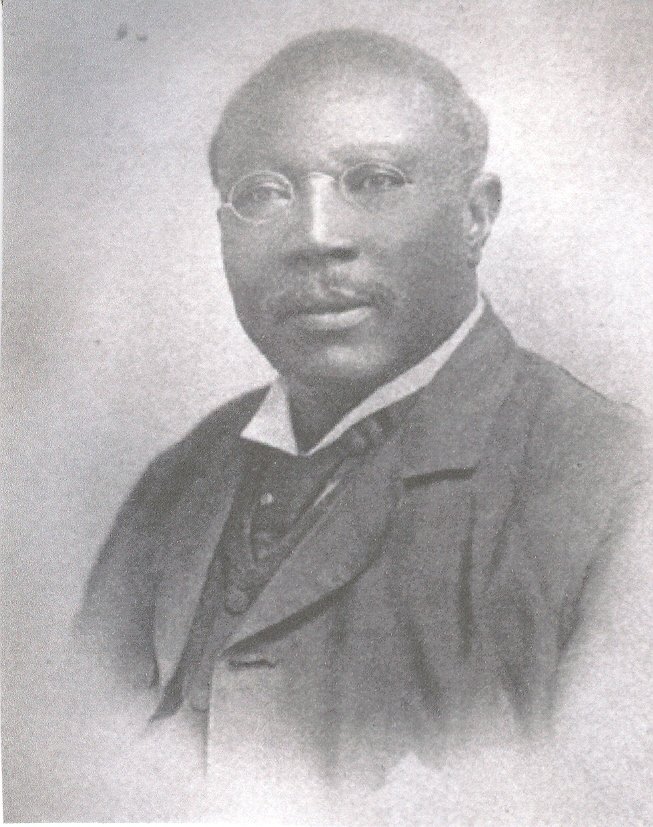
Dr. Joseph Robert Love

Dr. Joseph Robert LoveDr. Joseph Robert Love was the grandfather of the late Vera Love and great grandfather of the late Cynthia Love, who were both lifelong active members of St. Agnes Church.  Another of Dr. Love’s great granddaughters, Gloria Archer,   lives in Freeport, Grand Bahama.  Dr. Love was born in Nassau in 1839.  He grew up in Grant’s Town and was a member of St. Agnes Church.   He moved to the United States in the 1860s and became a priest in 1877.

Bust of Dr. Joseph Robert Love by Andret JohnIn 1879 Dr. Love became the first black medical graduate of the University of Buffalo.   He went to Haiti in 1881 as a medical missionary.  In the 1880s many black West Indians went to Haiti in search of work as they felt more comfortable living in a Black Republic, where they would not be discriminated against by Colonialists. Dr. Love was among a number of foreigners who became involved in Haitian politics.  He later moved to Jamaica where he also became active in politics and published a weekly paper the Jamaica Advocate.  He was elected to the Legislative Council in 1906 and served in other high offices in Jamaica.   Dr. Love was a proud black man and he always encouraged black Jamaicans to become involved in politics.   Marcus Garvey, the Jamaican Black Nationalist Leader, was influenced by the writings of Dr. Robert Love, who died in Kingston, Jamaica in 1914.  The bust of Dr. Love was created and photographed by Andret John.


© Copyright Rosemary C. Hanna 2013